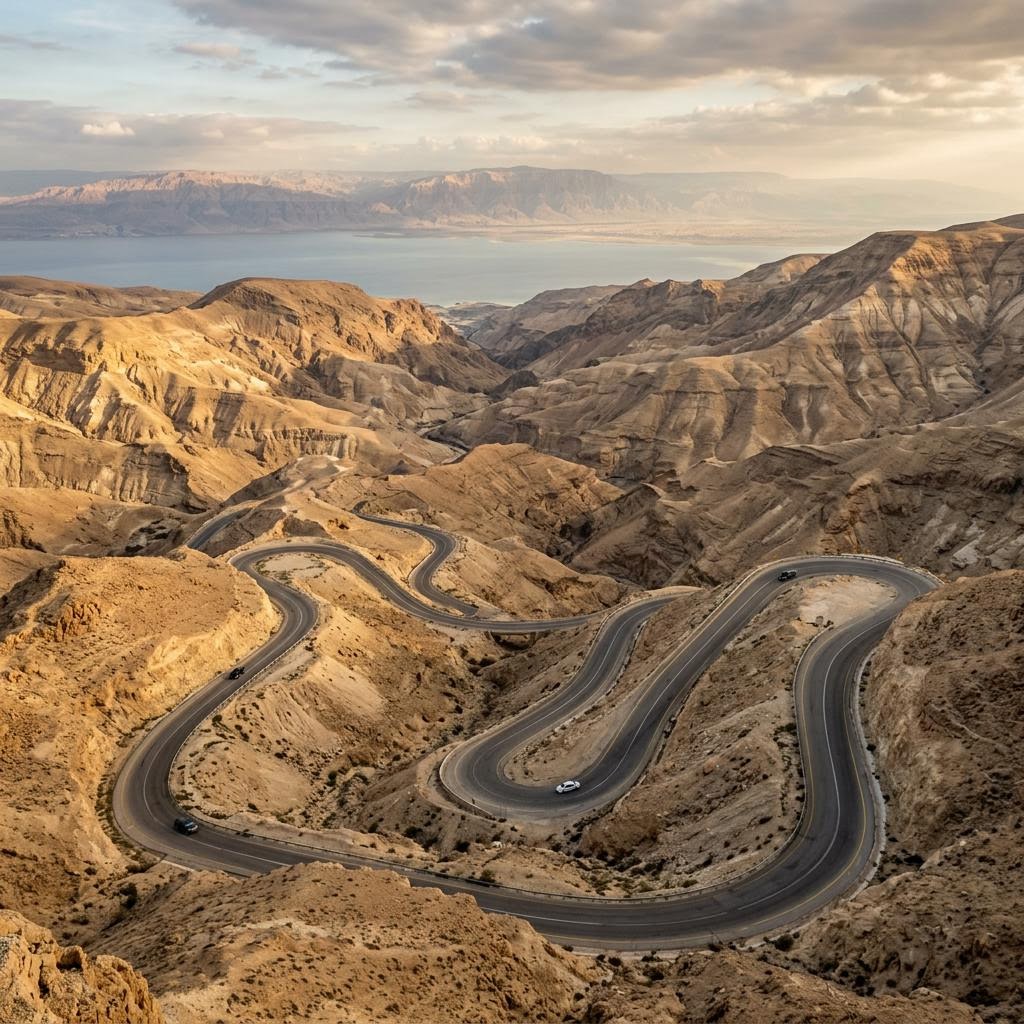
The simplest Jordan map for a first trip is a north-to-south line: Amman and Jerash in the north, Madaba and the Dead Sea in the center, Petra farther south, then Wadi Rum and Aqaba at the bottom. Start with your arrival and departure airport, place the longest transfers on sensible days and avoid crossing the same ground repeatedly. This Jordan route planner explains the sequence in plain language so you can turn a map into a workable driving plan.
Jordan’s roads connect the highlights, but map distance is not the same as sightseeing time. A stop for a viewpoint, lunch, fuel or a site entrance can turn a nominal transfer into most of a day. Use approximate drive times only for planning, then confirm current road conditions, weather, closures and access before setting off.
What is the basic north-to-south Jordan route?
Amman is the common starting point because it is the capital and near Queen Alia International Airport. Jerash is a northern detour, while Madaba and Mount Nebo lie southwest of Amman. The Dead Sea sits farther west in the Jordan Valley. Petra is in the southern highlands, Wadi Rum continues south through desert country and Aqaba is the far-southern Red Sea city.
A straightforward sequence is Amman, Jerash, Madaba or the Dead Sea, Petra, Wadi Rum and Aqaba. You do not need every stop. The sequence matters because it keeps the route generally moving south rather than sending you from Amman to Petra, back north to the Dead Sea and south again. Choose the version that matches your flight and priorities.
How should the Jordan map change for a short trip?
With three days, choose a compact spine: Amman or the airport area, Petra, and either Wadi Rum or the Dead Sea. Trying to include Jerash, Madaba, Petra, Wadi Rum, Aqaba and the Dead Sea usually creates rushed visits. With five days, you can add Jerash and a central stop. With seven or more, the route can breathe and include Aqaba, Dana or extra Amman time.
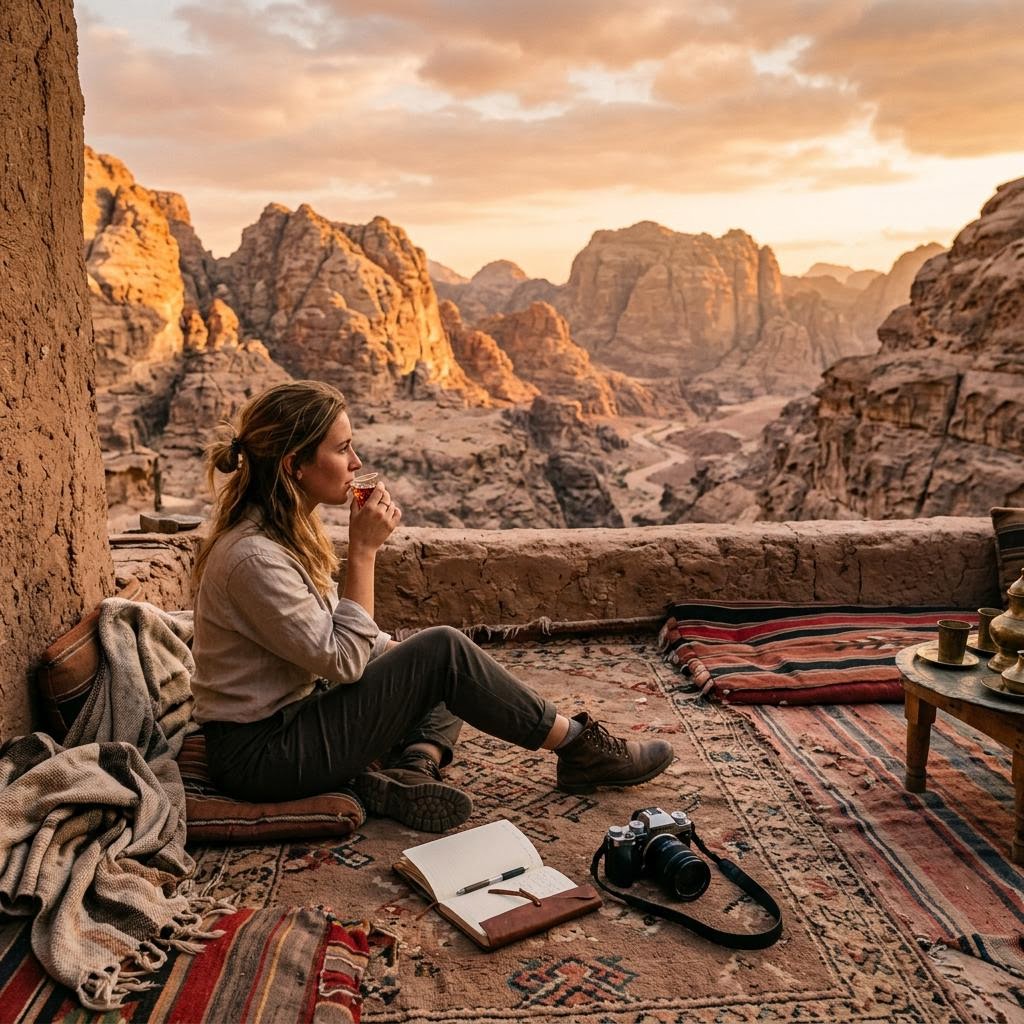
The most important sequencing rule is to protect Petra. Put it after a manageable transfer and give it a full day where possible. Avoid arriving after a tiring cross-country drive and expecting to climb to the Monastery immediately. A private transfer can save navigation time, but it cannot remove the physical distance or Petra’s walking.
Which roads connect the major stops?
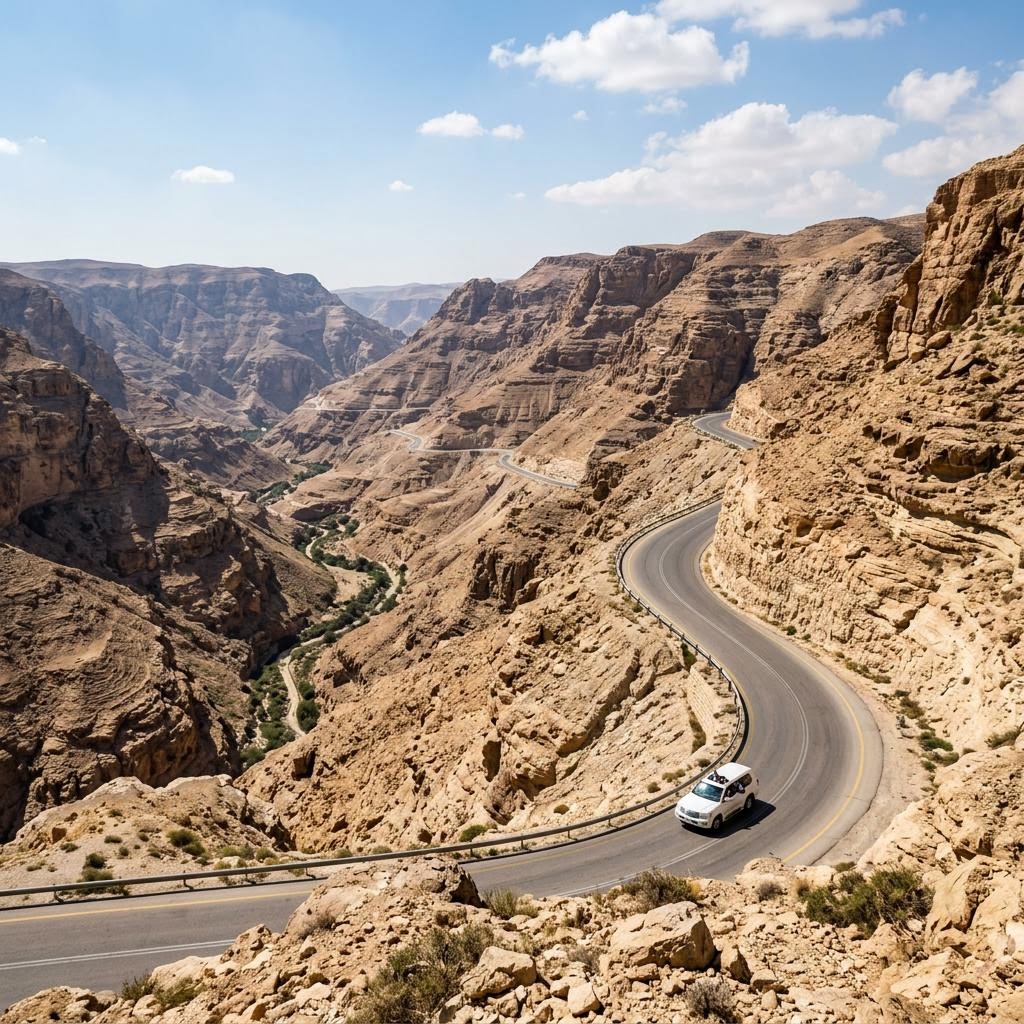
The Desert Highway is the direct inland connection between Amman and the south. The King’s Highway is slower and more scenic, with opportunities around Madaba, Mount Nebo, Kerak and valleys, but it needs more time and careful pacing. The Dead Sea road drops sharply from the highlands, and the Wadi Rum approach travels through open desert country before the protected area.
Do not treat a scenic road as a guaranteed shortcut. Weather, construction, traffic and your chosen stops can change the calculation. Daylight is useful on unfamiliar roads, especially outside cities. Confirm the exact accommodation entrance and pickup point because camp access and rural turns may not appear clearly on every navigation app.
Where should you place the Dead Sea?
The Dead Sea works well between Amman and Petra when you want a restorative stop, particularly after visiting Amman or before a longer southern transfer. It can also be a final night near the capital before an outbound flight, but allow a generous buffer for airport travel. Floating is a relaxed activity, yet heat and salt can be tiring, so do not stack it with too many other stops.
Madaba and Mount Nebo pair naturally with the central section, while Bethany Beyond the Jordan requires its own access and timing check. Confirm which shoreline facility or site you are visiting, what is available on your date and whether your transportation or guiding arrangement includes it.
How should Wadi Rum and Aqaba fit the sequence?
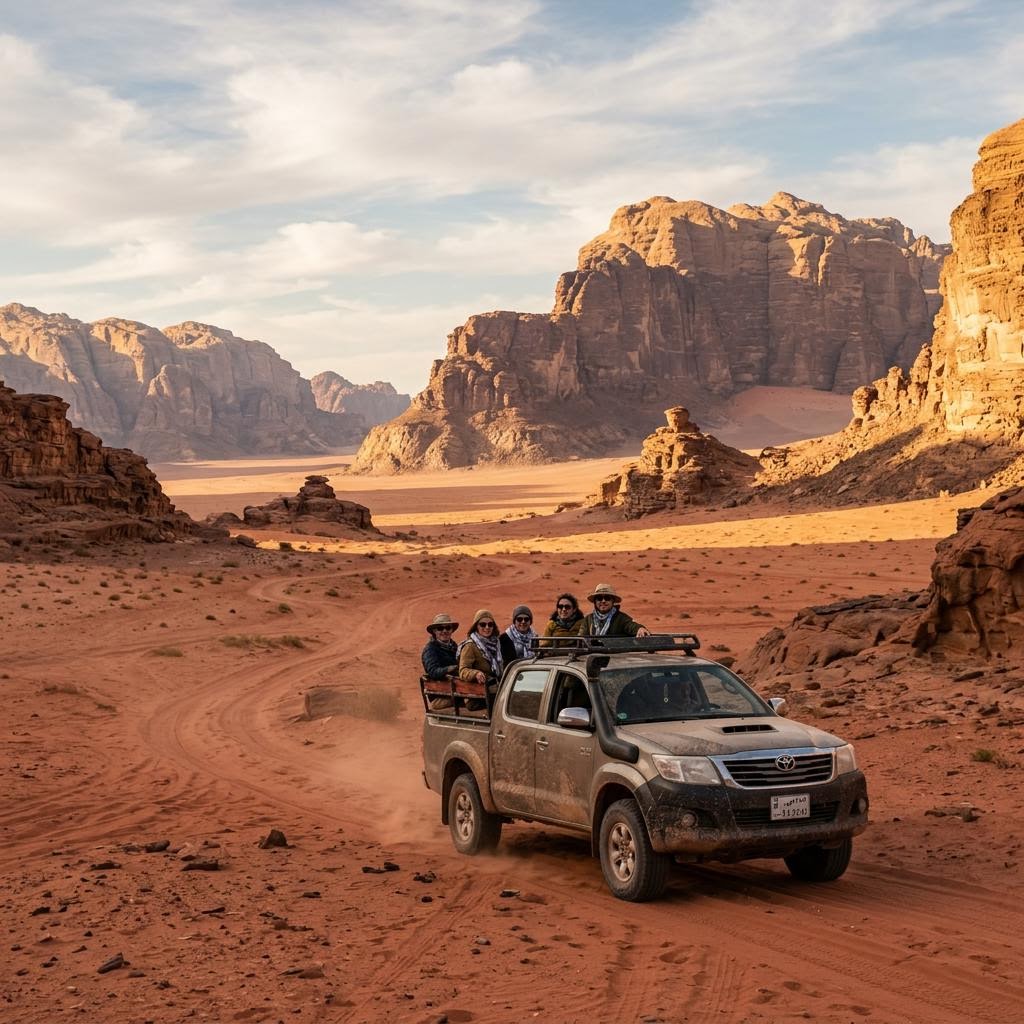
Wadi Rum follows Petra naturally for many travelers: Petra is a highland archaeological site and Wadi Rum is a desert landscape farther south. A half-day jeep outing can fit between transfers, while an overnight requires a later start or an additional night. Aqaba lies beyond Wadi Rum and is the logical finish for beach, diving or a slower coastal stay.
If your return flight leaves from Amman, going all the way to Aqaba adds a return journey or a separate flight plan. If the sea is a priority, accept that other stops may need to be shortened. Desert camp availability, activity times, road conditions and hotel arrangements change, so confirm them rather than relying on a generic sequence.
Should you drive the route yourself or hire transport?
Self-driving gives you control over stops and can work for experienced drivers comfortable with unfamiliar roads. Build in time for fuel, parking, directions and navigation errors. Avoid assuming that a route shown on a phone is suitable after dark or for every rental vehicle. Amman’s traffic and city hills are often more demanding than the long highway sections.
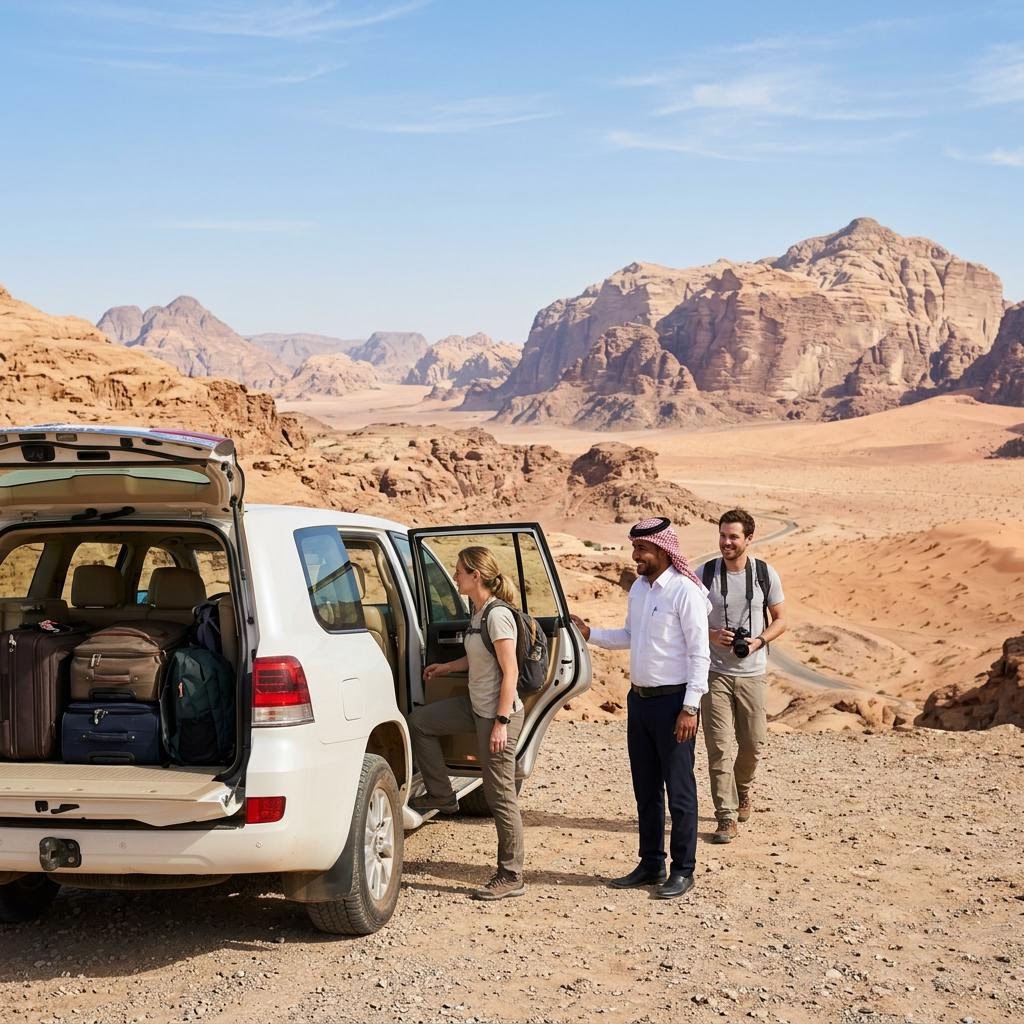
A private driver handles the route and vehicle logistics, but does not automatically mean a licensed guide. Arrange a licensed guide separately for in-depth interpretation at Petra, Jerash or Amman if that is important to you. Ask about waiting time, route changes, luggage and what happens if weather or access changes the plan.
How can you build a map-based itinerary?
Mark the airport, every overnight, each major site and the final departure point. Draw the route before booking hotels, then count both driving and walking hours. Keep the first and last days lighter, put one major outdoor site per day when possible and retain a spare block for delays. Compare your draft with current official information and accommodation confirmation.
This method is more reliable than copying a pin-heavy Jordan map from social media. Fewer bases usually mean more time exploring. When you request a private itinerary, send the map logic and ask the provider to identify unrealistic transfers, seasonal constraints and exclusions. Availability and changeable details should be reconfirmed close to departure.
Frequently Asked Questions
What is the best driving sequence for Jordan?
A common first-trip sequence is Amman, Jerash, Madaba or the Dead Sea, Petra, Wadi Rum and optionally Aqaba. Adjust it for your airports and time. The principle is to move generally north to south and avoid unnecessary backtracking.
Is the King’s Highway faster than the Desert Highway?
Usually not. The King’s Highway is scenic and full of possible stops, but it is slower and more winding. The Desert Highway is generally the practical direct corridor. Current road conditions and your stops can change actual travel time.
How many days do I need for a Jordan road trip?
Three days can cover a compressed highlights route, five days allows more balance, and seven or more makes room for northern sites, the Dead Sea, Aqaba or slower pacing. Protect a full day for Petra whenever possible.
Can I drive from Petra to Wadi Rum in one day?
Yes, the destinations are commonly sequenced together, and many travelers visit Wadi Rum after Petra. Allow for Petra’s walking, the transfer, the desert activity schedule and any camp check-in. Confirm current road and activity details before traveling.
Is a Jordan map enough for planning the route?
A map is a starting point, not a full plan. Add driving conditions, site hours, walking time, accommodation access, weather, fuel and airport buffers. Confirm changeable information with official sources and your transport or tour provider.
Plan this trip with us
Ready to experience Jordan with a local guide?
We plan and run private tours across all of Jordan — one message and your trip is in local hands.
Chat on WhatsApp