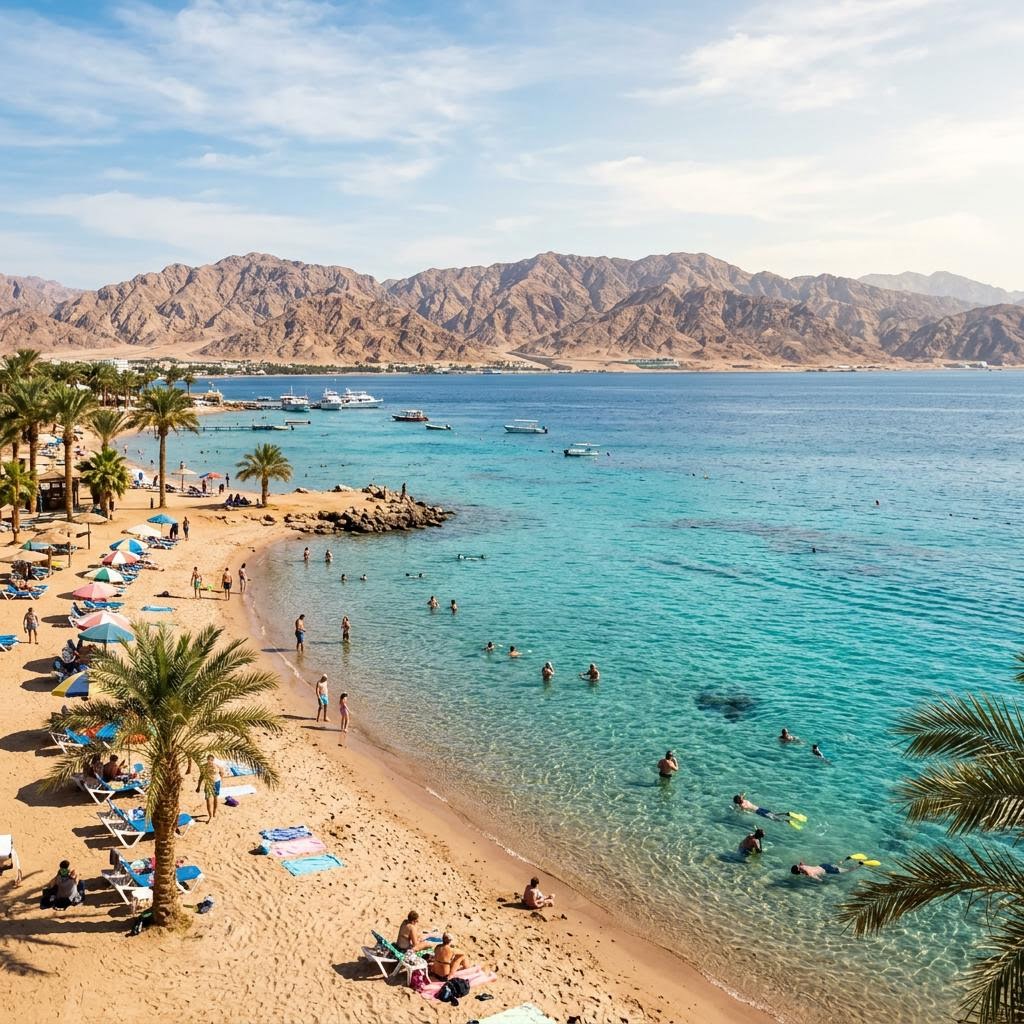
Aqaba is Jordan only coastline — a strip of Red Sea in the far south, about 330 km from Amman. It has a completely different climate from the highlands: warm all year, sunny almost every day, and blessed with sea temperatures that make swimming and diving possible even in winter.
Because it is a beach and dive destination rather than a walking city, the question of when to come is mostly about the sea and the heat. Get the timing right and Aqaba is a warm-water escape when the rest of Jordan turns cold.
The headline: September to May is the golden window, and even January stays swimmable.
When is the best time to visit Aqaba?
The best time to visit Aqaba is September to May, when air temperatures are pleasant and the Red Sea stays warm. This long window avoids the peak summer heat while still delivering sunny beach days and comfortable water for swimming, snorkeling and diving.
Autumn (September to November) and spring (March to May) are the standouts, with warm days, sea temperatures around 24 to 27°C, and none of the summer extremes. Winter (December to February) is Aqaba secret season — a warm 20°C or more by day when Amman is only 5 to 15°C, making it a genuine sun escape within Jordan.
This is why we often send guests south in winter: combine Aqaba with Wadi Rum and Petra, and you get warm beach days after cool desert nights on a single trip.
How warm is the sea in Aqaba?
The Red Sea at Aqaba is warm year-round, ranging from roughly 21°C in the coolest winter months to around 27°C in late summer. It never gets cold enough to stop swimming, which is exactly why Aqaba is a winter escape when the highlands turn chilly.
Water clarity is excellent for most of the year, with the coral reefs just offshore visible from the surface. Warmer months bring the most inviting water for long snorkeling sessions, while the cooler months are still perfectly comfortable with a light wetsuit for divers.
Whatever the month, the underwater world here — coral gardens and even a sunken ship or two — is the main event, and it is accessible directly from the shore.
Is Aqaba too hot in summer?
Aqaba is very hot in summer, with June-to-August afternoons regularly climbing past 40°C. The heat is dry rather than humid, but midday can be genuinely intense, so summer visitors should plan beach and sea time for the morning and evening and rest in the shade in between.
The sea itself is at its warmest in summer, which some travelers love, and hotel prices can be lower than in peak season. But if you are combining Aqaba with sightseeing elsewhere, remember that Petra and the desert are also at their hottest then, so early starts matter.
For pure beach relaxation with air-conditioned downtime, summer works. For a fuller southern Jordan trip, the September-to-May window is far kinder.
When is the best time to dive in Aqaba?
You can dive in Aqaba year-round, but many divers prefer the spring and autumn shoulder seasons and the warm-water summer months. Sea temperatures range from about 21°C in winter to 27°C in late summer, and visibility is consistently good across the calendar.
Winter diving is entirely possible and less crowded — a 5mm wetsuit handles the cooler water comfortably. Summer offers the warmest, most effortless conditions, though you will share popular sites with more visitors. The reefs and wrecks sit close to shore, so most dives are quick and easy to reach.
If diving is your priority, tell us your dates and we can arrange a private transfer to Aqaba and point you to reputable local dive operators for the reef and wreck sites.
Frequently Asked Questions
What is the best time of year to visit Aqaba?
The best time to visit Aqaba is September to May, when the air is pleasant and the Red Sea stays warm. Spring and autumn offer sunny days without extreme heat, while winter is a warm escape at 20°C or more when the Jordanian highlands are cold. Summer works but is very hot.
Can you swim in Aqaba in winter?
Yes, you can swim in Aqaba in winter. The Red Sea stays around 21°C even in the coolest months, and daytime air temperatures reach 20°C or more. This makes Aqaba a genuine warm-weather escape between December and February, when Amman and Petra can be as cold as 5 to 15°C.
How hot does Aqaba get in summer?
Aqaba gets very hot in summer, with afternoons between June and August regularly exceeding 40°C. The heat is dry rather than humid, but midday can be intense. Summer visitors should enjoy the beach in the morning and evening and rest in the shade during the hottest hours.
What is the sea temperature in Aqaba?
The Red Sea at Aqaba ranges from about 21°C in winter to around 27°C in late summer, staying warm enough to swim all year. Water clarity is excellent for most of the calendar, which makes Aqaba a reliable destination for swimming, snorkeling and diving in every season.
Is Aqaba a good place to dive year-round?
Yes, Aqaba is a good diving destination year-round. Sea temperatures range from about 21°C in winter to 27°C in late summer with consistently good visibility. Winter diving needs a wetsuit but is quieter, while summer offers the warmest water. The coral reefs and wrecks sit close to shore.
Plan this trip with us
Ready to experience Jordan with a local guide?
We plan and run private tours across all of Jordan — one message and your trip is in local hands.
Chat on WhatsApp