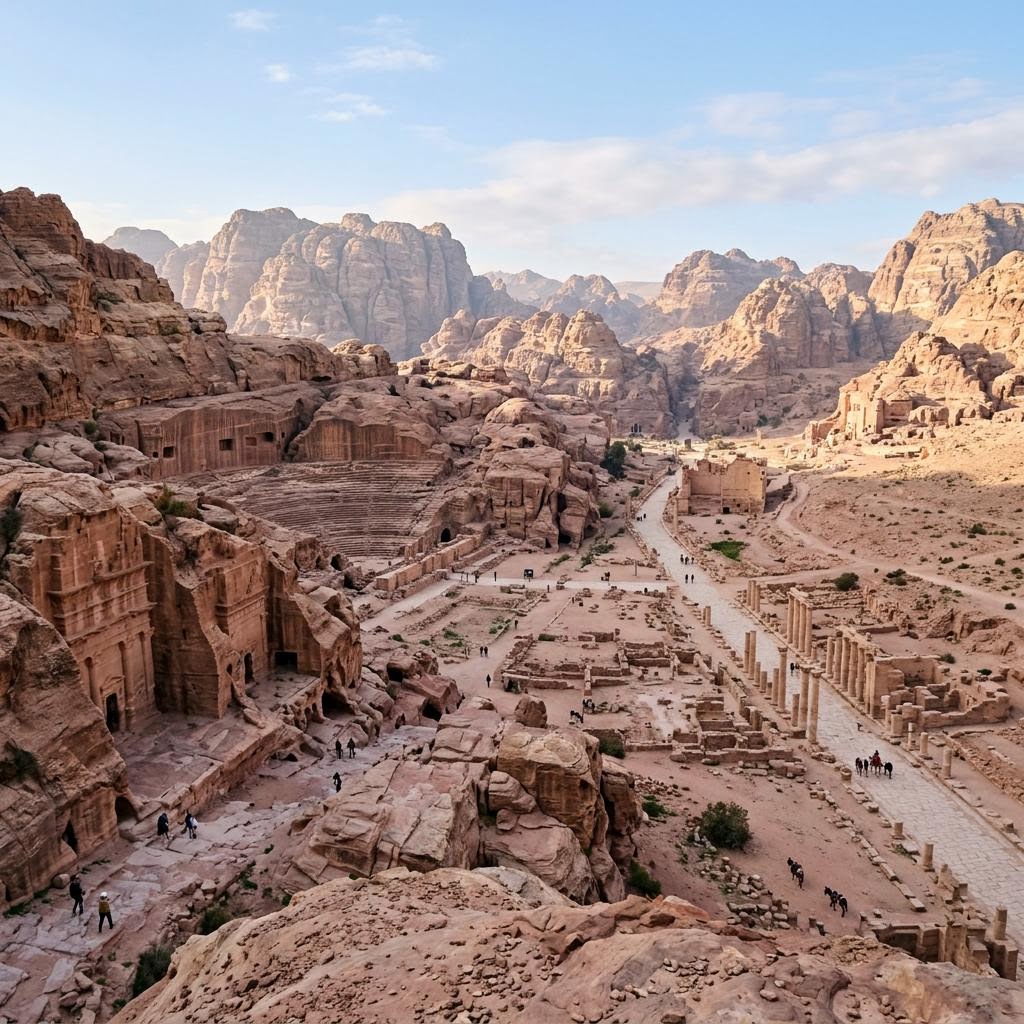
Petra is roughly 60 square kilometers of carved sandstone, and the average day visitor sees about a tenth of it before their feet stage a revolt. So "how many days do I need?" is a fair and slightly nervous question — usually asked while looking at a map that makes the place seem the size of a theme park. It is not. It is the size of a small city that a civilization spent centuries chiseling out of rock.
Here is the short version, so you can stop reading and go pack if you want: one full day is genuinely enough to see the famous things and leave happy. Two days lets you add the Monastery and the High Place of Sacrifice without walking 30,000 steps in a single afternoon and hating everyone you love. Three days is for hikers, photographers, and people who fall in love — and we have watched it happen.
The twist nobody expects is the ticket pricing, which quietly begs you to stay a second day. We will get to that, because it is the most persuasive argument for two days that exists.
Is one day in Petra enough?
Yes — one full day comfortably covers the classic route. You walk the 1.2 km Siq, arrive at the Treasury, continue down the Street of Facades to the Roman theater, then along the Colonnaded Street toward the Great Temple, with the Royal Tombs on your way back. That is the postcard version of Petra, and it is a spectacular day.
The catch is that "one day" and "everything" are not the same sentence. A single day means choosing: you can do the main valley plus the Royal Tombs comfortably, OR the main valley plus the Monastery climb, but doing both means a 20,000-step day with an 800-step staircase bolted onto the end. Some people love that. Others discover muscles they had filed as decorative. Start at the 6 am gate and pace yourself and one day works well.
What does a second day in Petra add?
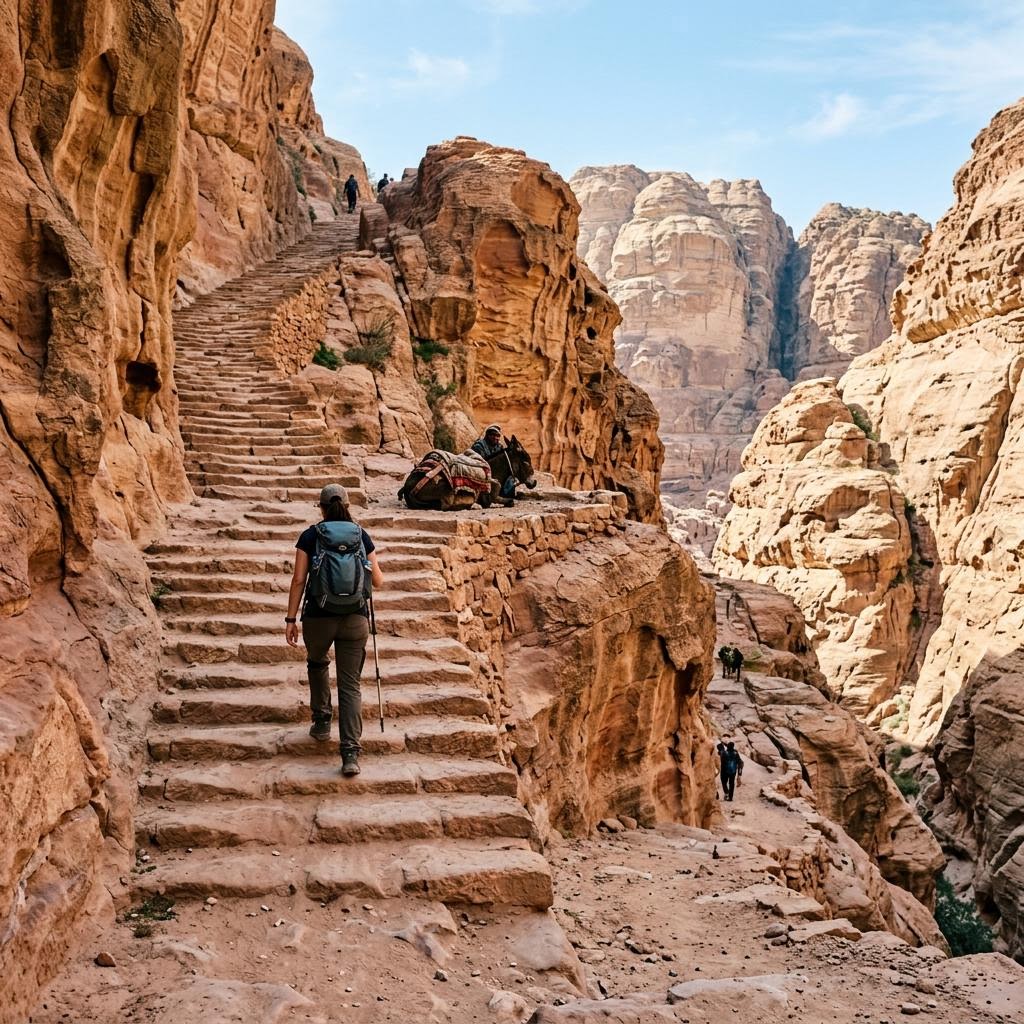
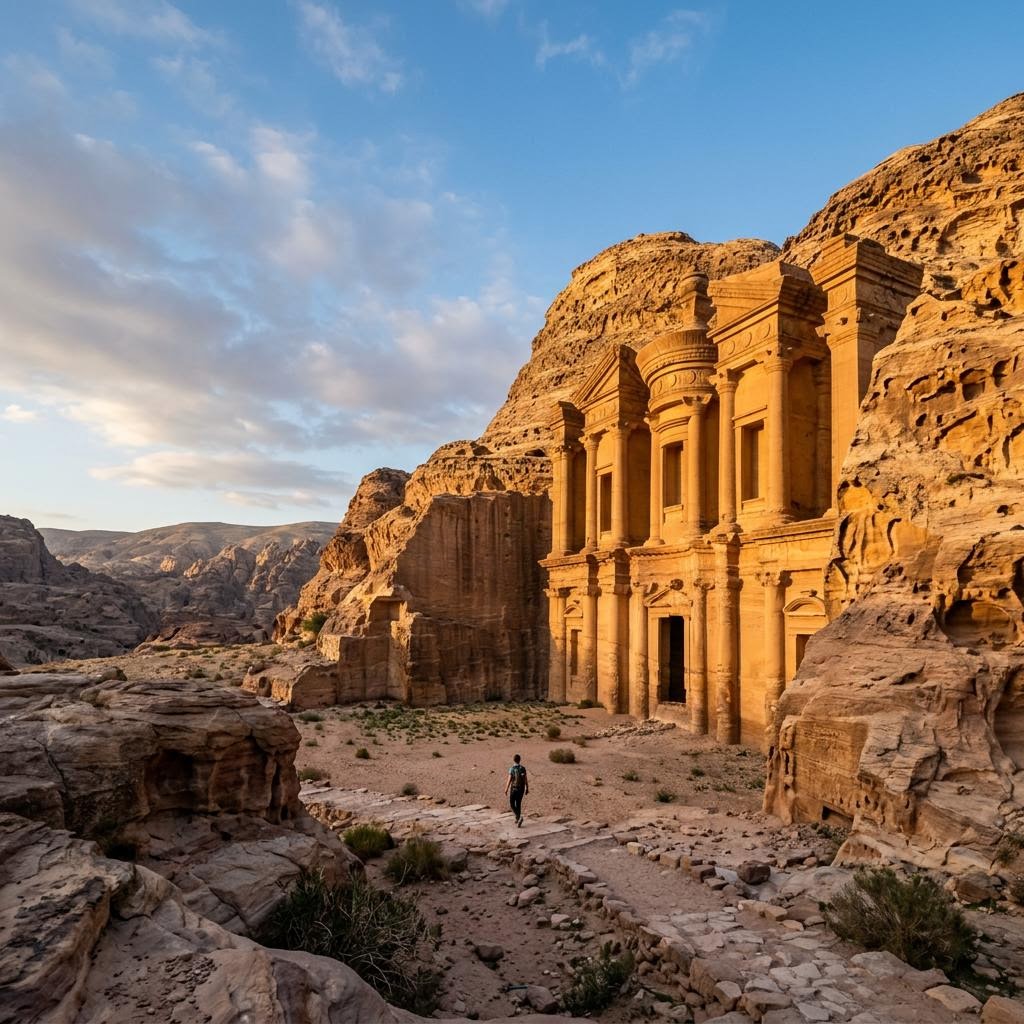
A second day buys you the two big climbs without the death march: the Monastery (Ad-Deir) and the High Place of Sacrifice. Both are uphill, both are worth it, and both are far quieter than the Treasury because stairs are an excellent crowd filter.
The Monastery is roughly 800 steps and 45–60 minutes up, and it is bigger than the Treasury while carrying about ten percent of the crowd — there is a tea shop at the top with a view that has ruined other views for our guests. The High Place of Sacrifice is a shorter but steeper climb from near the theater, delivering a panorama over the whole basin. On a two-day visit you tackle one climb per morning while your legs are still speaking to you, then wander the corners most people skip: the colorful Silk Tomb interiors, the quiet trail out to the Byzantine Church mosaics.
How much does a second day at Petra actually cost?
Almost nothing — and this is the part that makes people laugh. A one-day Petra ticket is 50 JOD. A two-day ticket is 55 JOD. So the second day costs you 5 JOD, or roughly the price of two lemon-mints at the Monastery cafe. The three-day ticket is 60 JOD, meaning day three costs another 5 JOD.
If you hold a Jordan Pass (from 70 JOD, which also waives the 40 JOD visa fee when you stay three or more nights in Jordan), Petra is already bundled in — check your pass terms for how many Petra days it grants. Either way, the pricing structure is basically the ruins whispering "stay a little longer." We tend to agree with the ruins.
How do most people get to Petra?
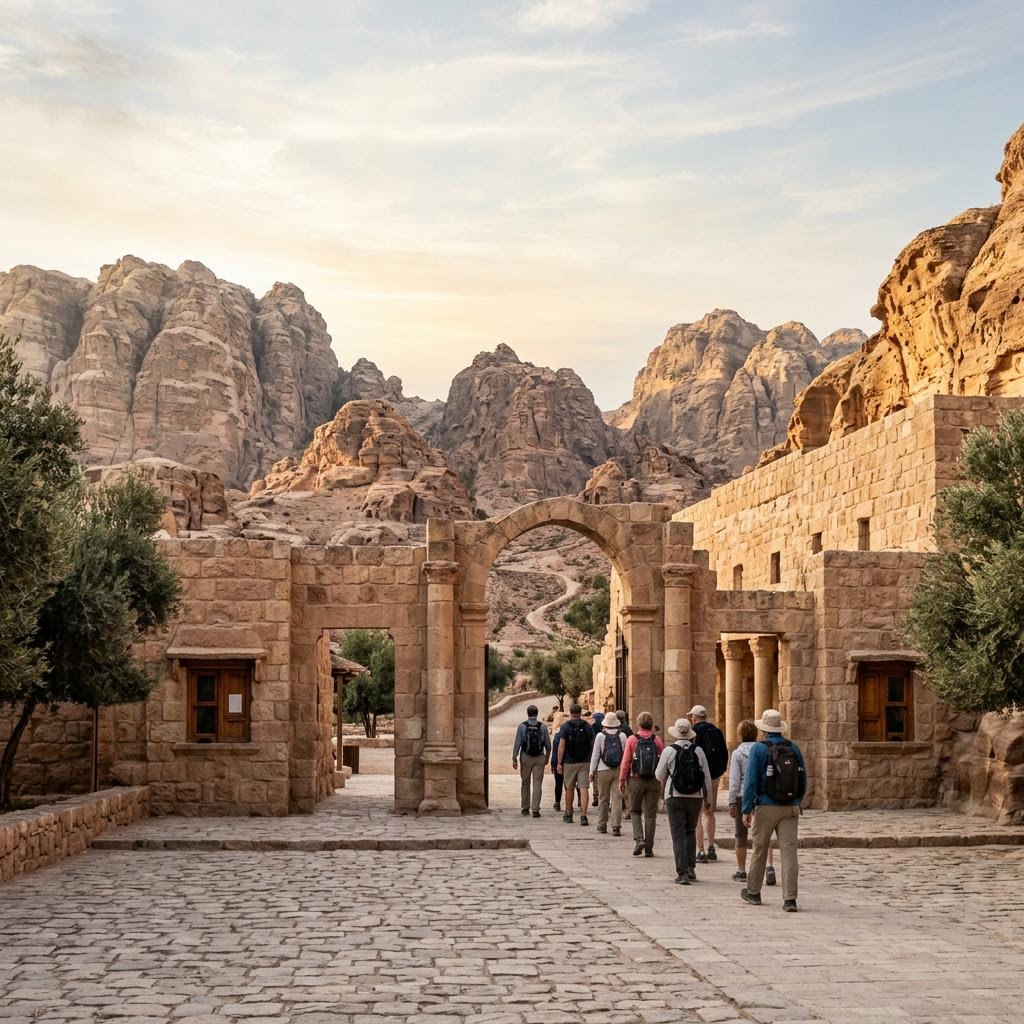
Petra sits about 235 km south of Amman — roughly a 3-hour drive down the Desert Highway, or longer and prettier via the King's Highway past Kerak and Dana. A one-day Petra visit as a round trip from Amman is doable but long: leave before 6 am, home late. For two days, stay overnight in Wadi Musa (the town at the gate) so you are first through the turnstiles both mornings.
This is where a private driver earns its keep. Our Petra tours include the private car, a professional driver and hotel pickup, so you nap on the drive down instead of white-knuckling a rental on unfamiliar roads. Entrance tickets and any on-site licensed guide inside Petra are separate — or covered if you carry a Jordan Pass. Message us on WhatsApp with your dates and we will match the car to your plan.
Frequently Asked Questions
How many days do you need in Petra?
One full day covers the Siq, Treasury, Street of Facades, Roman theater and Royal Tombs. Two days adds the Monastery and the High Place of Sacrifice without a punishing single-day march. Three days suits hikers and photographers who want the quieter back trails and unhurried time at every viewpoint.
Is one day in Petra enough?
For most first-time visitors, yes. Starting at the 6 am gate, one day comfortably covers the main valley and either the Royal Tombs or the Monastery climb. Doing both the Monastery and the full valley in one day is possible but means roughly 20,000 steps, so pace yourself.
How much is a two-day Petra ticket?
A one-day Petra ticket costs 50 JOD and a two-day ticket costs 55 JOD, so the second day adds only 5 JOD. The three-day ticket is 60 JOD. If you hold a Jordan Pass, Petra is already included — check your pass terms for the number of Petra days granted.
How long is the drive from Amman to Petra?
Petra is about 235 km south of Amman, roughly a 3-hour drive on the Desert Highway. The scenic King's Highway route takes longer but passes Kerak and Dana. A one-day round trip from Amman is doable if you leave before 6 am, though staying overnight in Wadi Musa is easier.
Is the Monastery worth a second day in Petra?
Yes. The Monastery is an 800-step climb of 45–60 minutes, it is larger than the Treasury, and it draws far fewer people. A second day lets you climb it fresh in the morning rather than tacking it onto an already long first day, and a two-day ticket costs just 5 JOD more.
Plan this trip with us
Ready to experience Jordan with a local guide?
We plan and run private tours across all of Jordan — one message and your trip is in local hands.
Chat on WhatsApp