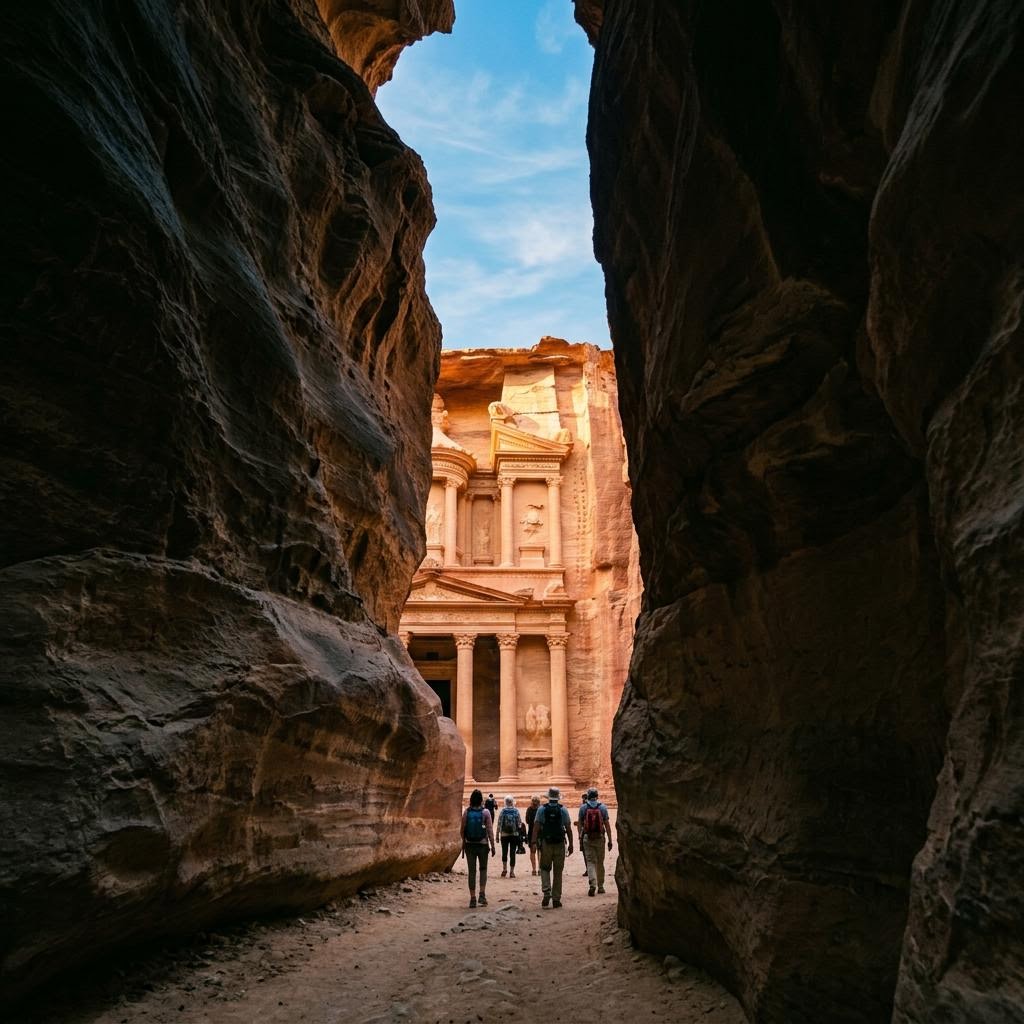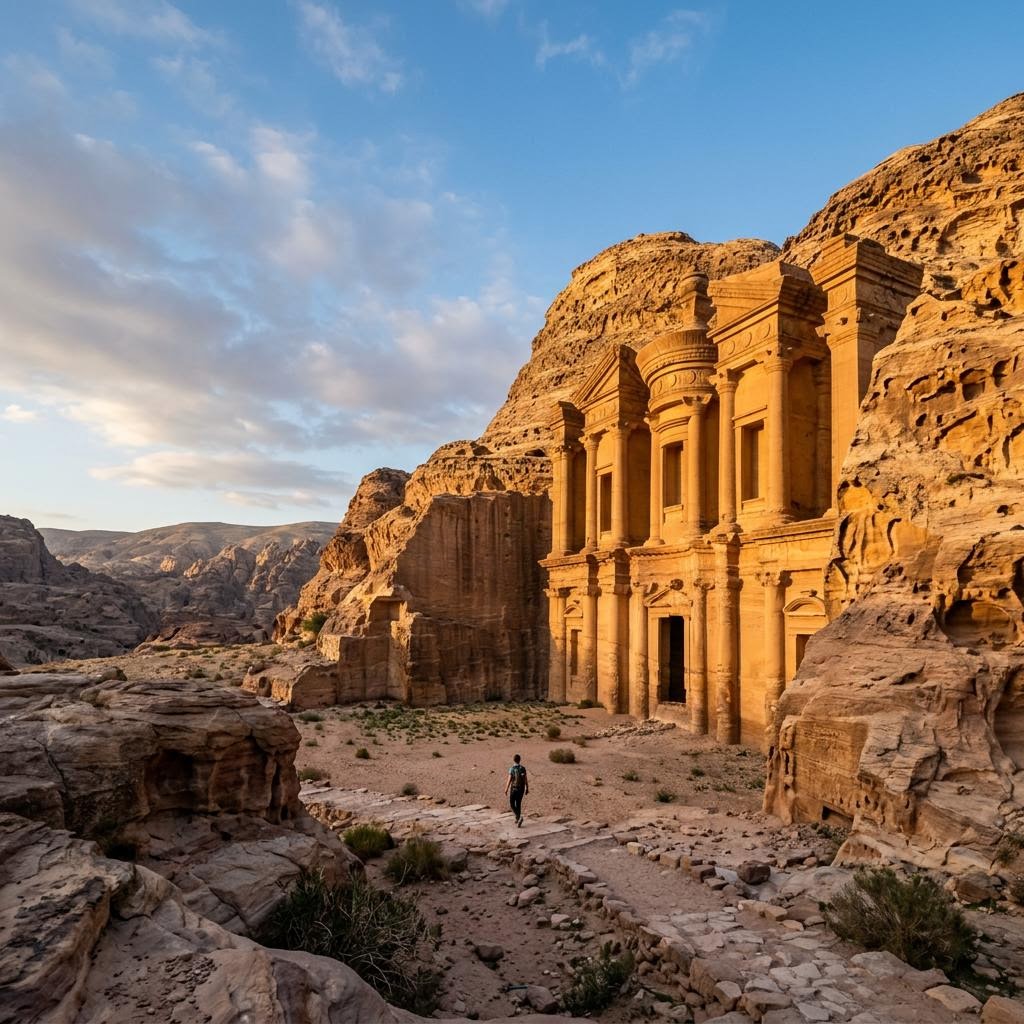
Everyone comes to Petra for the Treasury. Fewer people know that the biggest, most jaw-dropping monument in the whole city sits at the top of a rock staircase most day visitors talk themselves out of climbing — which is precisely why it is the best thing you can do here. The Monastery, or Ad-Deir, is a 50-meter-wide facade carved into a mountaintop, and it is larger than the Treasury while attracting maybe a tenth of the crowd.
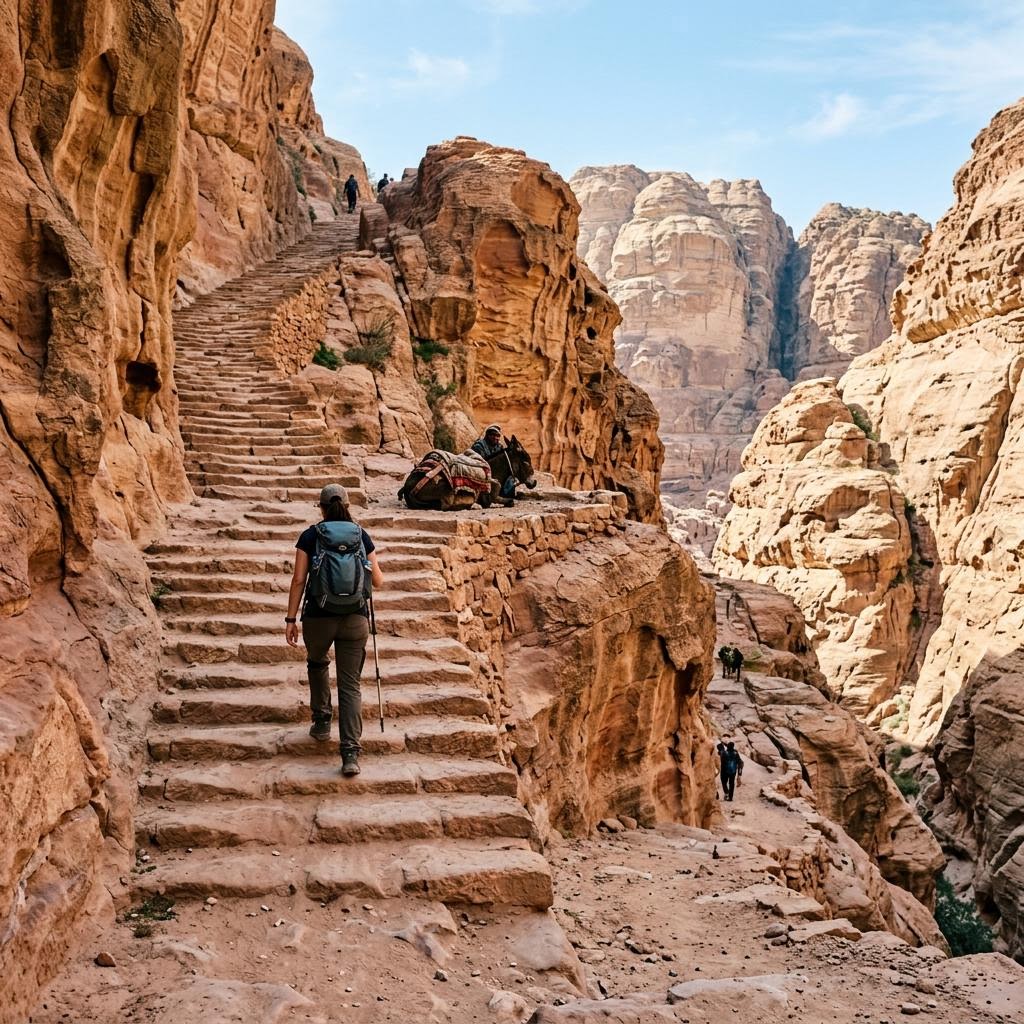
The barrier to entry is honest: about 800 steps. Stairs are the world's most reliable crowd filter, and Petra proves it daily. Everyone who gasps at the Treasury and then decides the climb "sounds like a lot" is doing you a personal favor. Bring water, take your time, and collect the reward at the top with a tea in your hand.
How long is the Monastery hike in Petra?
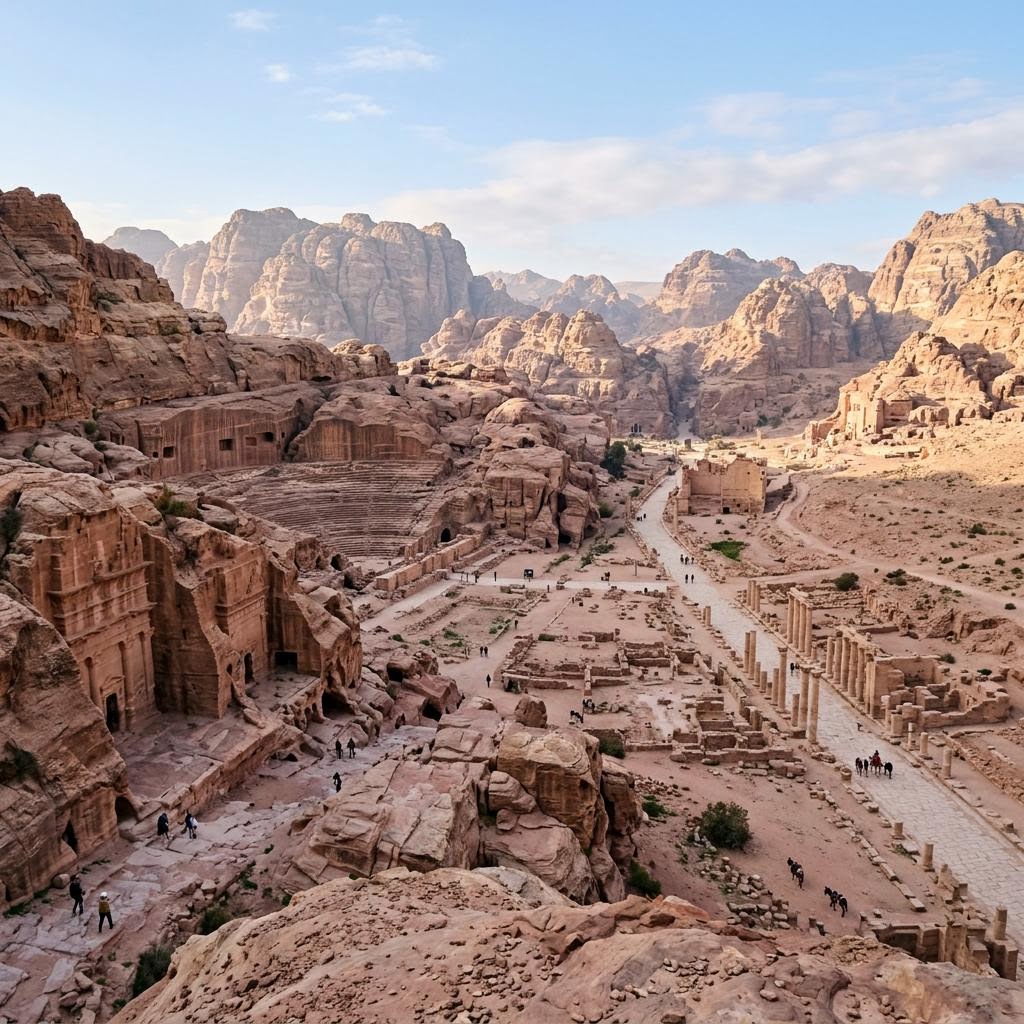
The Monastery climb is roughly 800 rock-cut steps and takes most people 45–60 minutes going up, plus a little less coming down. It starts near the end of the main valley, past the Colonnaded Street and the Basin restaurant area, so you have already done a fair walk before the stairs even begin.
It is not technical — there is no scrambling, no exposure to worry about, just a lot of uneven ancient stairs winding up a canyon. The pace is entirely yours. Fit walkers march it in 35 minutes; most people stop a few times to breathe, photograph the little rock-cut tombs along the way, and pretend they are "just admiring the view." (We do this too. It is a very good excuse.) Budget a good two-plus hours for the round trip once you factor in time at the top.
What is the best time to hike to the Monastery?
Early morning or late afternoon, for two reasons: shade and crowds. The climb runs up a canyon that catches brutal midday sun in summer, when Petra's valleys push past 35°C, so tackling it before roughly 10 am or after 3 pm keeps you in cooler air and softer light.
Timing also changes the photo. The Monastery faces such that late-afternoon light warms the facade beautifully, and by then the day-tripper crowds have largely drained back toward the gate — you may have the plaza nearly to yourself. In spring and autumn (20–28°C) the climb is pleasant almost any time. In winter, midday is actually the sweet spot because mornings in the canyon start cold. Whatever the season, carry 1.5–2 liters of water; the stairs are thirsty work.
Should I ride a donkey up to the Monastery?
This is a genuine ethics question, and we will be straight with you. Donkeys are offered constantly for the climb, and while some are cared for well, others are overworked and pushed up the steps in the worst of the heat. If you physically can walk it, walking is the kinder choice and, frankly, the better experience — you set your own pace and you actually see the canyon.
If mobility issues make the stairs impossible and a donkey is your only way up, that is a fair call — but insist on animals that look healthy and unstressed, never overload them, do not ride in the peak midday heat, and skip any handler who is beating the animal. Please do not take a donkey purely to save 20 minutes of effort you are capable of; the steps are the whole point, and the animals are not a shortcut worth their cost.
What is at the top of the Monastery hike?
At the top you get the Monastery itself, a vast plaza to sit and stare from, and a small Bedouin tea shop directly opposite the facade that markets itself, with total confidence, as having "the best view in Jordan." Having stood there many times, we are not going to argue.
Beyond the tea shop, a short scramble leads to a couple of signposted viewpoints looking out over the mountains toward Wadi Araba — on a clear day the horizon runs for miles. This is where you earn the sit-down: a hot sweet tea, your legs finally at rest, the giant carved Monastery glowing across the plaza and hardly anyone around. Our Petra tours get you to the gate with a private driver and pickup; the climb itself is yours to conquer, but this is the payoff we always tell guests not to skip.
Frequently Asked Questions
How many steps is the Petra Monastery hike?
The Monastery hike is roughly 800 rock-cut steps and takes most visitors 45–60 minutes to climb, with a shorter descent. It is not technical — no scrambling or exposure — but the stairs are uneven and ancient. Budget over two hours for the round trip including time at the top.
When is the best time to hike to the Monastery?
Early morning before about 10 am or late afternoon after 3 pm is best, giving you cooler air and thinner crowds. The canyon gets brutal midday sun in summer, when valleys exceed 35°C. Late-afternoon light also warms the facade nicely for photos, and most day-trippers have already left.
Is the Monastery bigger than the Treasury?
Yes. The Monastery facade is about 50 meters wide, larger than the Treasury, yet it draws roughly a tenth of the crowd because of the 800-step climb. Many visitors consider it the most impressive single monument in Petra precisely because it feels quieter and more remote.
Should I ride a donkey to the Monastery?
If you are physically able to walk, walking is the kinder and better experience. Donkeys are offered but some are overworked, especially in midday heat. If mobility issues require one, choose animals that look healthy, avoid peak heat, never overload them and skip any handler mistreating the animal.
Is there anything at the top of the Monastery hike?
Yes. There is the Monastery itself, a large plaza to rest in, and a small Bedouin tea shop opposite the facade advertising "the best view in Jordan." Short walks lead to signposted viewpoints looking out toward Wadi Araba, which are spectacular on a clear day.
Plan this trip with us
Ready to experience Jordan with a local guide?
We plan and run private tours across all of Jordan — one message and your trip is in local hands.
Chat on WhatsApp