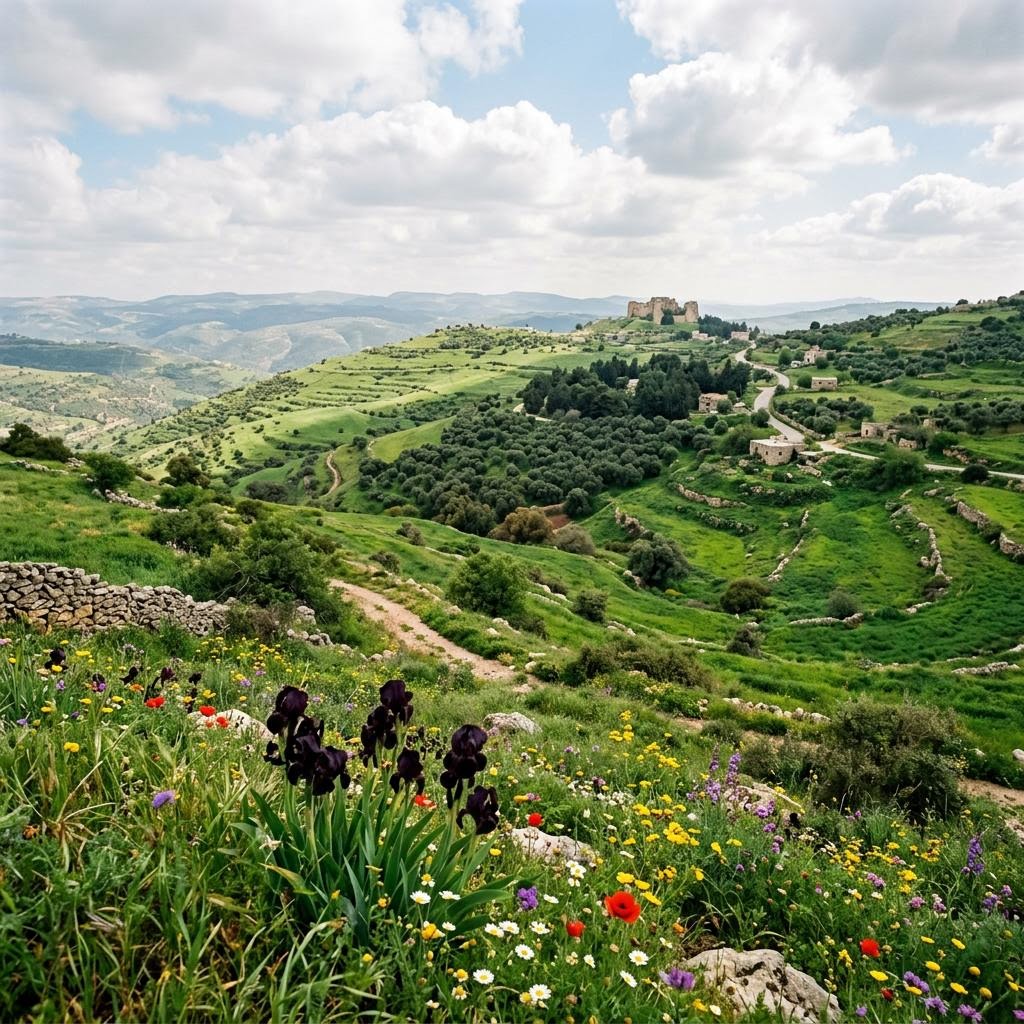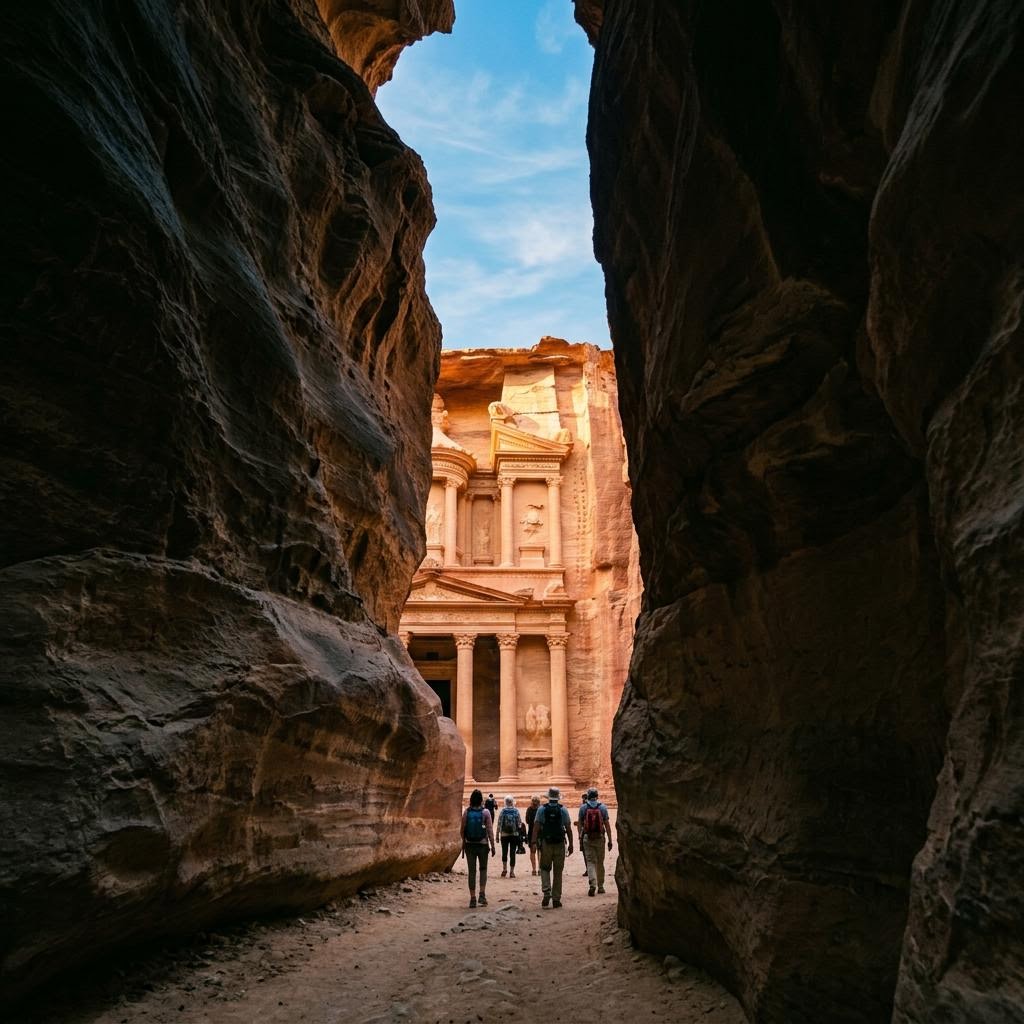
Petra is enormous — over 60 square kilometers of carved mountains — and most day visitors see barely a tenth of it. With a little planning, you can see the parts that matter most, at the hours when they are most beautiful. Here is how we guide it.
Tickets and the Jordan Pass
A one-day ticket costs 50 JOD, two days 55 JOD. Most travelers should instead buy the Jordan Pass online before arrival: from 70 JOD it bundles Petra, Wadi Rum, Jerash and 30+ other sites and waives your visa fee if you stay at least three nights. It pays for itself with Petra alone.
The classic route — and when to walk it
Enter at 6–7 am if you can. The Siq is cool and echoing at that hour, and you may reach the Treasury before the crowds. From there continue through the Street of Facades to the Theatre and Royal Tombs, then along the Colonnaded Street to the Great Temple. Save the Monastery climb (800 steps, 40–60 minutes up) for late morning when its plaza is in shade — the cafe at the top serves the best-earned lemon-mint in Jordan.
For the famous Treasury-from-above photo, the Al-Khubtha trail from the Royal Tombs is the safe, legal route with a spectacular viewpoint.
What to wear and bring
Real walking shoes (the sand hides ankle-turning stones), a hat, sunscreen, and 1.5–2 liters of water per person. Winter mornings in the Siq are cold; summer middays demand shade breaks. Cash for tea stalls and tips.
Is a guide worth it?
We are biased — but Petra without context is just beautiful rock. A licensed guide reads the Nabataean water channels, the tomb facades and the Greek inscriptions, takes you off the main flow to quiet corners, and paces the day to your energy. Our full-day private tour includes pickup from anywhere in Jordan, entrance, guide and lunch.
Ready to experience Jordan with a local guide?
We plan and run private tours across all of Jordan — one message and your trip is in local hands.
Chat on WhatsApp