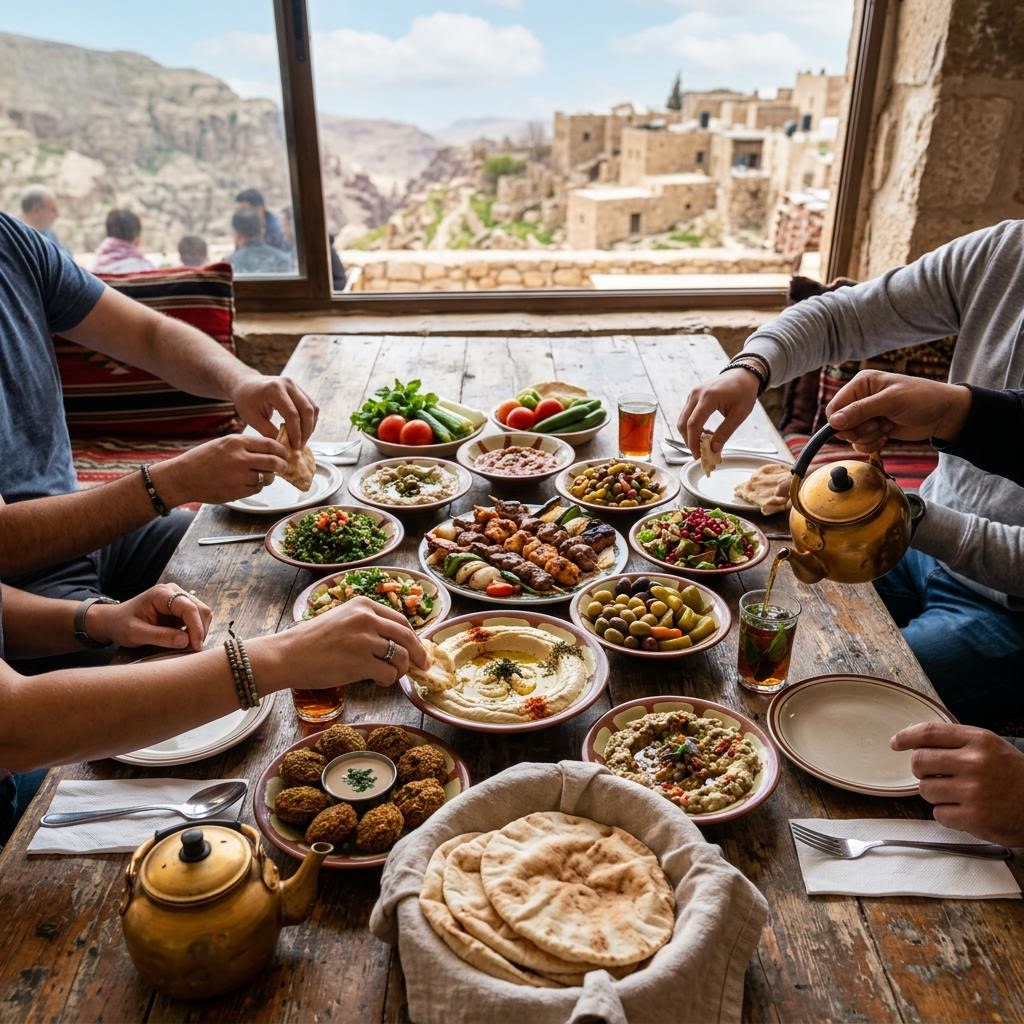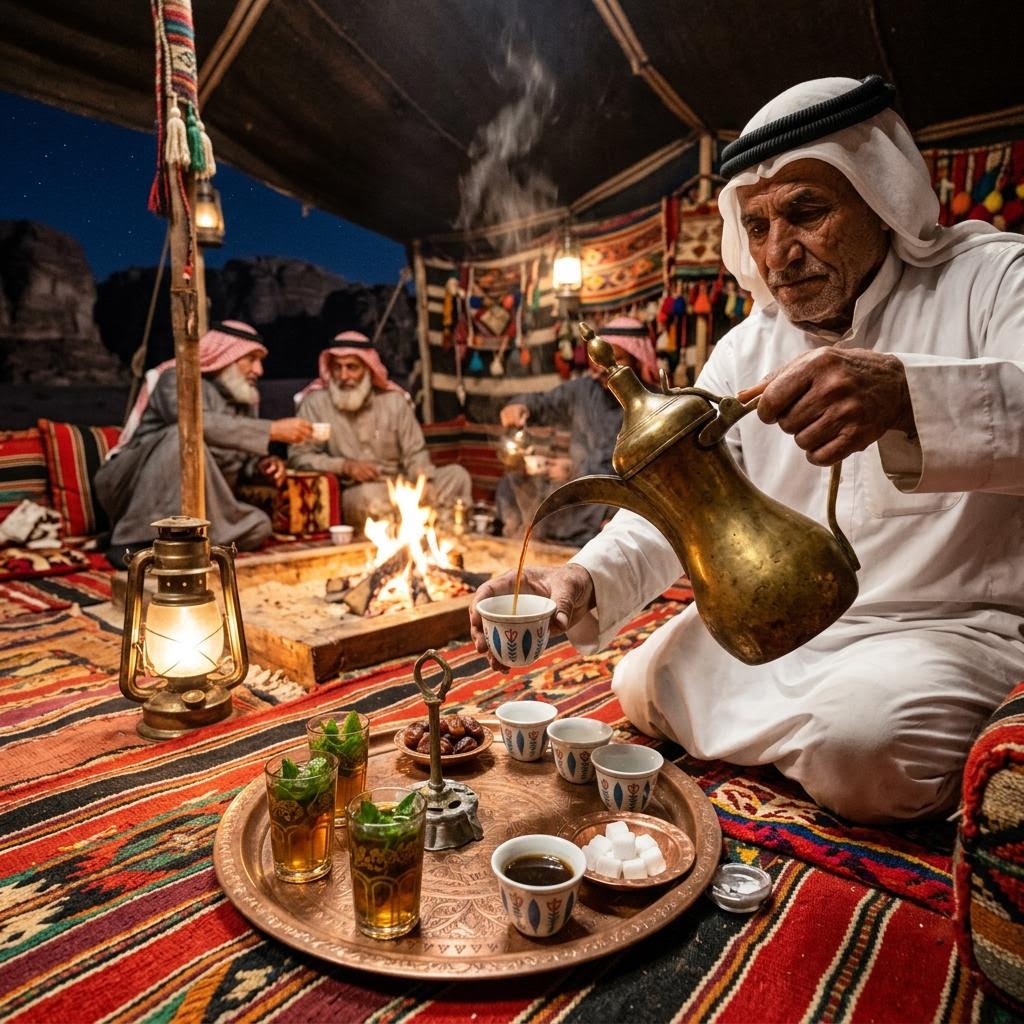
You will be offered a hot drink in Jordan more often than you will be asked your name. Step into a shop, a home, a Bedouin tent or a carpet stall in Petra, and before you have sat down, a small cup or a glass is already on its way. This is not a sales tactic — it is hospitality, and it runs deep.
The tricky part for visitors is not accepting the drink. It is knowing what to do next: how much to drink, how to signal you have had enough, and why a polite "no thank you" sometimes seems to have no effect whatsoever. There are gentle, unwritten rules here, and once you know them you will glide through every social encounter in the country.
So let us talk about the two great Jordanian rituals — the bitter cardamom coffee poured from the dallah, and the sweet tea that appears roughly every twenty minutes — and the small physical gesture that will save you from an accidental fourth cup.
What is Arabic coffee (qahwa) and how is it served?
Arabic coffee, or qahwa sadah, is a pale, lightly roasted coffee heavily flavored with cardamom and served unsweetened in tiny handleless cups poured from a long-spouted brass pot called a dallah. It is bitter, aromatic and served in very small amounts on purpose.
The host holds the dallah in one hand and a stack of the little cups in the other, pouring each one only a third full. This is deliberate — a small pour keeps it hot and signals that there is plenty more coming. You take the cup in your right hand, drink it in a sip or two, and hand it back. The cardamom is the whole personality of the drink; if you were expecting a strong espresso, recalibrate, because this is a different, older thing entirely.
How do I say "enough" without being rude?
To signal you have had enough Arabic coffee, hold the empty cup out and give it a small side-to-side wiggle or tilt as you hand it back. That little shake is the universally understood "no more, thank you" — without it, your host will simply keep refilling.
This is the single most useful piece of etiquette in this article. The default assumption is that you want another pour, so silence and a still cup mean "keep them coming." One gentle wiggle and the host stops, no offense taken, everyone smiles. Learn this before you visit a Bedouin camp, or you will find yourself three cups deep, jittery, and quietly wondering how to escape. We have watched it happen. We have been the person it happened to.
What about the sweet tea everyone keeps offering?
Jordanian tea (shai) is black tea brewed strong and served very sweet in small glasses, usually flavored with fresh mint (na'na) in summer or sage (maramiyeh) the rest of the year. Unlike the ceremonial coffee, tea is the everyday, all-day drink.
Where coffee is a ritual of a few sips, tea is offered constantly and warmly — on arrival, mid-conversation, after a meal, before you leave, and often as a way of asking you to stay a little longer. The mint is bright and cooling; the sage version is earthy and, locals will tell you, good for whatever ails you. The sugar level is not negotiable in most homes, so if you prefer it less sweet, say so kindly at the start rather than after it is poured.
Is it rude to refuse coffee or tea in Jordan?
Refusing outright can feel abrupt, because offering a drink is a gesture of welcome, but declining politely is perfectly acceptable — the trick is to soften it, accept at least the first small cup where you can, and thank the host warmly. Hospitality here is about the offer being made and received graciously.
A flat "no" can land as a rejection of the welcome itself, especially in a home or a Bedouin tent. If you genuinely cannot drink it, a hand on the heart, a warm shukran (thank you), and a gentle explanation goes a long way. On our tours and Culinary Trips (/culinary-experiences) we walk guests through these small courtesies so that coffee in a Bedouin camp or tea in a shop feels like the genuine connection it is meant to be, not a social minefield.
Frequently Asked Questions
What is Arabic coffee in Jordan?
Arabic coffee, called qahwa sadah, is a pale, lightly roasted, unsweetened coffee heavily flavored with cardamom. It is poured from a long-spouted brass pot called a dallah into small handleless cups, each filled only about a third full, and served in small amounts as a gesture of hospitality.
How do you signal you have had enough Arabic coffee?
To indicate you have had enough, hold the empty cup out and give it a small side-to-side wiggle or tilt as you return it to the host. Without this gesture, the host will assume you want more and keep refilling. The wiggle is the polite, widely understood way to stop the pours.
What kind of tea do Jordanians drink?
Jordanians drink strong black tea served very sweet in small glasses, typically flavored with fresh mint in summer and sage the rest of the year. Tea is the everyday, all-day drink, offered on arrival, after meals and throughout conversations as a warm sign of welcome and hospitality.
Is it rude to refuse coffee or tea in Jordan?
Refusing outright can seem abrupt because offering a drink is a gesture of welcome, but a polite, warm decline is acceptable. Accepting at least the first small cup where possible and thanking the host sincerely is the gracious approach, especially in a home or a Bedouin tent.
Is Arabic coffee sweet or bitter?
Traditional Arabic coffee in Jordan, qahwa sadah, is served unsweetened and tastes bitter and aromatic, with a strong cardamom flavor. This is different from the sweet black tea also commonly served. Travelers expecting a sweet or espresso-style coffee should be prepared for a lighter, more fragrant, bitter drink.
Plan this trip with us
Ready to experience Jordan with a local guide?
We plan and run private tours across all of Jordan — one message and your trip is in local hands.
Chat on WhatsApp