Here is the first thing you need to understand about eating in Jordan: you are not in control. You will sit down thinking you will have "a light lunch," and forty minutes later there are fourteen small plates in front of you, a mountain of rice appears, and someone's grandmother is personally offended that your plate has a visible gap in it. Resistance is polite, and completely ignored.
Jordanian food is Levantine at heart — olive oil, lemon, garlic, herbs, grilled meat, and bread used as a utensil, a napkin, and a personality. It borrows from Bedouin, Palestinian, Syrian and Circassian kitchens, and the result is generous to the point of being slightly aggressive about it. We mean that as the highest compliment.
This guide walks through the dishes you should actually seek out, how a Jordanian meal works socially (spoiler: sharing is mandatory and seconds are non-negotiable), and where we point our own guests. Come hungry. Come very hungry.
What is the national dish of Jordan?
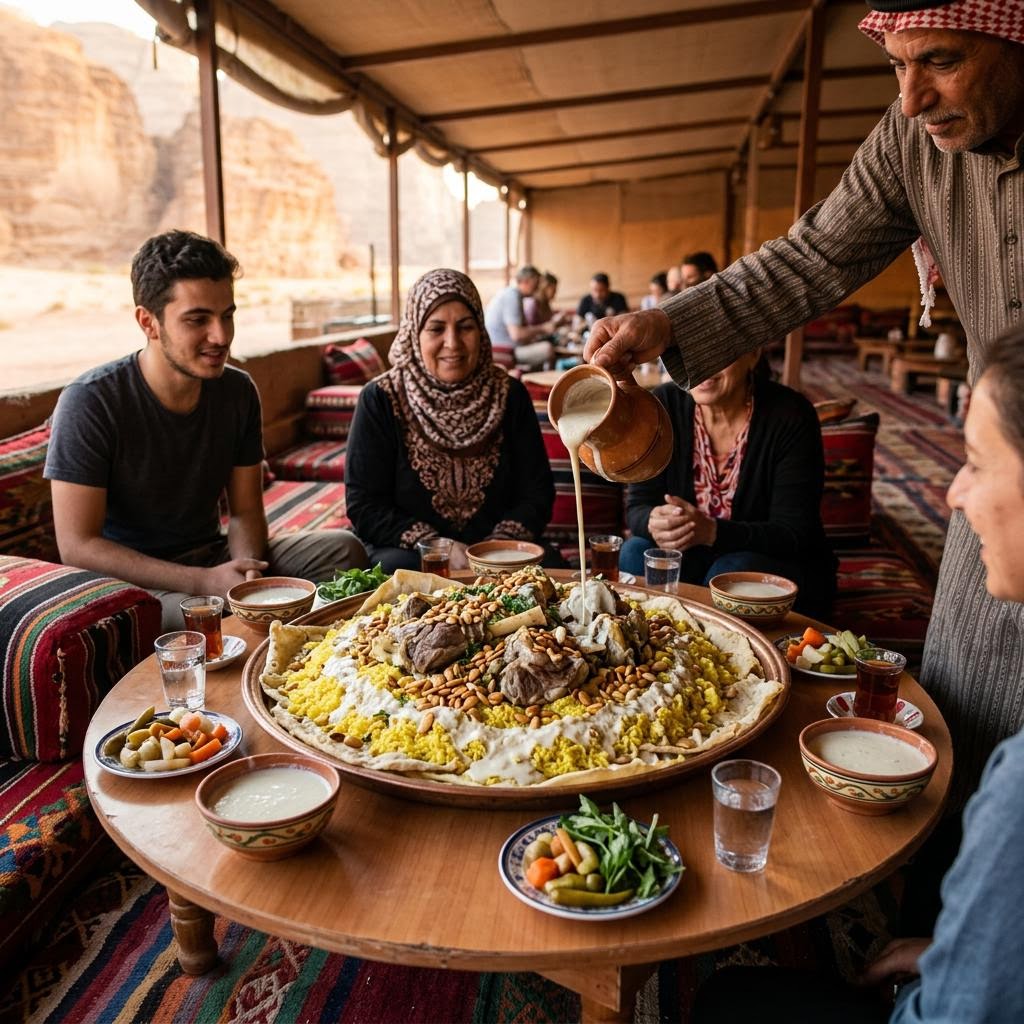
Mansaf — lamb slow-cooked in a tangy sauce of jameed (fermented, dried yogurt) and served over rice, topped with almonds and pine nuts. It is the dish for weddings, funerals, big Fridays and any occasion that matters. The jameed gives it a sharp, savory, almost cheesy depth that surprises first-timers.
Traditionally you eat it standing, gathered around a shared platter, using your right hand to squeeze the rice and meat into a neat ball. Most restaurants will happily give you a fork, and no Jordanian will judge you for using it — but doing it by hand at least once is a rite of passage. Budget 8–15 JOD a head at a good sit-down place.
What is maqluba and why do they flip it?
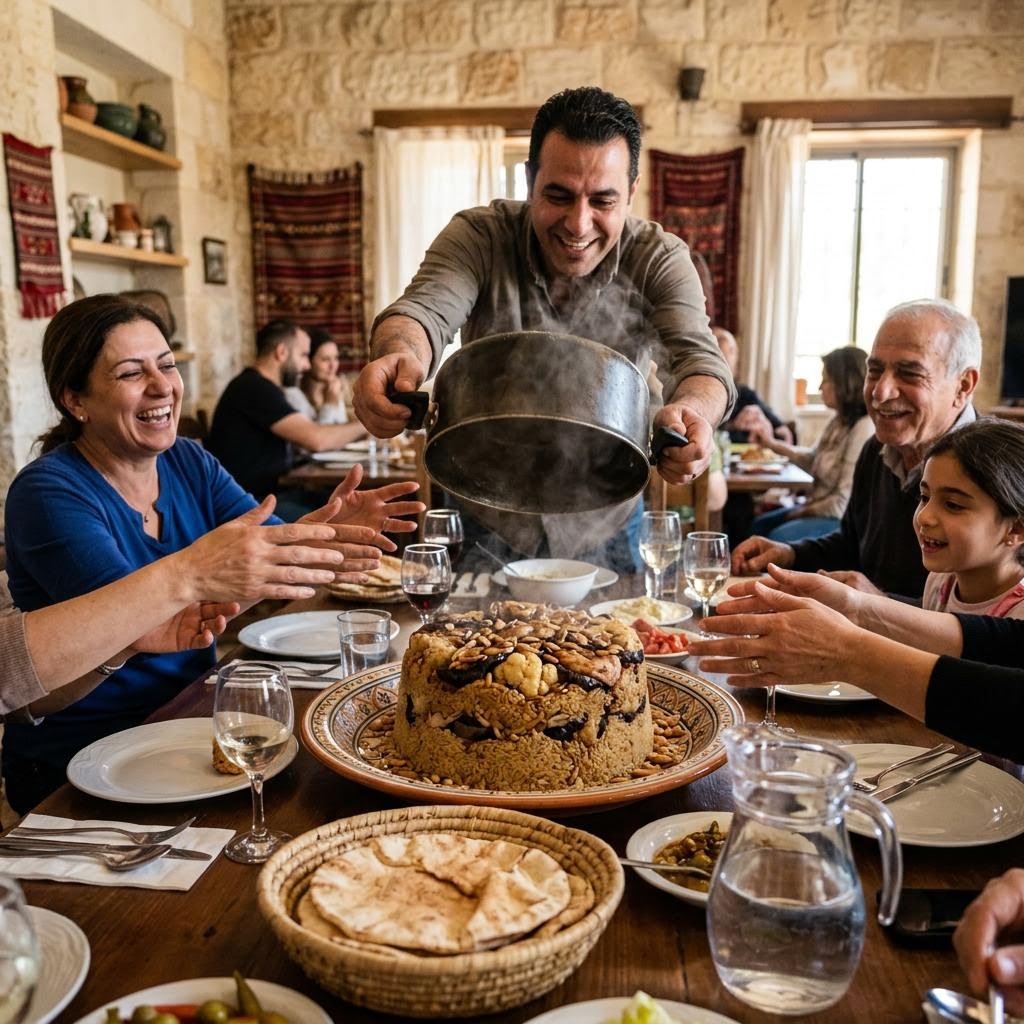
Maqluba means "upside-down," and that is not a metaphor. It is a one-pot dish of rice, fried eggplant, potato, cauliflower and meat cooked in layers, then flipped onto a serving tray so it comes out like a savory sandcastle. The flip is a genuinely tense household moment — one wrong wrist angle and dinner becomes a floor mosaic.
When it works, the tower stands proud and the whole family exhales. It is comfort food, home food, the thing people cook when the cousins visit. You will find it on many restaurant menus, and it is a favourite stop on our Culinary Trips — we will point you to the places that do the flip properly, so you get the drama without the liability.
What is mezze and how does a Jordanian meal work?
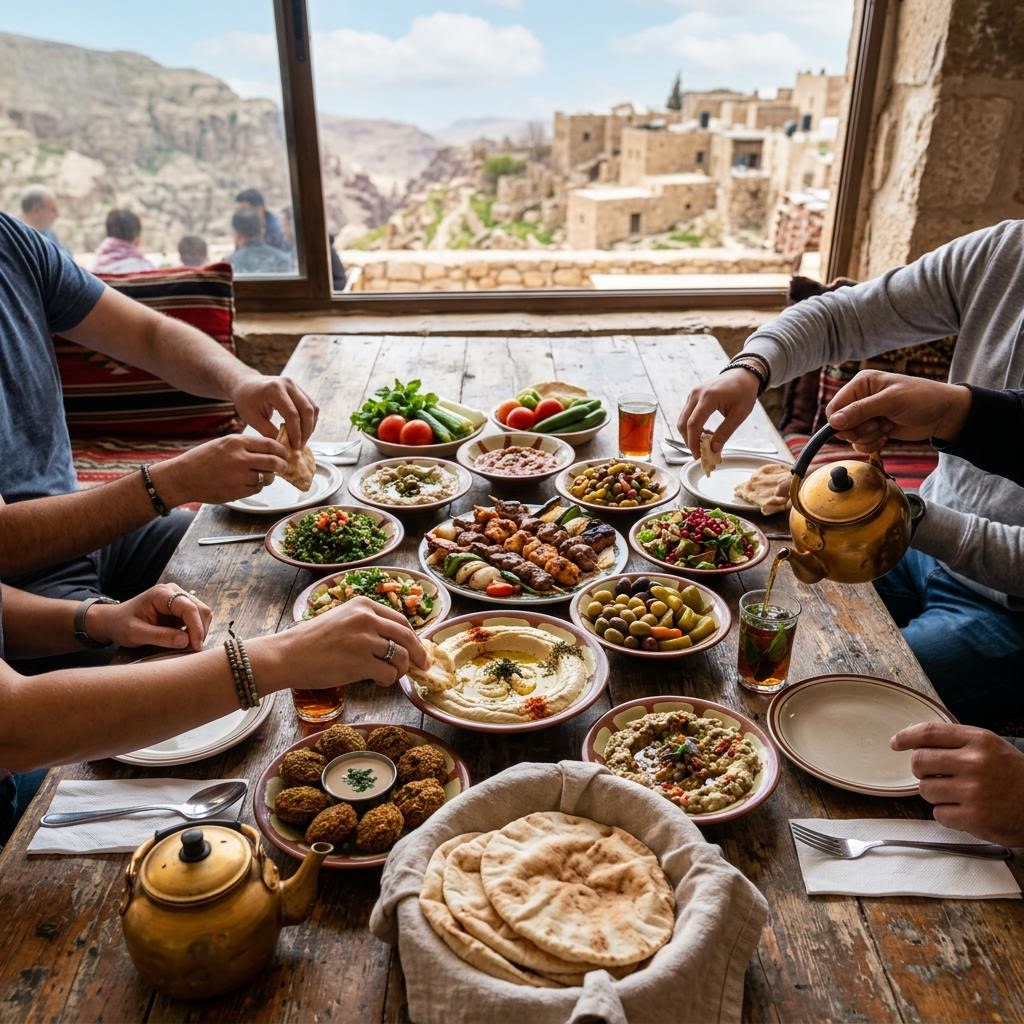
Mezze is the parade of small shared plates that opens almost every proper meal: hummus, moutabal (smoky eggplant), tabbouleh, fattoush, labneh, olives, warm bread, and fried things you did not order but will absolutely eat. Nothing here is "yours" — every dish is communal, and you tear bread and scoop from the middle.
The social rules are simple and non-optional. You share. You take seconds when offered, because refusing reads as "the food is bad." And when your host insists you have more after you are visibly done, that is not a suggestion — it is hospitality, and the correct move is to surrender gracefully. Meals in Jordan are long, loud and food is love expressed in carbohydrate form.
What street food and quick bites should I try?
Falafel and hummus are the national breakfast — crunchy chickpea fritters, silky hummus, fuul (stewed fava beans), pickles and bread, all for 2–4 JOD downtown. Shawarma (spit-roasted chicken or lamb rolled in bread with garlic sauce) is the reliable 1.5–3 JOD dinner that ends every night out.
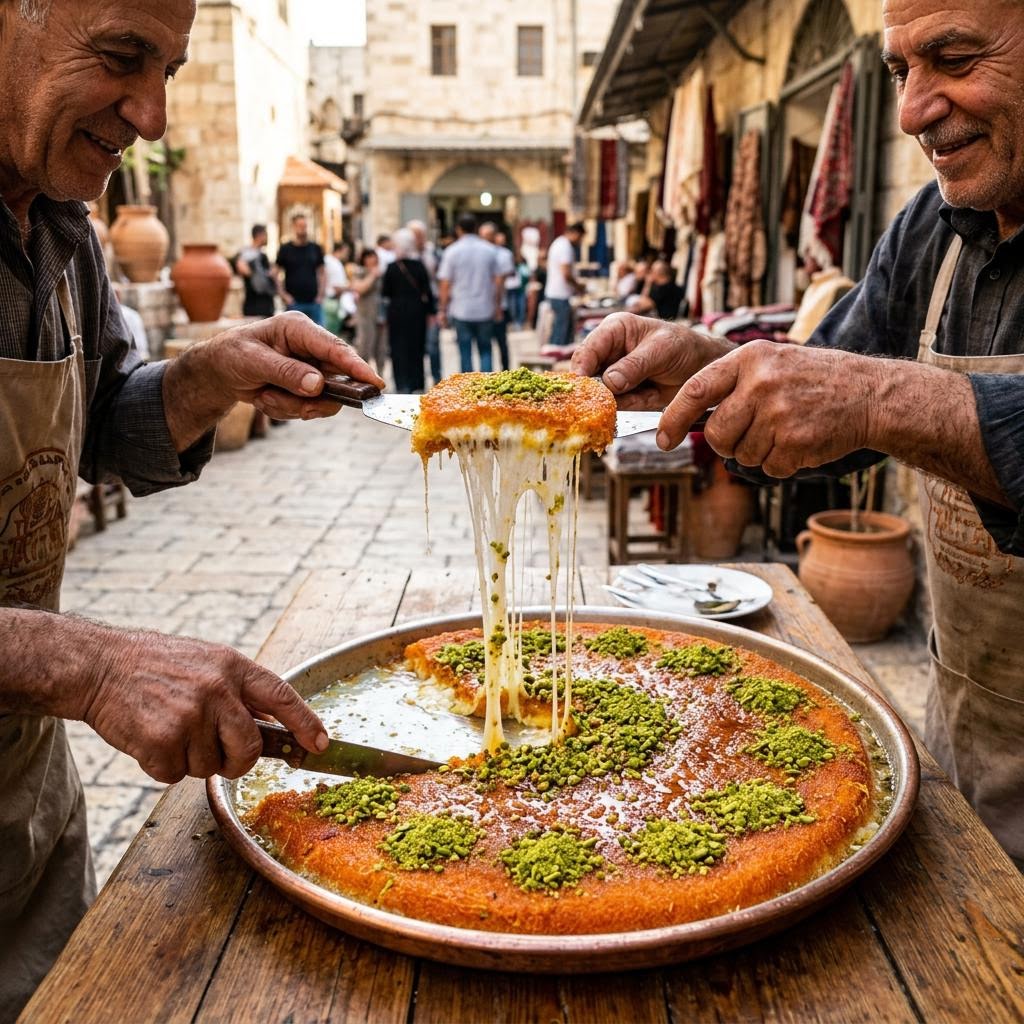
Do not skip zarb, the Bedouin barbecue cooked underground in a sand oven — meat and vegetables buried for hours until they fall apart. You will meet it in Wadi Rum camps. And save room for knafeh, the warm cheese-and-syrup pastry that is less a dessert and more a citywide obsession.
What about coffee and tea?
Arabic coffee (qahwa) is pale, thin, spiced with cardamom and served in tiny cups without handles. The etiquette: the host keeps pouring until you gently shake the empty cup side to side, which means "shukran, I am done." Forget the shake and you will drink coffee until sunset.
Tea (shai) is the everyday ritual — black, generously sweet, often with fresh mint or sage. You will be offered it constantly: arriving somewhere, leaving somewhere, buying a rug, not buying a rug. Accepting is the friendly thing to do, and honestly the mint tea after a long Petra day is medicinal. On our private tours your driver always knows which roadside stop pours the good one.
Frequently Asked Questions
What is the most famous food in Jordan?
Mansaf is Jordan's national dish and the most famous: lamb cooked in a tangy jameed (fermented dried yogurt) sauce, served over rice with almonds and pine nuts. It appears at weddings, holidays and important gatherings, and is traditionally eaten by hand from a large shared platter.
Is Jordanian food spicy?
Jordanian food is generally not chili-hot. It leans on garlic, lemon, olive oil, cumin, cardamom and fresh herbs rather than heat. Chili sauce or pickled peppers are usually served on the side, so you control the spice level. Most dishes are family-friendly and mild by default.
What do Jordanians eat for breakfast?
A classic Jordanian breakfast is hummus, fuul (stewed fava beans), falafel, labneh, olives, fresh vegetables and warm bread, often with sweet tea. A full spread at a downtown Amman spot typically costs 2–4 JOD per person and is filling enough to skip lunch.
Is it rude to refuse food in Jordan?
Refusing food outright can read as impolite because hospitality is central to Jordanian culture. Taking seconds when offered is the friendly move. If you are genuinely full, a warm compliment plus a gentle refusal is understood — hosts rarely take real offense at travelers.
Can vegetarians eat well in Jordan?
Yes. Much of Jordanian mezze is naturally vegetarian: hummus, moutabal, tabbouleh, fattoush, falafel, foul and stuffed vegetables. Meat-based dishes like mansaf are common but easy to skip, and most restaurants can build a satisfying meat-free spread on request.
Plan this trip with us
Ready to experience Jordan with a local guide?
We plan and run private tours across all of Jordan — one message and your trip is in local hands.
Chat on WhatsApp