If you eat one thing in Jordan, make it mansaf. It is our national dish, and calling it just "lamb and rice" is like calling Petra "some old rocks" — technically accurate, spiritually offensive. Mansaf is the food of celebration and mourning, of Fridays and weddings, of "an important guest is coming so cancel your afternoon."
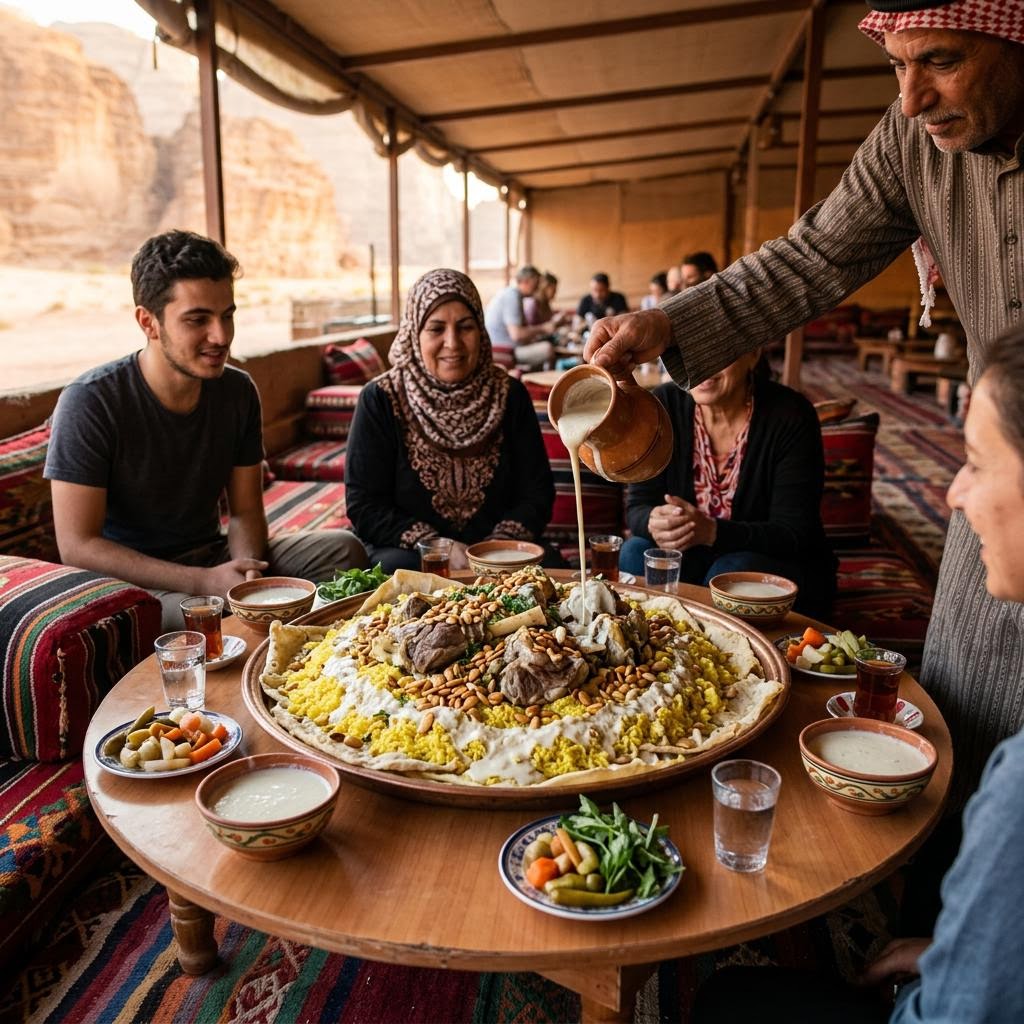
The star is jameed: dried, fermented sheep or goat yogurt, reconstituted into a warm, tangy, savory sauce that smells like a very confident cheese and tastes far better than that sentence suggests. The lamb falls off the bone, the rice drinks up the sauce, and toasted almonds and pine nuts go on top. It is rich, it is a lot, and it is glorious.
It is also a slightly emotional experience. Jordanians have strong feelings about mansaf — how it should taste, who makes it best, and whether your foreign face can be trusted to eat it correctly. Let us prepare you.
What exactly is mansaf made of?
Mansaf is lamb slow-cooked in a sauce of jameed — hard, dried fermented yogurt — served over rice (sometimes with a layer of thin shrak bread underneath) and finished with fried almonds and pine nuts. The jameed is what makes it distinctly Jordanian; without it, you just have lamb and rice, which nobody drives across town for.
The jameed sauce is the whole point: sharp, tangy, deeply savory, poured generously over everything so the rice is soaked, not merely damp. A good mansaf is judged first by its sauce and second by how tender the meat is.
How do you eat mansaf traditionally?
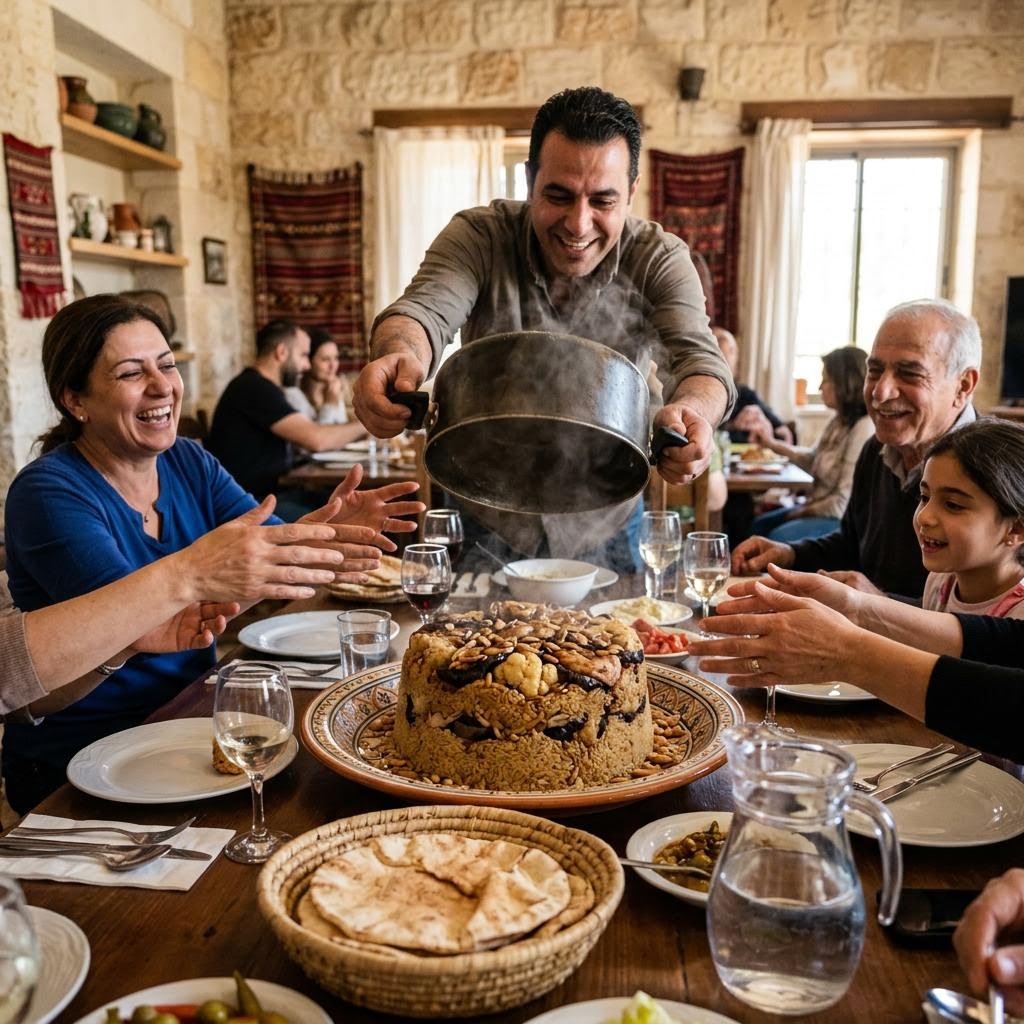
Traditionally, mansaf is eaten standing, gathered around one big communal platter, using only your right hand. You pinch off rice and meat, roll it into a compact ball against the platter with your fingers and thumb, and pop it in — no fork, no plate, no personal space.
It takes practice, and your first few balls will disintegrate embarrassingly. That is fine; everyone finds it funny, including you. In restaurants you will usually get a fork and your own plate, and using them is completely acceptable. But if a Jordanian family invites you and hands you a platter, do it their way — the goodwill you earn is worth the sticky fingers.
What is the deal with the meat and hospitality?
Meat in mansaf is loaded with meaning. A host offering you the best pieces — and especially the head or the choicest cuts — is showing deep respect, and it is polite to accept graciously. Pushing good meat toward your guest is a quiet competition of generosity, and you are expected to lose it and eat.
Do not serve yourself the biggest piece. Do not leave your neighbor's side of the platter empty while yours overflows. And when the host says "kul, kul" (eat, eat) after you have clearly stopped, understand that this will continue for a while. Smile, take one more bite, and let hospitality win.
Where can I try mansaf in Jordan?
In Amman, traditional restaurants around downtown and the older neighborhoods serve excellent mansaf, especially on Fridays when it is the natural big lunch. Expect roughly 8–15 JOD per person at a good sit-down spot. Outside the city, Bedouin-run places and countryside restaurants often make the most authentic versions with proper jameed.
The best mansaf is the kind locals actually eat — and our Culinary Trips steer you to exactly those spots, where the jameed is real and the "eat more" is relentless. Tell us on WhatsApp and your private driver can build a mansaf lunch stop into any day of touring (the meal itself is paid on-site).
Frequently Asked Questions
What does mansaf taste like?
Mansaf tastes rich, tangy and savory. The jameed yogurt sauce is sharp and almost cheesy, balancing the tender, mild lamb and the plain rice. Toasted almonds and pine nuts add crunch. First-timers are usually surprised by how bold the fermented-yogurt flavor is compared to ordinary lamb dishes.
Is mansaf eaten with the hands?
Traditionally yes — mansaf is eaten standing around a shared platter using the right hand, rolling rice and meat into small balls. In restaurants a fork and individual plate are normal and perfectly acceptable, so travelers can choose either way without causing offense.
What is jameed in mansaf?
Jameed is dried, fermented sheep or goat yogurt formed into hard balls, then reconstituted with water into the tangy sauce that defines mansaf. It gives the dish its signature sharp, savory flavor. The town of Karak is especially famous for producing high-quality jameed.
How much does mansaf cost in Jordan?
At a good sit-down restaurant in Jordan, mansaf typically costs around 8–15 JOD per person, depending on the venue and portion. It is usually served in generous amounts, so one order easily satisfies most appetites — and refusing seconds is the real challenge.
Is mansaf only eaten on special occasions?
Mansaf is the go-to dish for weddings, holidays, funerals and important gatherings, but it is also a common Friday family lunch. Restaurants serve it year-round, so travelers do not need a special occasion to try it — any Friday in Amman is a good bet.
Plan this trip with us
Ready to experience Jordan with a local guide?
We plan and run private tours across all of Jordan — one message and your trip is in local hands.
Chat on WhatsApp