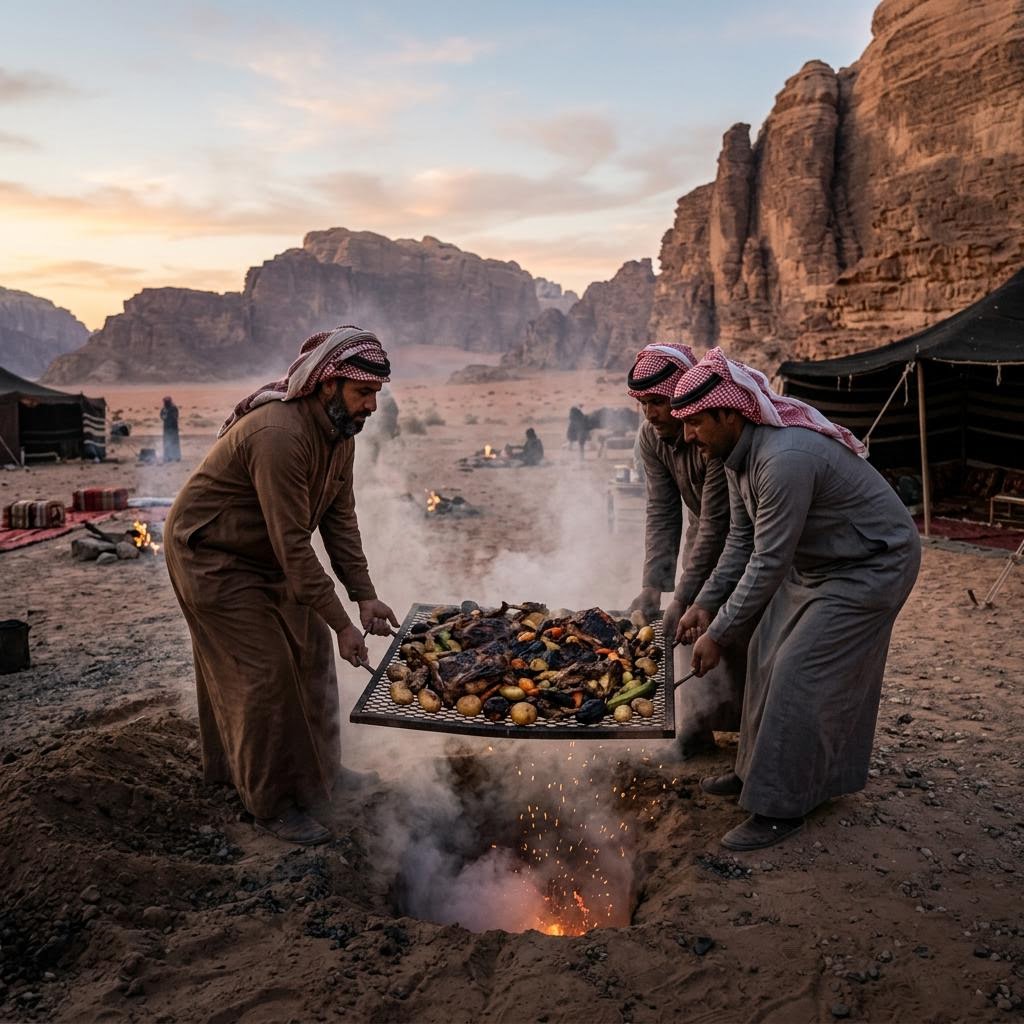
The first time you see zarb come out of the ground, you will not entirely believe it. One minute you are standing on flat orange sand in Wadi Rum, staring at what looks like nothing. The next, a Bedouin cook sweeps away a layer of sand, lifts a metal lid, and a column of fragrant steam rises out of the earth carrying racks of lamb, chicken and vegetables that have been quietly cooking underground for hours.
It is the most theatrical meal in Jordan, and — inconveniently for our dignity as guides who claim to have seen everything — it still gets us every time. Guests who had been half-heartedly filming suddenly stop, because the camera cannot really capture it. You have to smell it.
Zarb is the traditional Bedouin barbecue of the southern desert, and it is one of the best reasons to spend a night at a Wadi Rum camp rather than passing through in an afternoon. Here is what it actually is, and why the desert seems to make it taste better than it has any right to.
What exactly is zarb?
Zarb is meat and vegetables slow-cooked in an underground oven — a pit dug into the desert sand, lined with hot coals, loaded with food on stacked metal trays, then sealed with a lid and buried again to trap the heat. It is essentially a Bedouin pressure cooker made of earth.
The pit is dug in advance and a fire burns down to embers at the bottom. The trays go in — usually lamb or chicken on top, potatoes, carrots, onions and other vegetables below to catch the dripping juices — then everything is covered with a lid and a blanket and reburied in sand. It cooks low and slow for a couple of hours, so the meat comes out falling off the bone and faintly smoky, with none of the char of a grill.
Why does the desert make everything taste better?
Partly it is the cooking method, and partly it is you. The sealed sand pit steams and roasts the meat at once, so it stays absurdly tender while picking up a gentle smokiness, and the vegetables underneath soak up the fat and juices dripping from above.
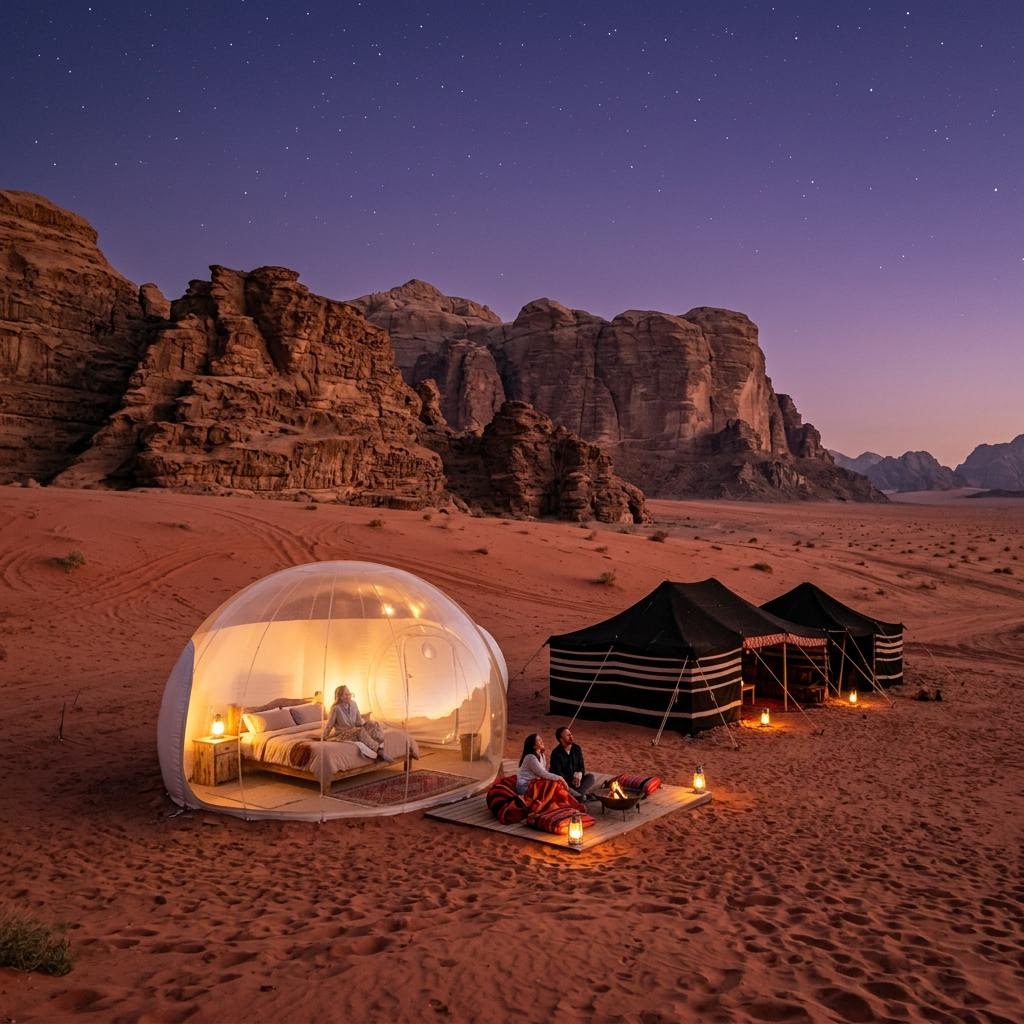
The rest is pure setting. You have spent the day bouncing across dunes and scrambling over sandstone, the temperature has dropped, the sky has gone the color of a bruise and then filled with more stars than you thought existed, and you are hungry in the honest, uncomplicated way that only desert air produces. Food eaten in that state tastes extraordinary. We could serve you the same lamb in an Amman apartment and, we admit it, it would be very good — but it would not be zarb-under-the-stars good.
Where and when do you eat zarb?
You eat zarb at a Bedouin desert camp in Wadi Rum, almost always as the evening meal after a day of exploring, since it needs hours of underground cooking to be ready. It is a communal dinner, served buffet-style once the pit is unearthed.
The Wadi Rum reserve fee is 7 JOD, and most overnight camps include the zarb dinner in the price of a stay along with breakfast. The typical rhythm is a late-afternoon jeep tour, sunset from a dune, then dinner as the cook performs the big reveal. Petra sits about 110 km away, roughly a 90-minute drive, which is why our Petra and Wadi Rum 2-day tour pairs the two so naturally: Petra by day, then a private driver down to the desert for zarb and a night under the stars.
Is zarb suitable for everyone?
Mostly, yes. Zarb is straightforward, unspiced meat and vegetables, so it suits travelers who prefer milder food, and camps will usually offer a chicken option alongside the lamb. Vegetarians are the one group who should give notice in advance.
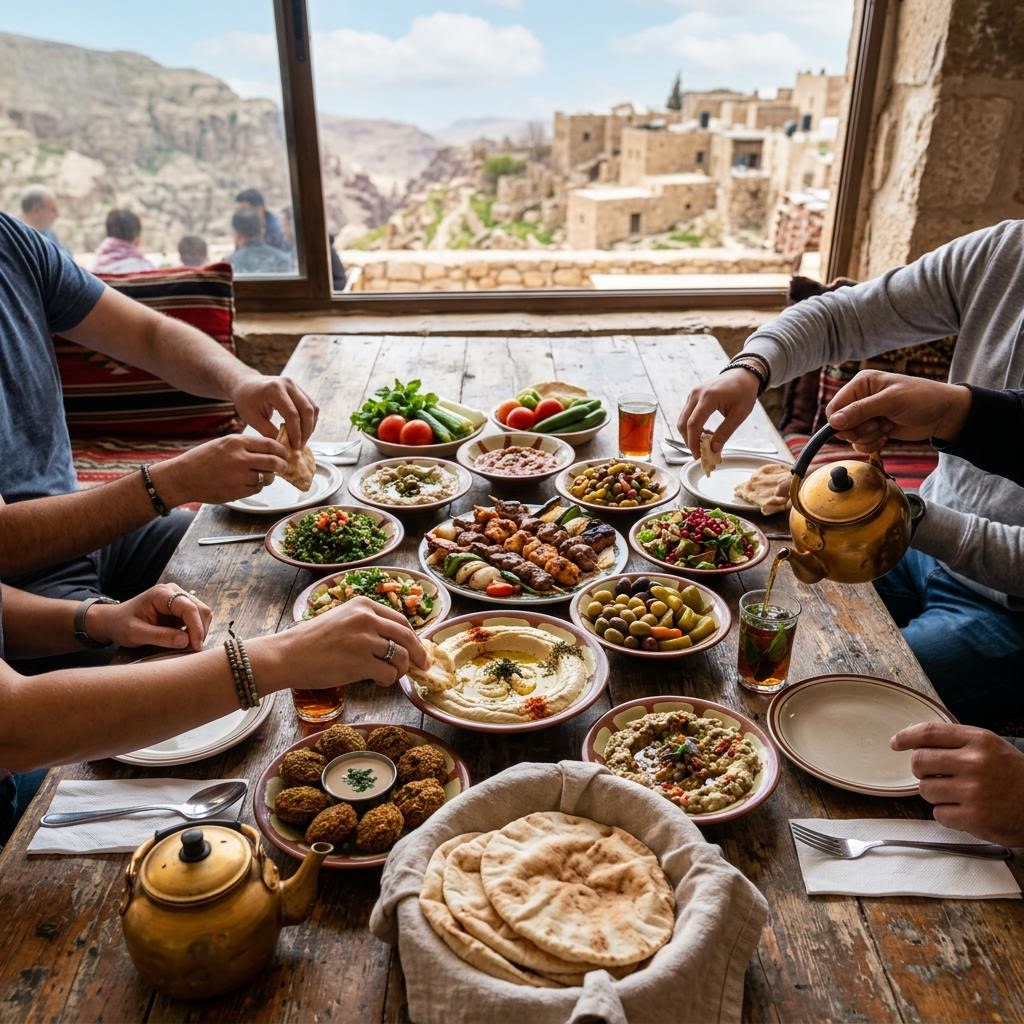
Because the whole point is meat cooked over coals, a purely vegetarian zarb is not really a thing — but most camps will gladly prepare a good spread of the roasted vegetables, rice, bread and mezze so nobody goes hungry, provided they know beforehand. Tell us your group's needs when you book and we will confirm it with the camp, so the reveal is a delight for everyone and a surprise for no one.
Frequently Asked Questions
What is zarb in Jordan?
Zarb is a traditional Bedouin barbecue in which meat and vegetables are slow-cooked in an underground sand pit oven lined with hot coals. The food cooks on stacked trays for a couple of hours, sealed under a lid and buried in sand, producing very tender, gently smoky results.
Where can I try zarb?
Zarb is served at Bedouin desert camps in Wadi Rum, usually as the evening meal after a day of jeep tours and hiking. Most overnight camps include the zarb dinner in the cost of a stay, making an overnight in Wadi Rum the most reliable way to experience it.
How long does zarb take to cook?
Zarb typically cooks for around two hours or more in the buried pit. The coals are prepared in advance, the food is sealed underground, and the long, slow heat is what makes the meat fall off the bone. This is why it is served as an evening meal rather than made to order.
Is there a vegetarian option for zarb?
A fully vegetarian zarb is uncommon because the dish is built around meat cooked over coals. However, most Wadi Rum camps can prepare roasted vegetables, rice, bread and mezze for vegetarians if told in advance, so plant-based travelers can still eat well at a desert dinner.
How much does a Wadi Rum camp with zarb cost?
Costs vary by camp and season, and are separate from the 7 JOD Wadi Rum reserve entrance fee. Many overnight camps include the zarb dinner and breakfast in the price of a stay. It is best to confirm exactly what is included with your camp or operator when booking.
Plan this trip with us
Ready to experience Jordan with a local guide?
We plan and run private tours across all of Jordan — one message and your trip is in local hands.
Chat on WhatsApp