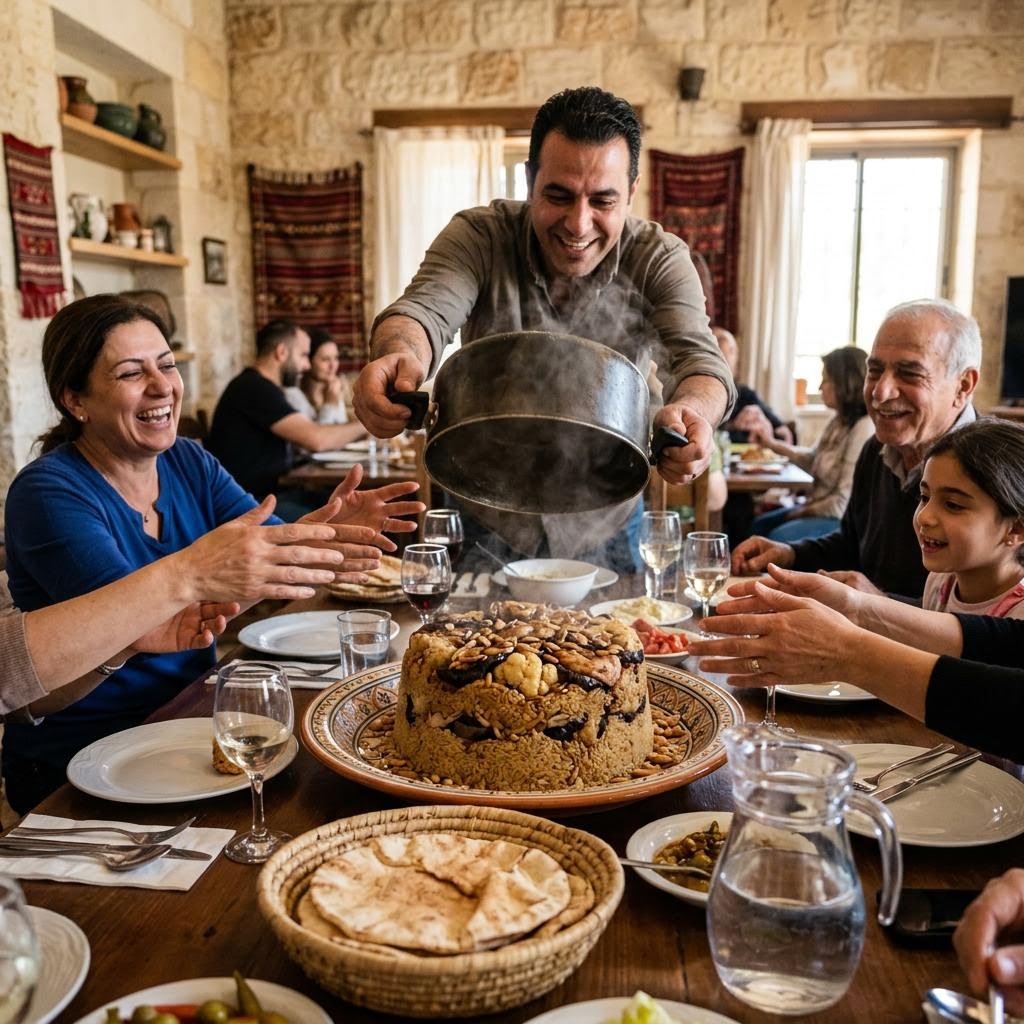
Maqluba is the dish where dinner and a magic trick share a plate. The name means "upside-down," and the whole point of it is the flip: after everything cooks in a single pot, someone inverts the entire thing onto a tray so it comes out as a standing, layered tower. When it works, the room applauds. When it does not, the room pretends it did not happen.
Underneath the theatrics it is deeply comforting food — rice, fried eggplant, potato, sometimes cauliflower, and meat, all cooked together so the flavors bleed into one another. It is home cooking, the kind people make when the extended family descends and one pot has to feed everyone.
It is also, quietly, one of the most fun things to watch being made in Jordan. There is real suspense. There is a designated flipper. There is judgment. We love it.
What is maqluba made of?
Maqluba is a one-pot dish layered with rice, fried eggplant, potato and meat — usually chicken or lamb — often with cauliflower, tomato or carrot depending on the cook. Everything is arranged in the pot in deliberate layers, simmered together, and then flipped so the bottom layer becomes the top of the tower.
The layering is the secret. Whatever goes in first ends up crowning the finished dish, so cooks arrange the prettiest ingredients at the bottom of the pot. The rice absorbs the meat juices and fried-vegetable oil, which is exactly why it tastes like far more than the sum of its parts.
Why is the flip such a big deal?
The flip is a big deal because it is the moment of truth — one confident, committed movement inverts the whole pot onto the tray, and there is no undo button. Hesitate and the tower collapses into a delicious but shameful heap. It is the culinary equivalent of a penalty kick with the family watching.
A clean flip that produces a tall, intact tower is a genuine flex, and cooks who nail it every time have earned quiet legend status in their households. The anxiety is real, the stakes are mostly emotional, and the payoff — a steaming, standing dome of rice and meat — is worth every held breath.
Are there different kinds of maqluba?
Yes — maqluba varies by household and region. Some cooks make it with eggplant, others favor cauliflower; some use chicken, others lamb or beef; some add tomatoes or a hit of warm spices like cinnamon and allspice. The version you meet in one home may look and taste noticeably different from the one next door.
This is normal and non-negotiable: every family believes their maqluba is the correct one, and arguing is pointless. Palestinian and Jordanian kitchens both claim it proudly, and the friendly rivalry only means more delicious variations for you to work through.
Where can travelers try maqluba?
Maqluba appears on many traditional restaurant menus in Amman and across Jordan, so it is not hard to find on a touring day — expect roughly 5–10 JOD per person. It is especially common at lunch and on family-oriented weekends.
For the full experience — the layering, the tension, the flip and the cheer — you want a place that flips the pot at the table. Ask us on WhatsApp and we will point your Culinary Trip to a restaurant that does exactly that, with your private driver working it into the itinerary (meals paid on-site).
Frequently Asked Questions
What does maqluba mean?
Maqluba means "upside-down" in Arabic. The name refers to the way the dish is served: after cooking in a single pot, it is flipped onto a serving tray so the layers invert and it stands as a tower. The flip is central to the dish's identity and appeal.
What ingredients are in maqluba?
Maqluba layers rice, fried eggplant, potato and meat — usually chicken or lamb — often with cauliflower, tomato or carrot. Warm spices such as cinnamon and allspice are common. The exact ingredients vary by household and region, so no two versions are identical.
Is maqluba Jordanian or Palestinian?
Maqluba is beloved in both Jordanian and Palestinian cuisine, and both claim it warmly. It is widely cooked across the Levant. In Jordan it is a common home and restaurant dish, so travelers can easily try an authentic version during a visit.
How much does maqluba cost in Jordan?
At traditional restaurants in Jordan, a plate of maqluba typically costs around 5–10 JOD, depending on the meat used and the venue. Portions are generally hearty. It is most commonly served at lunch and on family-focused weekend meals.
Is maqluba vegetarian-friendly?
Standard maqluba includes meat, but a meat-free version is entirely possible and sometimes made at home, relying on the fried eggplant, potato, cauliflower and spiced rice. Ask in advance, as the vegetarian version is less common on restaurant menus than the meat one.
Plan this trip with us
Ready to experience Jordan with a local guide?
We plan and run private tours across all of Jordan — one message and your trip is in local hands.
Chat on WhatsApp