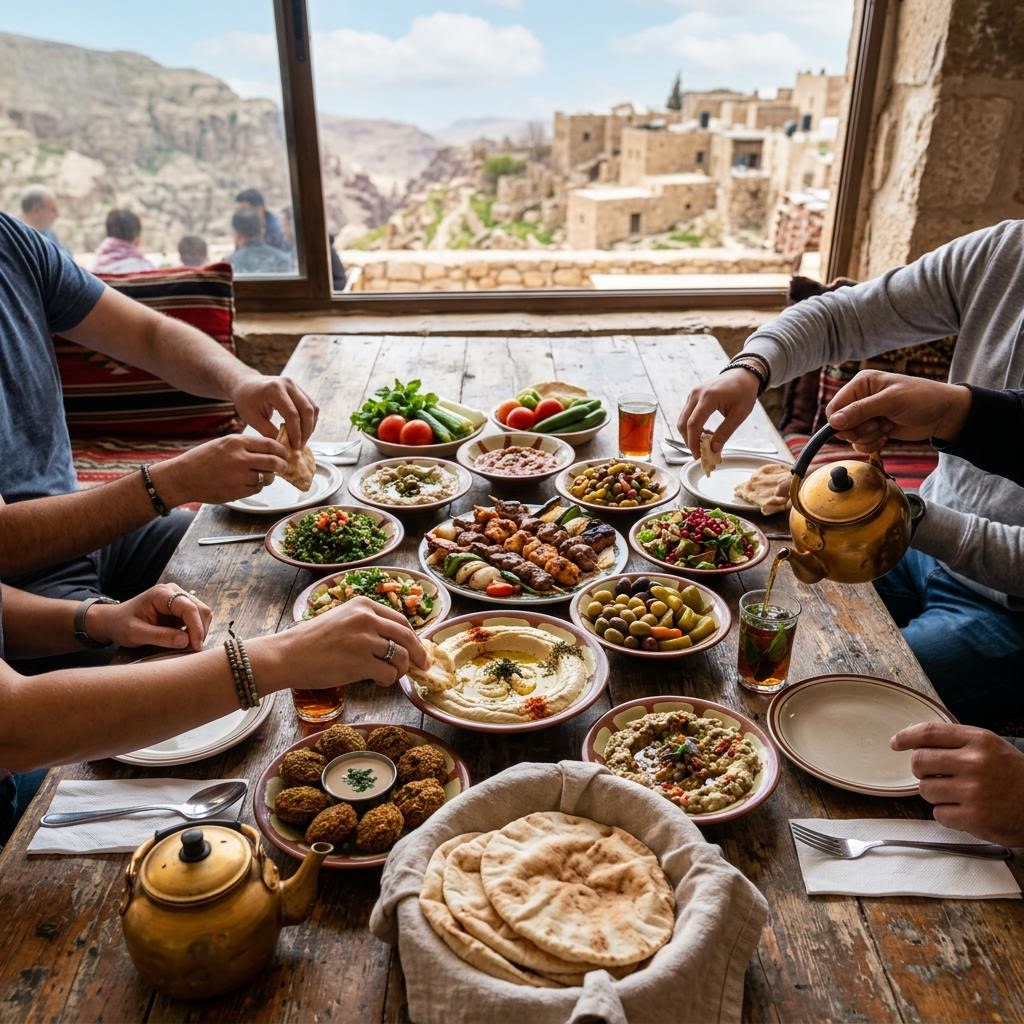
The single most important thing to understand about eating in Jordan is that the meal begins before you have decided what to order. You sit down, you say "we are quite hungry," and within minutes the table has vanished under a dozen small plates you do not remember requesting. This is mezze, and it is a beautiful, dangerous trap.
It is dangerous because every one of those little dishes is delicious, the bread is warm and endless, and it is entirely possible to fill up completely before the main course — the actual reason you came — has even left the kitchen. We have watched countless first-time guests hit this wall with a look of genuine betrayal on their faces.
So consider this both a field guide and a survival manual. Here is what is on the table, how the bread-as-cutlery system works, and how to pace yourself so you make it to the grilled meat still standing.
What are the classic Jordanian mezze dishes?
The core lineup is hummus, mutabbal, foul, yalanji, labneh, tabbouleh and kibbeh — a mix of dips, cold vegetable dishes and a few fried or stuffed items. Learn these seven and you can read almost any mezze table in the country.
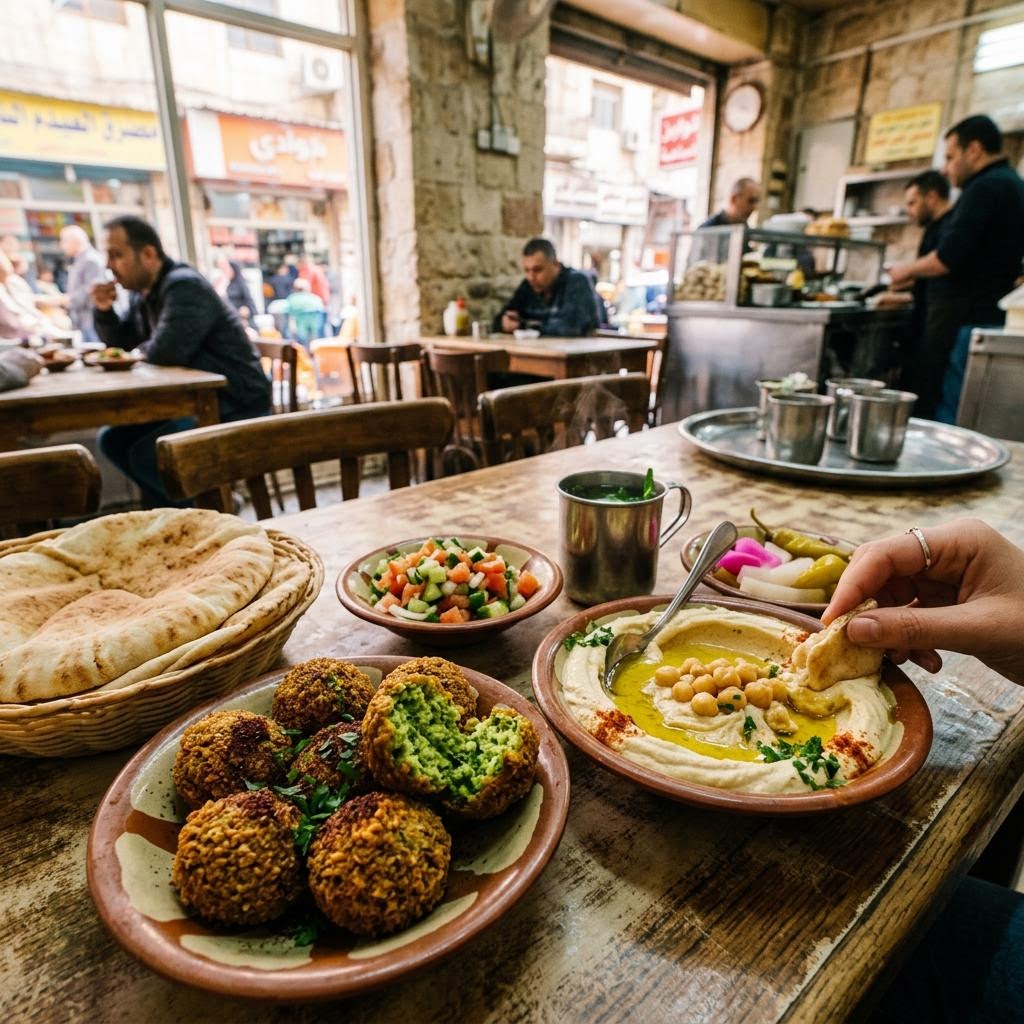
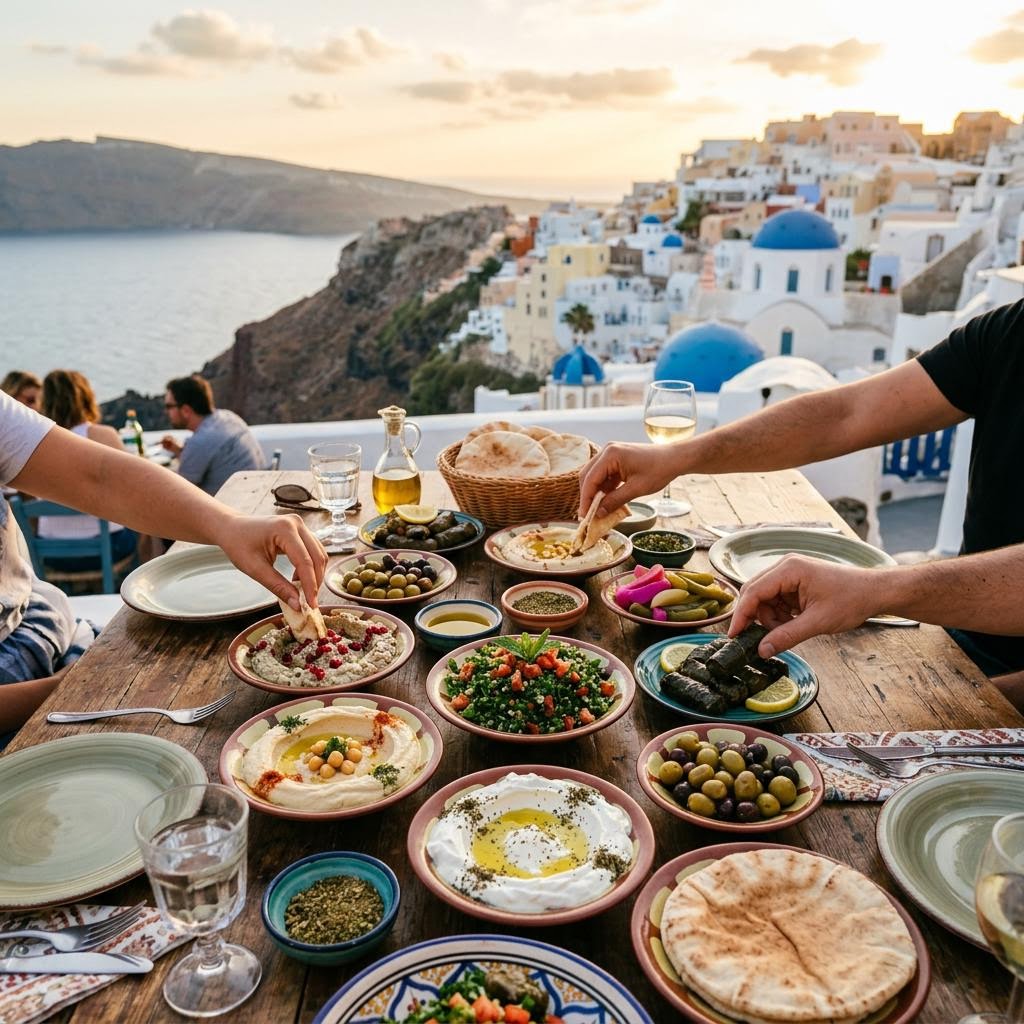
Hummus is the famous chickpea-and-tahini dip; mutabbal (often called baba ghanoush elsewhere) is its smoky roasted-aubergine cousin. Foul is warm, mashed fava beans with olive oil, lemon and cumin — the breakfast of champions. Yalanji are cold vine leaves stuffed with spiced rice, tangy and refreshing. Labneh is thick strained yogurt drizzled with olive oil, and tabbouleh is the sharp, herb-heavy parsley-and-bulgur salad that cleanses everything else.
Then come the show-stoppers: kibbeh, fried torpedoes of bulgur shell filled with spiced minced meat and pine nuts. If someone at the table claims not to be that hungry, watch what happens to the kibbeh. It always disappears first.
How does the bread-as-cutlery system work?
In Jordan, flatbread is the cutlery — you tear off a piece and use it to scoop, pinch or wrap the mezze rather than reaching for a fork. Once you get the technique, dips and stuffed dishes are all fair game.
The move is simple: tear a small piece of the warm khubz, fold it slightly to make a little scoop, and drag it through the hummus or mutabbal, or use it to grab a vine leaf or a piece of kibbeh. Right hand by tradition. The bread basket refills without you asking, which is lovely and, again, a trap — those refills are how the mezze quietly becomes your entire meal. It is genuinely more fun than using a fork, so lean in.
How do I pace myself so I survive to the main course?
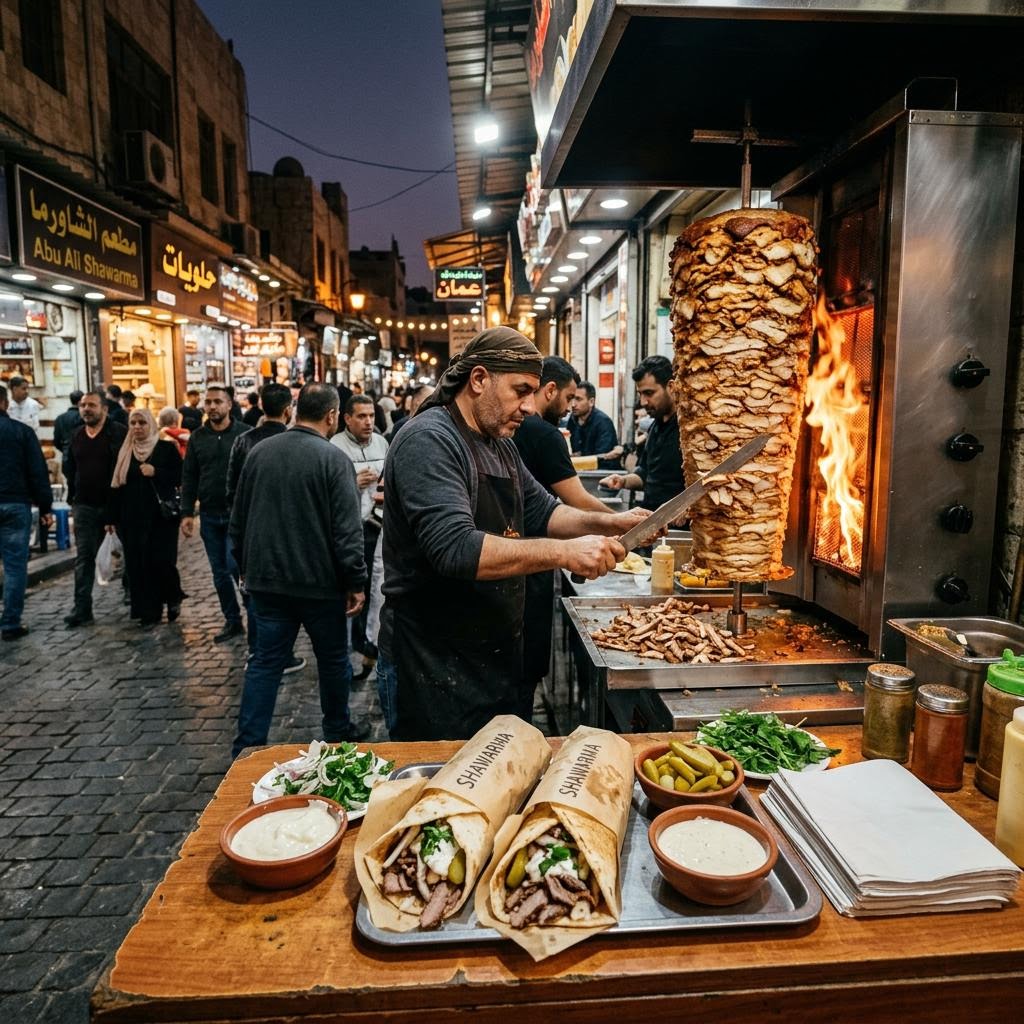
Taste widely but eat lightly — try a scoop of everything, favor the fresh salads over the heavy dips early on, and consciously stop before you feel full, because the grilled meats are still coming and they are the point. Discipline at the mezze stage is the whole game.
Our practical rules, learned the hard way: go easy on the bread first (it is a stealth filler), keep the tabbouleh and yalanji in rotation because their acidity resets your appetite, and remember that mezze is designed to be grazed over an hour, not demolished in ten minutes. If you are dining as a group, agree out loud that the meat is the destination. On our Culinary Trips (/culinary-experiences) we deliberately order the mezze in waves so nobody arrives at the main course already defeated.
Is mezze good for vegetarians?
Yes — mezze is one of the easiest ways for vegetarians to eat wonderfully in Jordan, because the majority of the small plates are plant-based. Hummus, mutabbal, foul, yalanji, tabbouleh, labneh and a range of pickles and salads are all meat-free.
In practice, a vegetarian can build an entirely satisfying meal from mezze alone and skip the grilled-meat main without missing anything. The main items to watch are kibbeh and any meat-stuffed vegetables, which do contain minced lamb or beef. A quick "vegetarian, no meat" at the start of the meal is enough, and most kitchens will happily steer you.
Frequently Asked Questions
What is mezze in Jordan?
Mezze is a spread of small shared plates served at the start of a meal in Jordan, including dips, salads, pickles and stuffed or fried items. Classics include hummus, mutabbal, foul, yalanji, labneh, tabbouleh and kibbeh, usually eaten with flatbread before the grilled main course arrives.
Do you eat mezze with bread or cutlery?
Mezze is traditionally eaten with flatbread rather than cutlery. Diners tear off a piece of warm bread and use it to scoop dips such as hummus and mutabbal or to pick up items like vine leaves and kibbeh. The bread basket is refilled continuously throughout the meal.
What is the difference between hummus and mutabbal?
Hummus is a dip made from blended chickpeas and tahini with lemon and garlic, while mutabbal is made from smoky roasted aubergine blended with tahini. Both are creamy mezze dips eaten with bread, but hummus is chickpea-based and mild, whereas mutabbal has a distinctive smoky, earthy flavor.
Is Jordanian mezze suitable for vegetarians?
Yes, most mezze dishes are vegetarian, including hummus, mutabbal, foul, yalanji, tabbouleh and labneh. Vegetarians can build a full meal from mezze alone. The main exceptions are kibbeh and meat-stuffed vegetables, so mentioning vegetarian preferences at the start of the meal is helpful.
How much mezze should I order per person?
As a rough guide, three to four mezze dishes per two people is plenty when a main course will follow, since portions are generous and bread is unlimited. Ordering too many at once is the most common way travelers fill up before the grilled meats arrive, so pacing is worth the discipline.
Plan this trip with us
Ready to experience Jordan with a local guide?
We plan and run private tours across all of Jordan — one message and your trip is in local hands.
Chat on WhatsApp