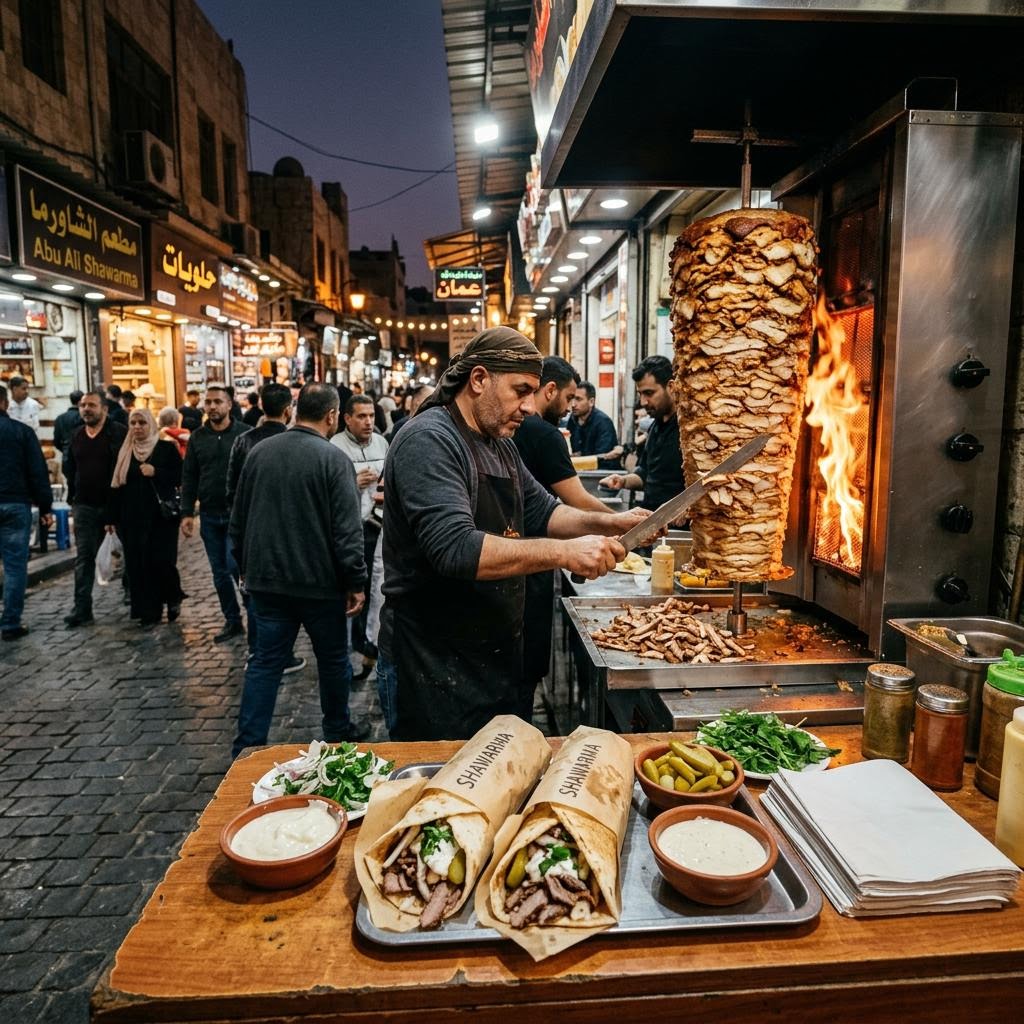
Shawarma is the meal that Jordan eats when it is hungry, in a hurry, slightly drunk on nothing but conversation, or all three at once. It is the great equalizer: taxi drivers, teenagers, doctors and tourists all end up hunched over the same foil-wrapped cylinder, and every single one of them thinks their favorite shop is the best in the country.
It is also, quietly, one of the cheapest good meals you will eat here — usually 1.5 to 3 JOD for a wrap that leaves you comfortably too full. After enough years of ferrying guests around Amman, we have watched the same scene play out a hundred times: someone says "I am not really hungry," we stop for shawarma anyway, and forty seconds later they are asking where to get a second.
So here is the honest field manual — what to order, what it costs, and how to spot a cone worth stopping for. This is not high cuisine. It is better than that; it is reliable.
Chicken or beef shawarma — which should I order?
Order chicken (shawarma dajaj) if you want the classic, milder, garlic-heavy wrap most people picture; order beef or mixed lamb (shawarma lahmeh) if you want something richer and more savory. Both are excellent, and locals are genuinely split, so do not overthink it.
Chicken is the crowd favorite and the safer first bet — juicy, mild, and built around that pale, potent garlic sauce called toum. Beef and lamb are spiced more assertively and often come with a tangy tahini or a pickle-forward dressing instead. If you cannot decide, most shops are happy to do a mixed order, and on a group tour we usually just buy a stack of both and let everyone fight it out on the drive.
What is the garlic sauce (toum) and how much is too much?
Toum is a whipped emulsion of garlic, oil, lemon and salt — pale, fluffy, and roughly as subtle as a car alarm. It is the soul of chicken shawarma, and Jordan takes it seriously.
A good shop uses enough toum that you can smell it before you unwrap the foil. This is a feature. The catch is commitment: toum does not leave quietly, and neither does its aftermath. If you have a meeting, a first date, or a long shared taxi afterward, plan accordingly — everyone in Amman has, at some point, made a garlic decision they had to live with for the rest of the day. We say order it anyway. Regret is temporary; a dry shawarma is forever.
Do they really put fries inside the wrap?
Yes — in Jordan, fries inside the wrap is standard, not a novelty, and skipping them is the unusual choice. The potatoes go in with the meat, sauce and pickles, get rolled up and often toasted on a press until the outside crisps.
This causes genuine confusion for first-timers who expect fries as a side. Here they are structural. The starch soaks up the garlic and juices so nothing leaks, and the toasted wrap holds together in one hand — which matters when your other hand is holding a phone map and you are lost near the Citadel. If you truly do not want them, say "bidoon batata" (without potato), but we would gently suggest you are missing the point.
Why is late-night shawarma such a thing here?
Because shawarma shops stay open when almost nothing else does, and a 1 am wrap is one of the small, dependable pleasures of an Amman night. Late-night shawarma is less a meal than a social ritual.
After a long evening out — a rooftop on Rainbow Street, a wedding, a football match on a cafe TV — the natural last stop is a brightly lit shawarma window with a queue of people who all clearly had the same idea. The cone is at its most flavorful late, having caramelized all evening, and the mood is unbeatable. Our late-finishing airport transfers have quietly become shawarma-stop transfers more times than we can count, and nobody has ever complained.
How do I spot a good shawarma shop?
Look for a busy shop with a well-shaped, evenly cooked cone and a fast local queue — turnover is everything, because it means the meat is fresh and the outer layer is always freshly crisped. A neglected, patchy cone that has clearly been spinning alone is a warning sign.
The physics are simple: the vertical spit cooks from the outside in, and the server shaves off the browned outer edge to order. High turnover keeps that edge crisp and the inside from drying out. So trust the crowd over the sign. A queue of taxi drivers and construction workers on their lunch break is the single most reliable review in Jordan. If you would rather skip the guesswork entirely, our private-driver day trips and Culinary Trips (see /culinary-experiences) can build a shawarma stop into the route at the shops we actually eat at ourselves.
Frequently Asked Questions
How much does shawarma cost in Jordan?
A standard shawarma wrap in Jordan usually costs between 1.5 and 3 JOD, depending on the size, the meat and the neighborhood. Larger or specialty wraps and combo meals with a drink and extra fries can run a little higher, but shawarma remains one of the cheapest satisfying meals in the country.
Is shawarma in Jordan chicken or beef?
Both are common. Chicken shawarma (dajaj) is the milder, garlic-forward favorite, while beef or lamb (lahmeh) is richer and more heavily spiced. Most shops offer both, and many will happily make a mixed wrap, so travelers do not have to commit to just one.
What is toum in a shawarma?
Toum is a whipped garlic sauce made from garlic, oil, lemon and salt. It is pale, fluffy and very potent, and it is the classic sauce for chicken shawarma in Jordan. The flavor is strong and lingers, so travelers with meetings or shared transport afterward should order it knowingly.
Why do they put fries inside shawarma in Jordan?
In Jordan, fries are a standard filling inside the wrap rather than a side dish. The potatoes absorb the garlic sauce and meat juices, help the wrap hold together in one hand, and are considered part of the classic recipe rather than an optional extra.
Is shawarma safe to eat in Jordan?
Yes, shawarma is generally safe when bought from a busy shop with high turnover, since fresh meat and a constantly cooked cone reduce risk. Choosing places with a steady local queue is the simplest way to eat well, as popular shops rarely leave meat sitting on the spit for long.
Plan this trip with us
Ready to experience Jordan with a local guide?
We plan and run private tours across all of Jordan — one message and your trip is in local hands.
Chat on WhatsApp