Amman does not have one center — it has a dozen, each stacked on its own hill and each with its own personality. Choosing where to stay or spend your time is really a question of what kind of traveler you are: history hunter, café loiterer, art person, or "I want a nice dinner and a mall, thank you very much."
Here is how a local carves up the city, hill by hill, so you can point your hotel booking and your evenings in the right direction. The good news is that most of these neighborhoods are 10–20 minutes apart by car, so you are never really committing to just one.
Where should first-time visitors stay in Amman?
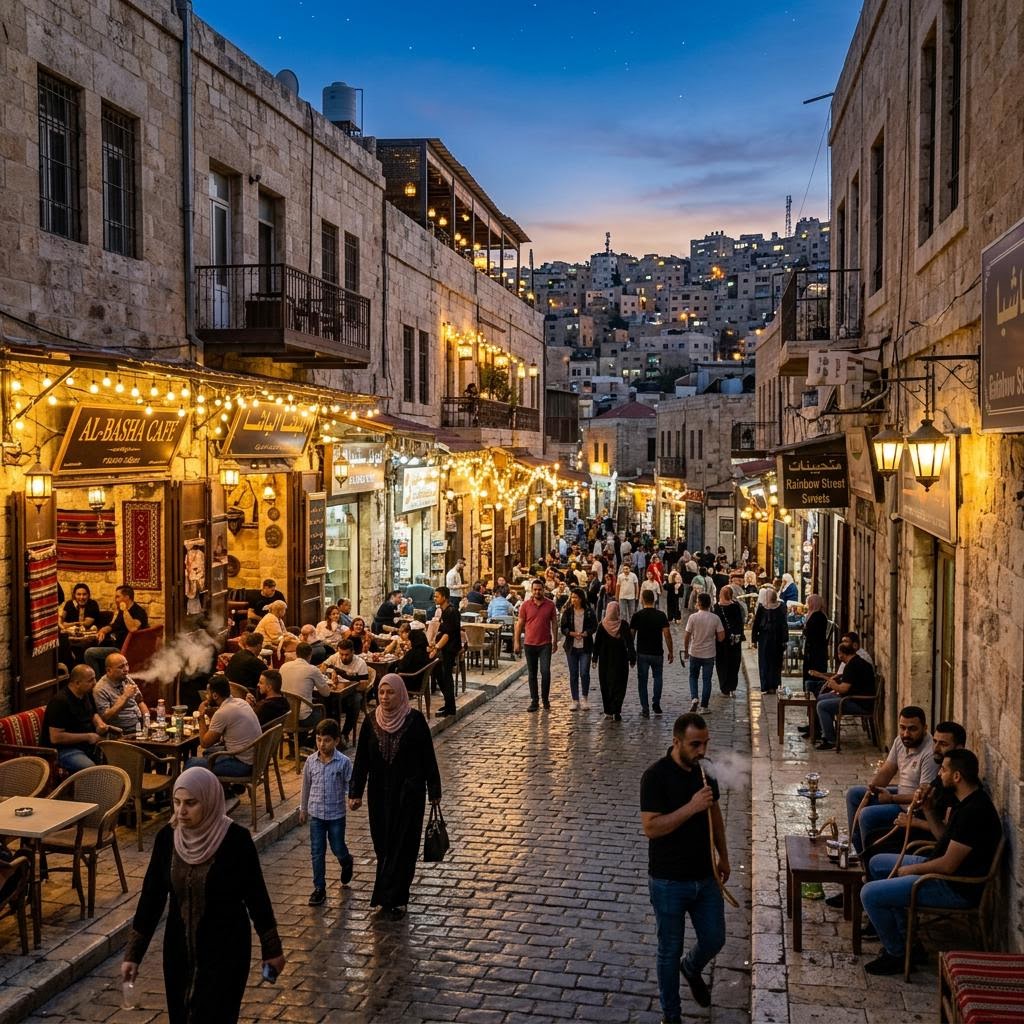
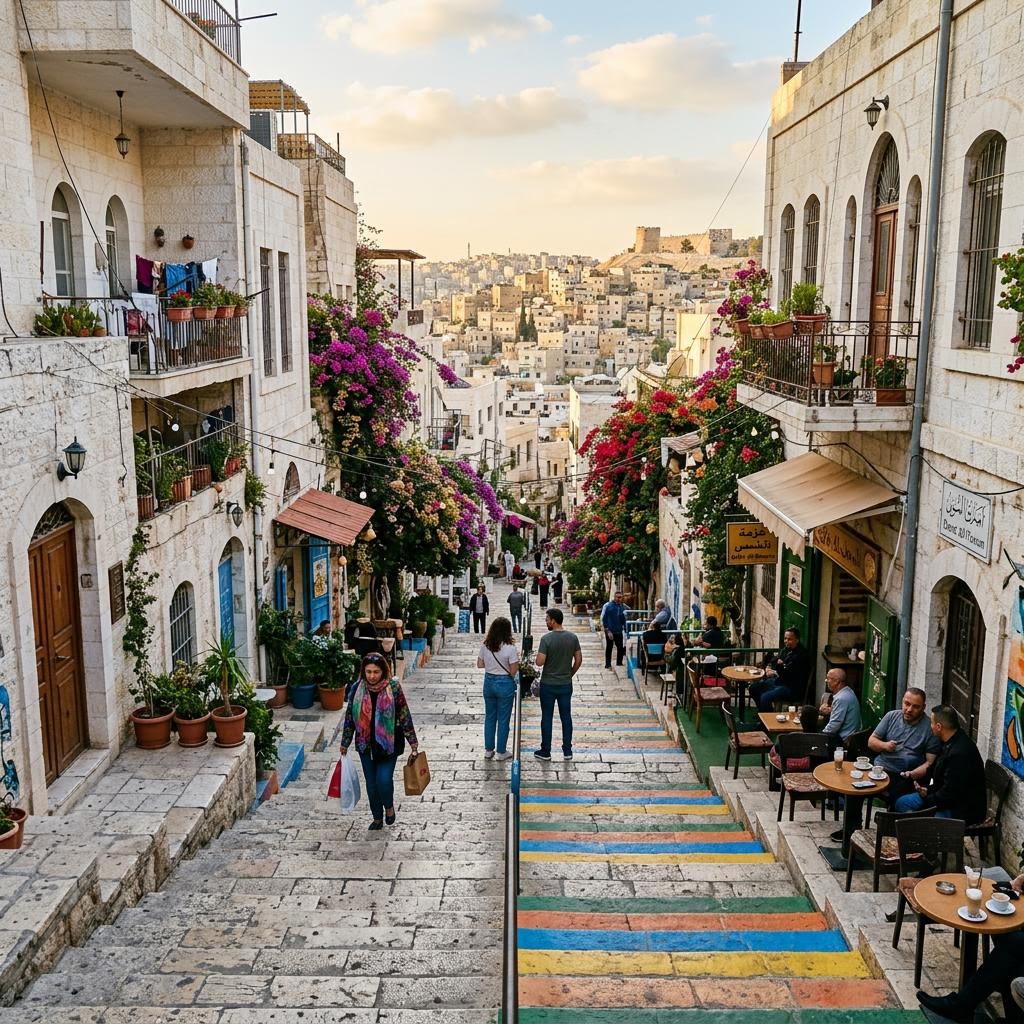
For a first visit, Jabal Amman or Jabal Al-Weibdeh are the sweet spot — central, characterful, walkable-ish, and close to Rainbow Street and downtown. You get cafés, small hotels and easy access to the sights without the sterile feel of the newer districts.
Weibdeh in particular has become the city's creative heart: independent galleries, bookshops, artsy cafés and a slower, more residential pace. Jabal Amman brings the café buzz of Rainbow Street. Between them, you have the most enjoyable base in the city for anyone who likes to wander on foot.
What is downtown Al Balad like?
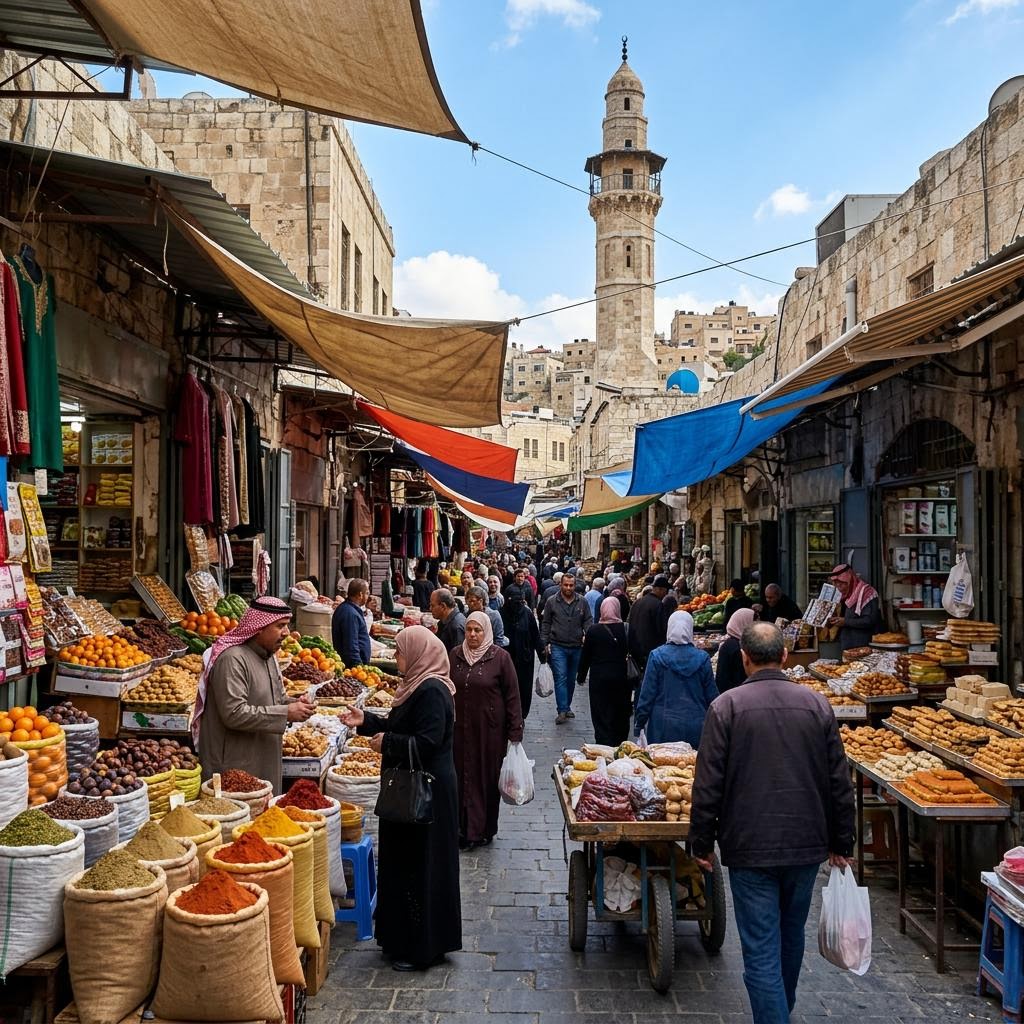
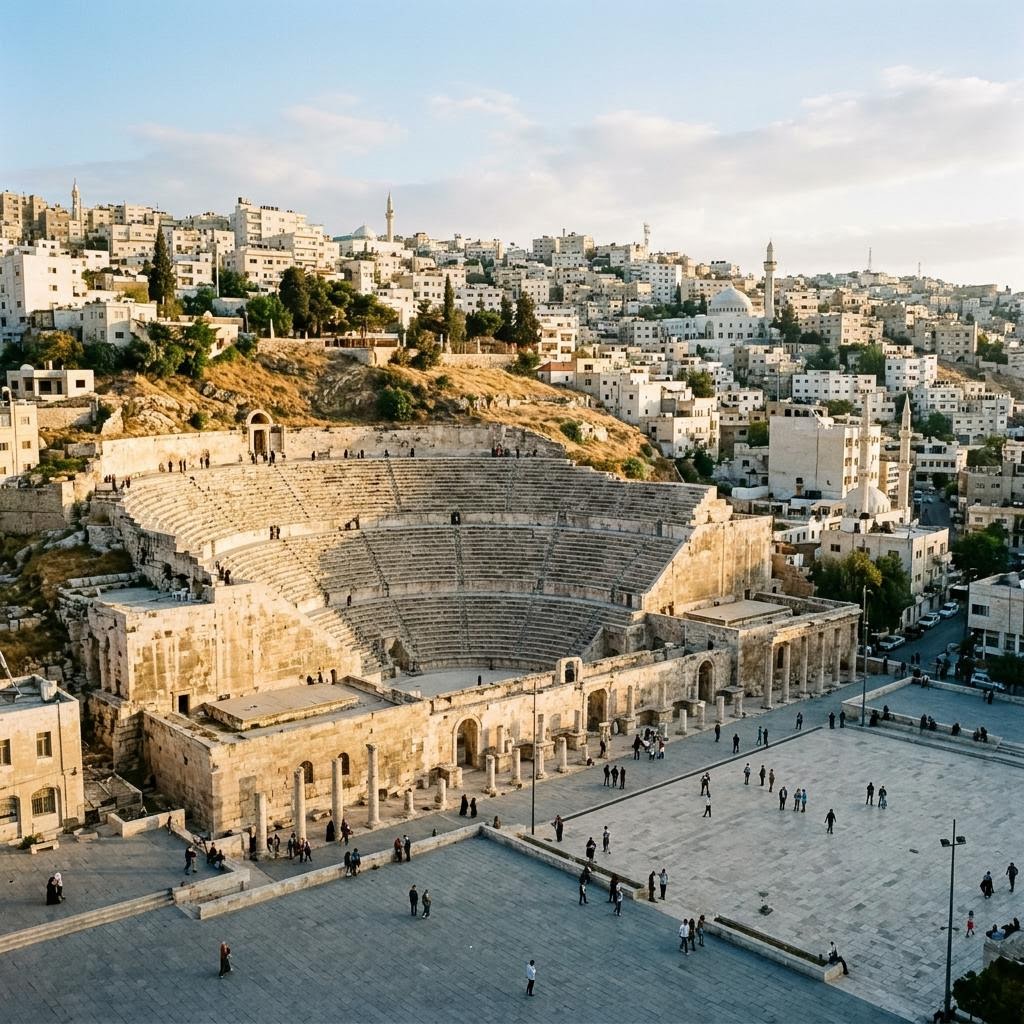
Al Balad is the old downtown, the historic bowl at the bottom of the hills, and it is the most atmospheric part of Amman. This is where you find the Roman Theater, the busy souks, the gold market, the spice stalls and the best street food in the city, from falafel to knafeh.
It is loud, crowded, and gloriously chaotic in the best way. It is also where you go for that giant marble hand up at the nearby Citadel. A few boutique hotels have opened down here, but most people prefer to stay up the hill and come down to explore — the climb back up afterward is no joke.
What are Abdoun and Sweifieh good for?
Abdoun and Sweifieh are the upscale, modern side of Amman — think polished restaurants, international brands, cafés with valet parking, and Sweifieh's malls and shopping streets. Abdoun is leafy and residential, home to embassies and some of the city's smartest dining; Sweifieh is the retail-and-restaurants hub.
These districts suit travelers who want comfort, familiar chains, air-conditioned malls and reliable fine dining over old-city atmosphere. They are a bit removed from the historic sights — usually 15–20 minutes by car to downtown — so factor that into your plans.
How do you get between Amman's neighborhoods?
Taxis and ride apps are cheap and everywhere, and short hops across the city typically run just a few JOD. Because Amman is so hilly, walking between neighborhoods is more of a workout than a shortcut — the map distance lies to you constantly.
If you want to cover several neighborhoods in a day — say, the Citadel and Al Balad in the morning, Weibdeh cafés at lunch, Rainbow Street in the evening — a private driver with pickup makes it painless. Our Amman city tours are built around exactly this kind of hill-hopping so you spend the day exploring rather than negotiating fares.
Frequently Asked Questions
What is the best neighborhood to stay in Amman?
For most first-time visitors, Jabal Amman or Jabal Al-Weibdeh are the best areas to stay. Both are central and full of character, with cafés, small hotels and easy access to Rainbow Street and downtown. Weibdeh leans artsy and residential, while Jabal Amman offers more of the lively café and restaurant scene.
What is Jabal Al-Weibdeh known for?
Jabal Al-Weibdeh is Amman's creative and artistic district, known for independent art galleries, bookshops, cozy cafés and a quieter, more residential feel than the busier parts of the city. It has become popular with artists, students and travelers who want atmosphere and walkable streets away from the tourist crowds.
What is downtown Al Balad best for?
Downtown Al Balad is best for history, street food and shopping in the souks. It sits in the old heart of Amman and holds the Roman Theater, gold and spice markets, and famous cheap eats from falafel to knafeh. It is the most atmospheric and lively area, though also the most crowded.
Are Abdoun and Sweifieh good for tourists?
Abdoun and Sweifieh suit travelers who prioritize modern comfort, upscale restaurants, international brands and malls over old-city atmosphere. Abdoun is leafy and upmarket with embassies and fine dining, while Sweifieh is a shopping and restaurant hub. Both are about 15–20 minutes by car from the historic downtown sights.
Is it easy to get around Amman's neighborhoods?
Yes. Taxis and ride-hailing apps are inexpensive and widely available, with short trips across the city usually costing only a few JOD. Walking between neighborhoods is possible but tiring because Amman is built on steep hills, so many visitors rely on taxis or a private driver to hop between areas.
Plan this trip with us
Ready to experience Jordan with a local guide?
We plan and run private tours across all of Jordan — one message and your trip is in local hands.
Chat on WhatsApp