Karak Castle is best understood as a layered fortress, not a single Crusader monument. Set above the town on the King’s Highway, it combines Crusader, Ayyubid, Mamluk and later remains, with vaulted passages and high views that make the military logic immediately clear. Give the castle at least a couple of hours, wear shoes for uneven stone and use a licensed guide if you want the Battle of Kerak explained in context.
The fortress is often associated with Reynald of Châtillon, Saladin and the 1183 Battle of Kerak, but the site’s story is broader than one confrontation. Access, museum arrangements and local services can change, so confirm the current details before travel. A private driver can connect Karak to Madaba, the Dead Sea or Petra, while a guide and driver remain distinct roles.
Why is Karak Castle important?
Karak occupied a strategic ridge controlling routes between the Levant and the south. Its walls, towers and deep interior spaces show how a fortress could command movement while providing protected storage and accommodation. Standing on the ramparts, you can read the surrounding valleys as part of the castle’s defense: visibility was not decorative; it was information.
The castle also demonstrates how political power changed hands. Crusader construction was expanded or adapted by Muslim rulers, and later communities reused parts of the complex. A licensed guide can separate surviving evidence from popular legend and explain why historians sometimes describe the same event through different sources. Look for reused blocks, changes in masonry and the way corridors manage light.
What was the Battle of Kerak?
The Battle of Kerak in 1183 was part of the wider struggle between the Crusader states and Saladin’s forces. Saladin’s army approached while a wedding was taking place in the castle, traditionally identified with the marriage of Humphrey IV of Toron and Isabella of Jerusalem. Accounts emphasize the tension between a major military threat and the ceremonies within the fortress, but the details should be treated through historical context rather than a simplified dramatic script.
The siege did not end with the castle’s immediate fall. Karak remained a strategic Crusader stronghold for a time before changing control later in the 12th century. When visiting, ask how the terrain, supply routes and political alliances shaped events. The castle’s significance is not only the battle name: it is the long contest over a route and a frontier.
What should you see inside Karak Castle?
Start with the approach and outer defenses, then explore the courtyards, vaulted halls, stairs and underground passages that remain accessible. The darker rooms show how the fortress functioned away from the exposed walls. From higher points, look toward the valleys and town to understand the commanding position. Do not rush through the tunnels; uneven floors and low ceilings make a careful pace essential.
The museum or interpretive spaces can add useful context when open, but do not assume a specific display or current facility. Carry a phone light as a backup without shining it at other visitors, and follow barriers around unstable areas. Karak is a working heritage site with conservation limits, not an adventure playground. Respect closures even when a passage looks tempting.
When should you visit Karak Castle?
Morning or late afternoon usually offers kinder light and less heat than the middle of a summer day. Winter can be cold and windy on exposed walls, while rain makes stone steps slippery. Spring and autumn are often comfortable for walking, but the forecast and actual access decision matter more than a generic seasonal promise. Leave enough daylight for the road if Karak is a stop between cities.
A visit can be short on paper and still expand with photographs, a guide conversation or a meal in town. Avoid placing an inflexible appointment immediately afterward. Traffic through towns, roadworks and weather can change the journey, and details such as current opening arrangements should be confirmed before you set out.
What should you pack and wear?
Wear closed shoes with grip, especially for sloping stone, stairs and underground passages. Bring water, sun protection and a layer for wind; the ramparts are exposed even when the town feels warm. Modest, comfortable clothing suits the historic site and nearby community. Travelers with limited mobility should ask about the accessible route in advance because the original fortress was not built for modern access.
Keep your hands free for steps and do not climb walls or sit on fragile masonry. A small bag is easier than a large suitcase, and valuables should stay secure in the vehicle or accommodation according to your plan. If you want a meal stop, ask your planner to confirm the current venue and dietary options instead of relying on an old recommendation.
Driver versus licensed guide at Karak
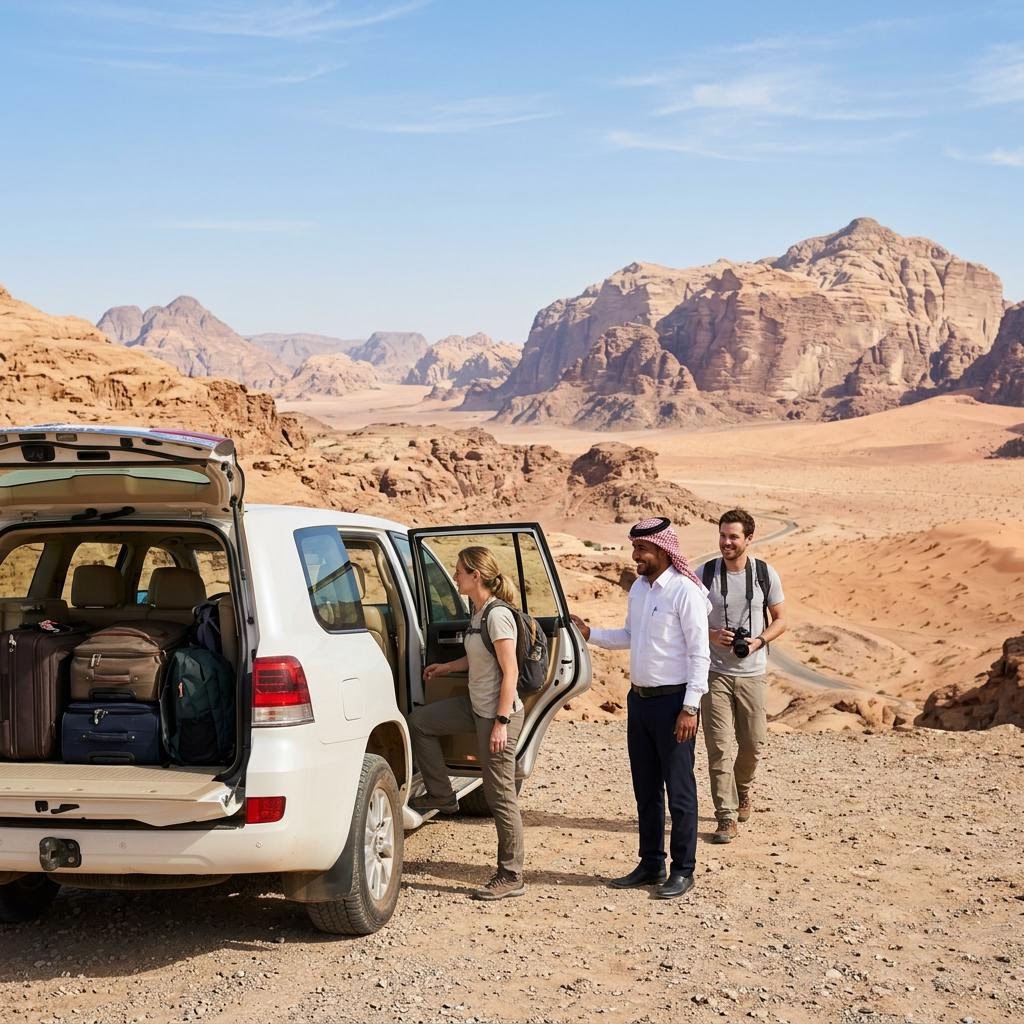
A private driver is useful for the King’s Highway because Karak fits naturally between Amman, Madaba, the Dead Sea and Petra, while public connections can limit your timing. The driver handles the road, agreed stops and vehicle logistics. A licensed guide explains the castle’s chronology, the Battle of Kerak and the difference between historical evidence and folklore. Request each service explicitly; a driver is not automatically a licensed guide.
Entrance arrangements, a guide, meals and transport may be separate parts of a booking. Our team can shape a route around your interests, but availability, language, access and changeable details must be confirmed for your date. Never ask a driver to wait in an unsafe place or hurry through a road restriction to protect an itinerary.
How to add Karak to a Jordan itinerary
Karak works particularly well as a historical stop on a north-to-south road day, provided you protect enough time for the castle and a proper break. A route from Amman toward Petra can include Karak, but the exact sequence should account for your arrival time, other stops and whether you want a guide. Travelers who want a deep medieval-history day may prefer to pair Karak with Shobak or another planned site only when the road timing remains comfortable.
Treat the castle as a destination rather than a photo stop. Read the landscape, explore the interior slowly and let a guide answer questions. If weather or access changes the plan, a custom itinerary can move the visit to another day; no historic site is worth ignoring a closure or hazardous road.
Karak Castle planning checklist
Confirm the current access decision, entrance and museum arrangements, guide meeting point, road conditions and expected walking surface. Bring water and sturdy shoes, respect barriers and avoid presenting uncertain legends as fact. Remember that the Battle of Kerak is one chapter in a much longer story of the fortress and the region.
Karak rewards travelers who combine curiosity with patience. Arrange a driver for the road if useful, add a licensed guide for interpretation and leave buffers around the visit. Current availability and all changeable details should be confirmed before departure.
Frequently Asked Questions
What is the Battle of Kerak?
The Battle of Kerak in 1183 was part of the conflict between the Crusader states and Saladin’s forces. Saladin approached Karak during a wedding at the fortress, but the castle did not fall immediately; its wider strategic history continued afterward.
How long do you need at Karak Castle?
Allow at least two hours for the main walls, courtyards, halls, passages and views. More time is useful if you hire a licensed guide, visit interpretive spaces when open or want to explore without rushing.
Is Karak Castle difficult to walk around?
The castle has uneven stone, stairs, low passages and exposed ramparts. Wear shoes with grip and ask about the practical route if mobility is a concern. Do not climb closed or unstable areas.
Can you visit Karak Castle between Amman and Petra?
Yes. Karak lies on a natural north-south route, but allow realistic time for the visit, traffic, meals and any guide service. A private driver can make the connection more flexible.
Is a guide necessary at Karak Castle?
You can see the architecture without one, but a licensed guide adds chronology and explains the Battle of Kerak, later adaptations and the fortress’s strategic setting. A driver provides transport and is a separate role.
Plan this trip with us
Ready to experience Jordan with a local guide?
We plan and run private tours across all of Jordan — one message and your trip is in local hands.
Chat on WhatsApp