Discover Aqaba Jordan: Premier Snorkeling & Beach Destination
The Red Sea Gateway — Coral Reefs & Clear Waters
Aqaba Jordan: the Red Sea side of the country
Aqaba is Jordan’s only coastal city, set at the northern end of the Gulf of Aqaba where desert mountains meet clear Red Sea water. Its shoreline gives a Jordan itinerary something completely different from archaeological sites and inland landscapes: coral reefs, swimming, boat trips, seafood and time to slow down. Aqaba is also a working port and a growing city, not simply a resort enclave.
The gulf is narrow, and the surrounding region brings Jordan close to neighboring countries. Mountain silhouettes change color near sunset, while the water often appears intensely blue against the arid coast. Visitors commonly add Aqaba after Petra and Wadi Rum, using the beach as a relaxed conclusion to a southern route. It can also serve as an arrival point or a base for day trips when transport logistics are planned carefully.
Diving in Aqaba
Aqaba is known for accessible Red Sea diving. Reefs, coral gardens, seagrass, artificial reef structures and wrecks support varied experiences within a relatively compact coastline. Dive conditions and visibility change with weather, currents, season and site, so no operator should guarantee one fixed underwater experience. A reputable center will match the site to certification, recent experience and comfort rather than steering every diver toward the same headline location.
The Cedar Pride is Aqaba’s best-known wreck. The former cargo vessel was deliberately sunk in the 1980s and now supports marine growth. It is suitable only under the direction of qualified professionals and within individual training limits. Other underwater attractions include a tank and larger artificial reef projects, while natural sites such as Japanese Garden are valued for coral and fish life. Names, moorings and permitted access should be confirmed locally.
Snorkeling and glass-bottom boats
Travelers do not need scuba certification to enjoy Aqaba’s marine environment. Several southern beach areas provide snorkeling access, while boat outings can reach selected locations when conditions permit. The best choice depends on swimming ability, wind, entry conditions and reef distance. Ask for current advice instead of assuming every public beach leads directly to healthy coral.
A mask that seals properly matters more than expensive equipment. Fins help with efficient movement, but swimmers should stay within their ability and conserve energy for the return. Wear a flotation aid when appropriate, use reef-conscious sun protection and cover exposed skin with a rash guard. Do not stand on coral, collect shells or handle marine animals. Keep distance from boats and use marked swimming areas.
Glass-bottom boats offer an option for families, non-swimmers and anyone who prefers to remain dry. The quality of viewing depends on water conditions and the route, so ask what the trip includes before boarding. Confirm safety equipment, duration and pickup point with the operator. A boat ride can be enjoyable in its own right even when visibility is less than perfect.
Marine life and reef conservation
Aqaba’s reefs support hard and soft corals, reef fish and larger visitors that may include turtles or rays. Wildlife sightings are never guaranteed. Responsible observation means allowing animals to control the encounter, keeping an appropriate distance and resisting staged handling. Lionfish are beautiful but have venomous spines; all marine life should be viewed without contact.
Aqaba’s history: Ayla and the fort
Aqaba has long held strategic value near the meeting point of sea and overland routes. The archaeological site of Ayla preserves the plan of an early Islamic port city founded in the seventh century. Walls, gates, streets and building foundations reveal a settlement connected to trade and pilgrimage. The ruins are less visually monumental than Petra or Jerash, but interpretation makes them an important chapter in the history of Islamic urbanism.
Aqaba Fort, sometimes called the Mamluk Fort, stands near the waterfront and the tall flag of the Arab Revolt. The structure was rebuilt and altered across periods, so one simple date does not capture its full history. Its location is associated with the campaigns of the Arab Revolt in 1917, although popular retellings can oversimplify events. Check current access before visiting because conservation work may affect entry.
Nearby, the Sharif Hussein bin Ali Mosque is a prominent modern landmark. Visitors should respect prayer schedules, dress modestly and confirm whether non-worshipper access is permitted. The waterfront, older commercial streets and archaeological remains can be combined in a compact walk when temperatures are comfortable. A local guide helps connect the modern port with Ayla, pilgrimage routes and regional trade.
Beaches, resorts and public access
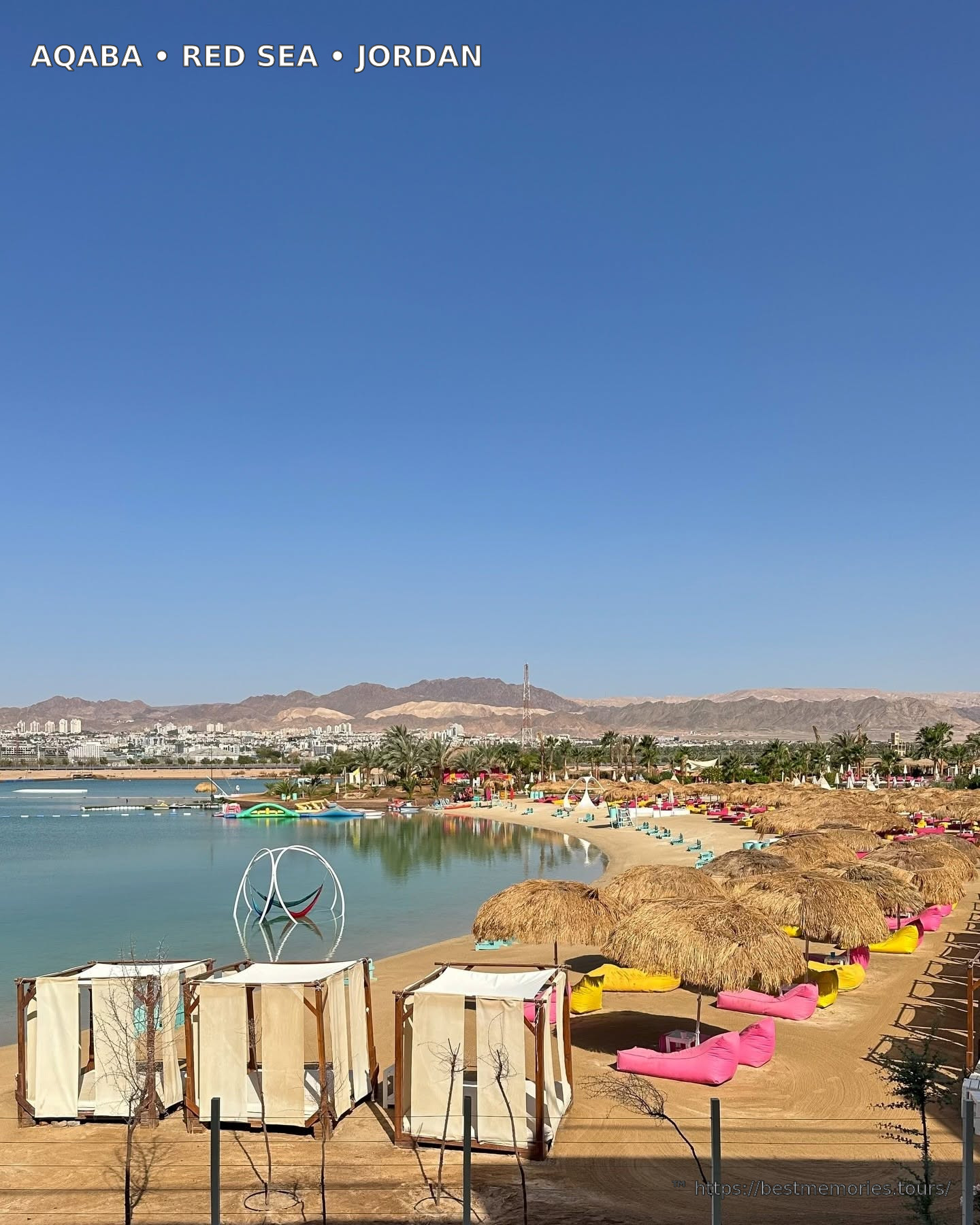
Aqaba offers resort beaches, beach clubs and public shoreline, each with different facilities and atmosphere. Resorts may provide loungers, showers, pools and managed swimming areas. Public beaches are more integrated with local social life, where modest swimwear and considerate behavior are appropriate. South Beach areas are closer to several reef sites but require transport from the city center.
Sun exposure is intense on the coast. Carry water, seek shade and avoid long midday sessions, especially with children. Coral fragments and stones make water shoes useful in some entry areas, but footwear does not permit walking on reefs. Follow posted flags and local advice; wind, boat traffic or jellyfish conditions can change the sensible swimming zone.
Food, souks and evenings
The souk is useful for spices, nuts, dates, sweets and everyday shopping. Aqaba is a special economic zone, but travelers should not assume every purchase is automatically a bargain or exempt from all onward customs rules. Compare quality, keep receipts for significant purchases and check allowances for the next destination. Polite browsing is welcome; ask before photographing vendors.
Evenings often bring residents and visitors to cafés and waterfront spaces after daytime heat. Dress standards vary between resorts and public streets. Covering up away from private beaches is respectful, and public alcohol consumption is not appropriate. Licensed hotels and restaurants may serve alcohol. Families remain an important part of evening life, giving central Aqaba a social rather than exclusively nightlife-focused character.
Planning Aqaba with Petra and Wadi Rum
Aqaba is roughly an hour by road from Wadi Rum’s visitor area and around two hours from Petra under typical conditions, although exact times vary. This geography creates a logical southern triangle. One efficient sequence is Petra, Wadi Rum and Aqaba, followed by a flight or road transfer north. The reverse works equally well when arriving through Aqaba.
Do not underestimate recovery time between desert activities and diving. Scuba divers must follow recognized guidance about intervals before flying or ascending to significant altitude. Discuss the complete itinerary with the dive center, including Wadi Rum, Petra and onward flights, because both altitude and repetitive diving affect planning. When in doubt, use conservative intervals advised by qualified professionals.
Day trips from Aqaba to Petra are possible but produce a long day and limited flexibility. Staying near Petra is better for travelers who want an early start or longer hikes. Wadi Rum can work as a day visit, though an overnight camp provides sunset, stars and a slower desert experience. Related tours on this page show ways to connect the coast with southern Jordan without unnecessary backtracking.
When to visit and practical essentials
Aqaba is a year-round destination, but the preferred season depends on activity. Spring and autumn are popular for balanced air and water conditions. Winter can be pleasant compared with Amman, while evenings and boat rides may still feel cool. Summer heat can be severe, making early water activities and midday rest sensible. Holidays and local weekends may increase demand.
Bring swimwear appropriate to the chosen beach, a cover-up, sun protection, reusable water bottle and secure footwear. Divers can rent equipment, but those with prescription masks or strongly preferred personal gear may choose to pack it. Travel insurance should explicitly cover scuba or other planned water sports at the relevant depth and qualification level.
Aqaba has road links north and an airport with schedules that vary. Confirm current transport directly with official or trusted providers and leave margins around border, airport or port procedures. Within the city, taxis and arranged transfers are practical; agree on or verify the accepted fare method before departure. Avoid inventing precision into plans where traffic and operations can change.
A well-paced stay usually allows at least two nights: one day for snorkeling, diving or a boat outing and additional time for Ayla, the fort area, markets and relaxation. Dedicated divers may want several days, while families may build in more resort time. Aqaba works best when treated as a destination rather than a hurried photo stop—the Red Sea, historic port and easy evenings provide a fitting final dimension to Jordan.
Photo Gallery
How to Visit
Aqaba is 4 hours from Amman, 1 hour from Wadi Rum and 2 from Petra, so it slots perfectly at the end of a southern route. Our private Aqaba & Red Sea Adventure covers guided snorkeling with equipment, the fort and old town, and optional diving or a sunset boat trip — with pickup from anywhere in Jordan.