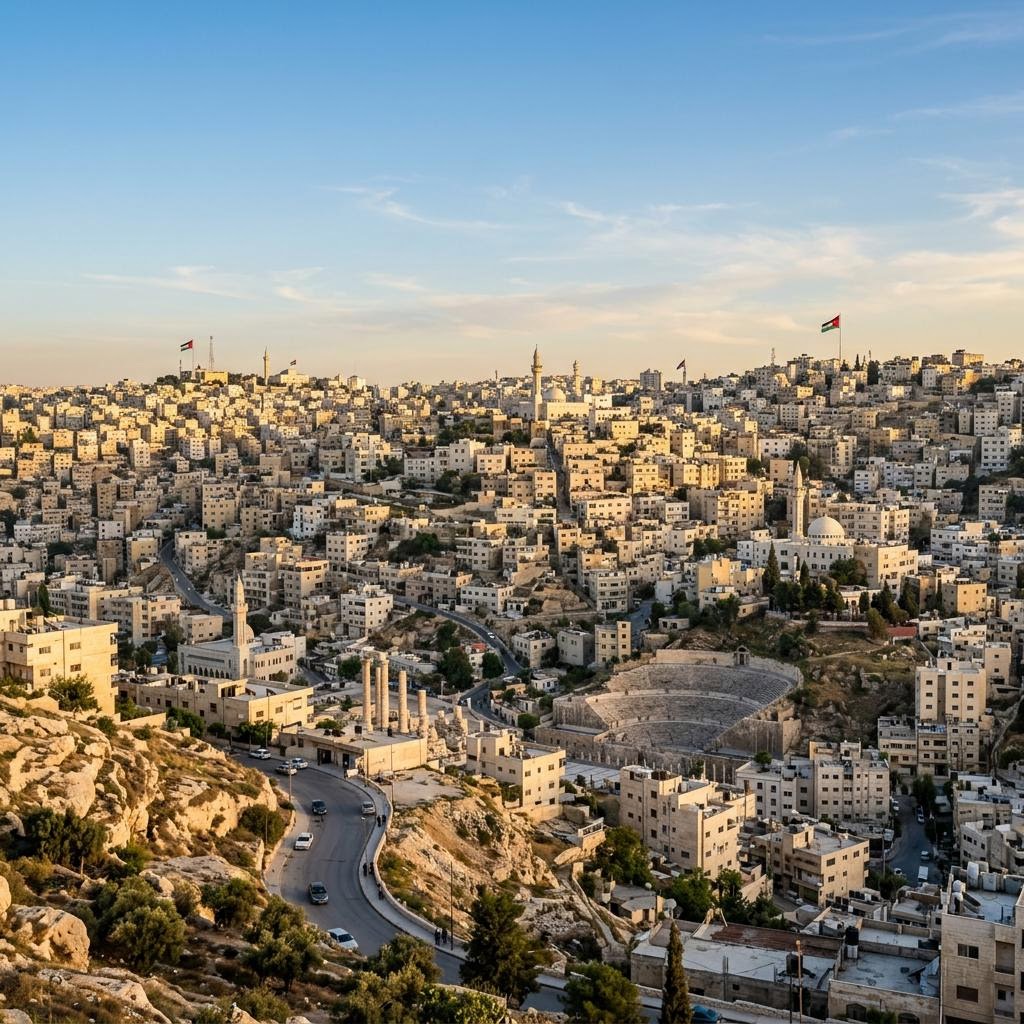
The Amman Citadel crowns Jabal al-Qal’a, the high hill above downtown where successive civilizations built temples, churches, palaces and defenses. A visit brings Jordan’s long history into one walkable archaeological site, then adds a 360-degree panorama across the capital’s limestone hills.
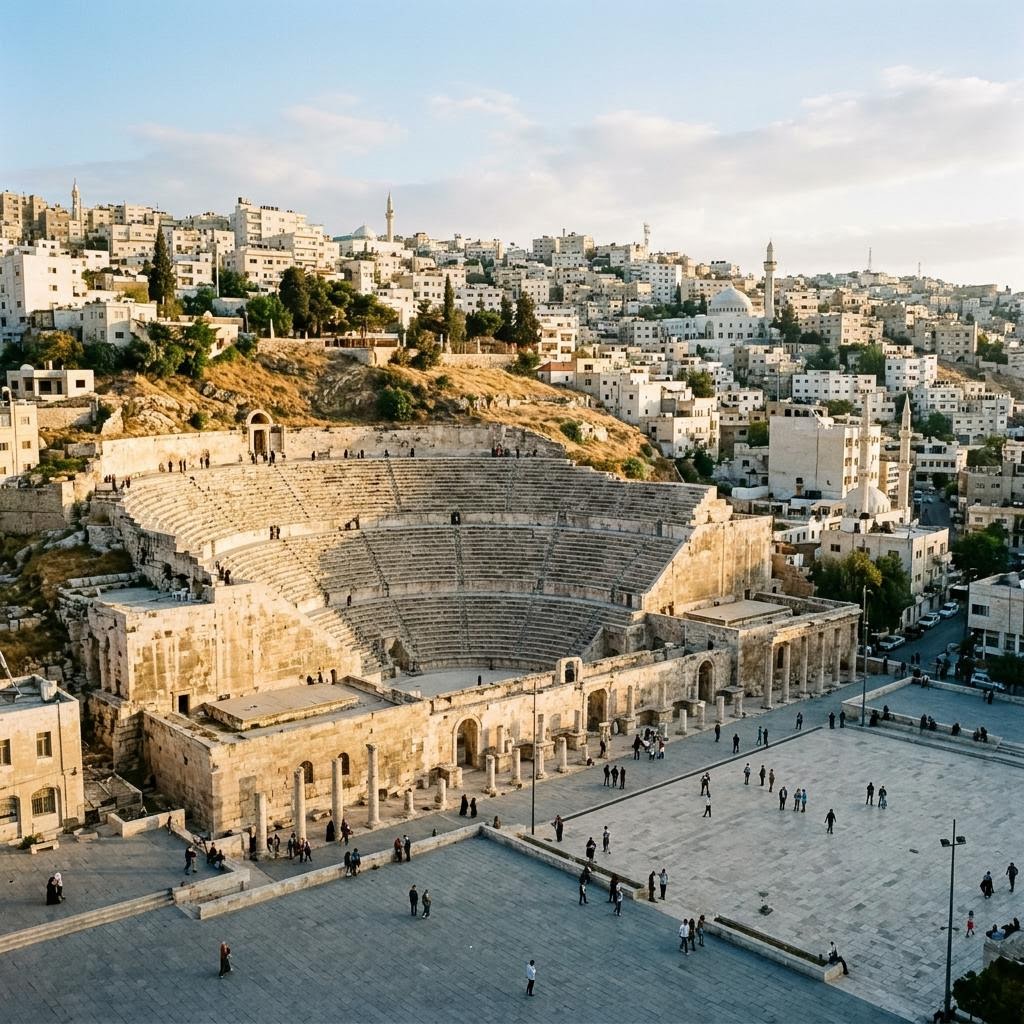
Amman Citadel tours usually focus on the Roman Temple of Hercules, the Umayyad Palace, the Byzantine Church and the Jordan Archaeological Museum. Between them are fortification walls, carved stones, cisterns and traces of much earlier settlement. Looking down, you can clearly see the Roman Theater and Al Balad.
This guide explains what each landmark means, how long to allow and how to combine the hill with downtown. The site is compact, but its exposed terrain and layered history reward a little planning.
Why the Amman Citadel matters
Jabal al-Qal’a has evidence of human activity reaching back to the Neolithic period and was fortified by the Bronze Age. Its height, springs and command of surrounding routes made it a natural center for settlement. In the Iron Age, this was Rabbath Ammon, capital of the Ammonites mentioned in ancient regional sources.
The city later became Philadelphia under Hellenistic rule and flourished in the Roman period as part of the cultural network known as the Decapolis. Byzantine Christians built churches here. In the early Islamic era, the Umayyads established an administrative and residential complex on the summit.
Earthquakes, political change and shifting trade reduced the hill’s role, but did not erase its remains. That continuity is the real attraction: visitors do not see a reconstruction of one moment, but physical layers spanning prehistoric Jordan, the Ammonite kingdom, classical Philadelphia, Byzantine Christianity and the Umayyad caliphate.
Temple of Hercules and the giant marble hand
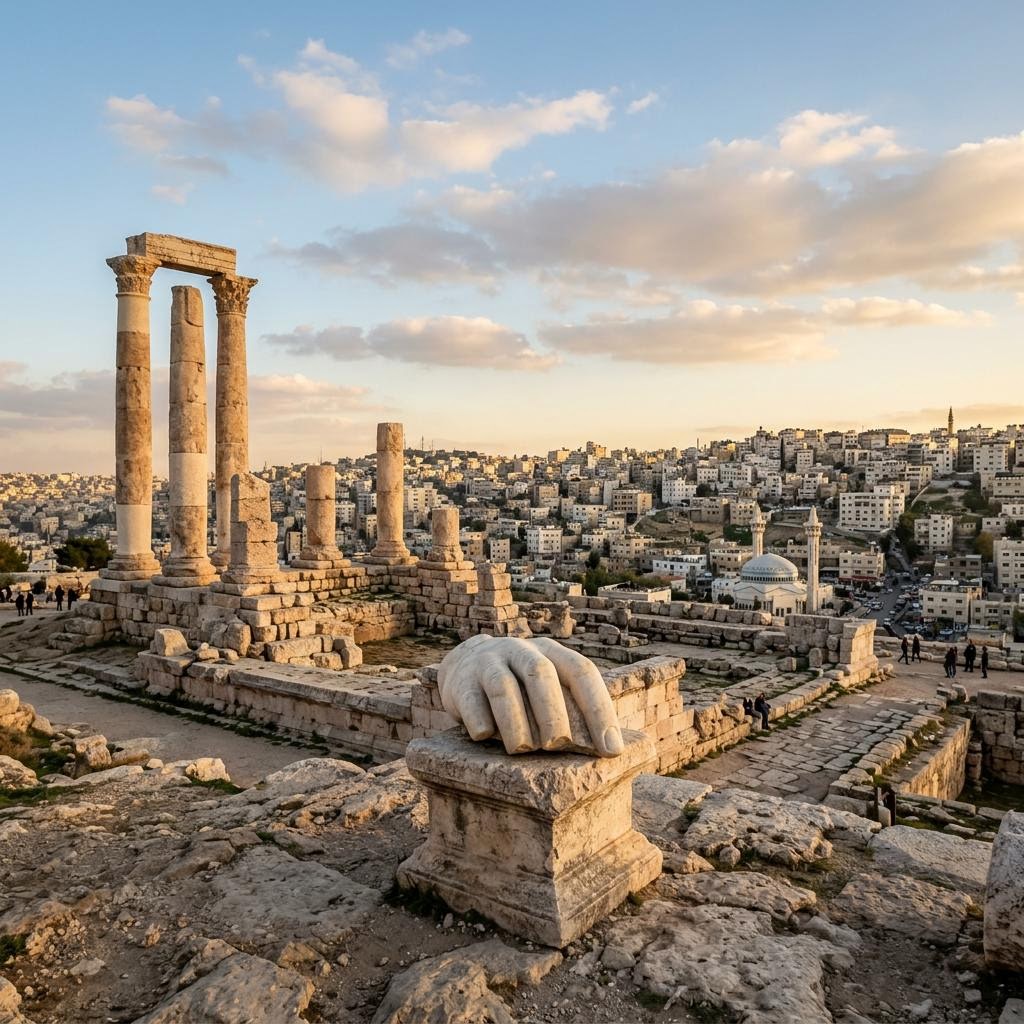
The Temple of Hercules is the Citadel’s most recognizable Roman monument. An inscription dates it to the governorship of Geminius Marcianus, around AD 161–166, during the reign of Marcus Aurelius. Its surviving columns and podium indicate a monumental sanctuary, although scholars debate whether construction was ever fully completed.
Near the temple lie three enormous marble fingers and part of an elbow. These fragments are generally identified as pieces of a colossal statue of Hercules. Estimates vary, but its full standing height may have exceeded 10 m. The hand is easy to miss if you hurry directly between the columns and museum.
Walk around the podium rather than viewing it from one angle. The columns frame excellent city photographs, while details in the reused stone reveal later alterations. A guide can explain how archaeologists used inscriptions, proportions and the surviving fragments to interpret the sanctuary.
Umayyad Palace, audience hall and water system
At the northern end of the hill, the Umayyad complex dates mainly to the first half of the 8th century. Its domed audience hall, often called the monumental gateway, is the most complete-looking structure at the Citadel. The wooden interior dome is a modern reconstruction inspired by the building’s surviving form; the carved stone walls are historic.
Beyond the hall, a colonnaded street led into residential and administrative buildings arranged around courtyards. The complex may have served a governor and his household. An earthquake in AD 749 caused severe damage, though parts of the area continued to be used afterward.
The large circular cistern nearby is crucial to understanding life on the hill. It stored rainwater because the summit had no dependable spring. Channels and settling points helped collect water from roofs and paved surfaces. This practical infrastructure often tells visitors more about daily life than the grand reception hall alone.
Byzantine Church and earlier remains
The Byzantine Church was built around the 6th century AD. Its floor plan remains visible, including the nave, side aisles and semicircular apse. Corinthian columns once divided the interior. Although less intact than the palace gateway, it marks the hill’s importance during Amman’s Christian Byzantine period.
Look beyond the headline buildings for stretches of wall, caves, tombs and reused masonry. Ancient builders repeatedly adapted the summit, so a Roman block may appear in a later wall. Archaeological excavations continue to refine interpretations of the site’s Ammonite defenses and earlier occupation.
Respect barriers even when low walls seem easy to cross. Unexcavated ground and fragile stonework are part of an active archaeological landscape, not simply a scenic park.
Jordan Archaeological Museum
The small Jordan Archaeological Museum stands near the Temple of Hercules and is included with Citadel admission. Opened in 1951, it displays objects from archaeological sites across Jordan in chronological order, from prehistoric tools and figurines to Nabataean, Roman, Byzantine and Islamic material.
Its collection gives context that the outdoor ruins cannot. Pottery, inscriptions, jewelry and everyday objects connect monumental architecture with the people who used it. Important Dead Sea Scroll fragments formerly displayed here were transferred to the Jordan Museum downtown, so do not rely on older guidebooks that place them at the Citadel.
Allow at least 20–30 minutes if history is a priority. Labels and displays can be modest, making a knowledgeable guide useful, but the manageable size means even a short museum stop adds value.
Opening hours, tickets and Jordan Pass
The Citadel is open daily, generally from around 8am to 5pm. Opening and closing times can vary by season, Ramadan, public holidays and official operational changes, so confirm current hours shortly before visiting. Arrive well before the posted final admission time rather than expecting a full visit at closing.
Entry is 3 JOD and includes the archaeological site and Jordan Archaeological Museum. The attraction is also included in the Jordan Pass. Keep the pass ready for scanning or inspection and check the official pass terms that apply to your trip.
Licensed site guides are an optional service paid separately at the site. Entrance fees are separate on our private Amman tours unless specifically stated, or covered when the traveler has a valid Jordan Pass.
How long do you need?
Allow 1–1.5 hours for the principal monuments, museum and viewpoints. A fast independent circuit can take about an hour, while travelers who enjoy archaeology or photography may prefer two hours. School groups and tour coaches can slow movement around the audience hall and museum.
A logical route starts at the Temple of Hercules, continues into the museum, crosses to the Byzantine Church, and finishes at the Umayyad Palace and cistern. Pause at viewpoints along both sides of the ridge rather than saving every photograph for one crowded edge.
Combining the Citadel with the Roman Theater, downtown souks and lunch usually fills half a day. Add the Jordan Museum, Rainbow Street or Jabal Al-Weibdeh for a more complete full day in central Amman.
Best time to visit for weather, crowds and photos
Early morning offers cooler temperatures, quieter paths and clean light on the ruins. It is the most comfortable choice in summer, when the exposed summit has limited shade. Late afternoon brings warmer golden light across the limestone and dramatic views over the city, but leave enough time before closing.
Spring and autumn are generally pleasant. Summer requires a hat, sunscreen and drinking water. Winter can be cold, windy and wet at this elevation, so bring layers and shoes with grip. After rain, uneven stone and soil may be slippery.
For photography, frame the Temple of Hercules against the city and use the eastern edge for the classic view down to the Roman Theater. The blue-domed King Abdullah I Mosque is visible in another direction. Drones require authorization and should never be assumed permissible at an archaeological site.
Getting to Jabal al-Qal’a
The entrance is reached by road at the top of the hill. A taxi, ride-hailing car or private driver is the simplest option from most hotels. Ask for “Jabal al-Qal’a” or “the Citadel”; both names are widely recognized. Travel time depends heavily on your neighborhood and central traffic.
Walking up from Al Balad is possible, but the route is steep and involves stairs and uneven pavements. Map apps may suggest shortcuts that are tiring or unclear. Many visitors arrange a drop-off at the Citadel, then walk or drive downhill to the Roman Theater and souks.
Parking near the entrance can become busy. A private Amman city tour avoids parking and route decisions and makes it easier to connect the hill with downtown. Confirm pickup arrangements before entering, because several viewpoints can look similar when describing a meeting point by phone.
Accessibility and facilities
The archaeological site has uneven ground, gravel, steps and exposed stone. Some main areas can be approached on broader paths, but complete step-free access is limited and conditions can be difficult for wheelchair users or anyone with reduced mobility. Contact the site or tour operator ahead of time for the latest access advice.
Wear closed, supportive shoes rather than smooth sandals. Families should supervise children near drops, low walls and rough surfaces. Shade is scarce, so carry water and sun protection; in cool months, expect stronger wind than in the streets below.
Basic visitor facilities are available near the entrance, but options on the summit are limited. Use restrooms when available and bring what you need for the walk. Do not climb columns, sit on fragile masonry or remove stones.
Self-guided visit or guided Citadel tour?
A self-guided visit works for travelers on a tight budget. Read the orientation panels, follow a chronological route and allow museum time. Downloading background information before arrival helps, as mobile service and on-site interpretation should not be your only plan.
A licensed guide adds the connections between scattered structures: why Roman Philadelphia built a temple here, how the Byzantine church was arranged, how the Umayyad palace managed water and which parts are reconstructed. That context is especially useful because multiple eras occupy the same small summit.
Private Amman Citadel tours can also coordinate hotel pickup and continue directly to the Roman Theater, Jordan Museum or lunch downtown. Ask exactly what the quoted tour includes—driver, licensed guide, entrance tickets and meals are separate items unless the itinerary says otherwise.
Nearby attractions and a half-day itinerary
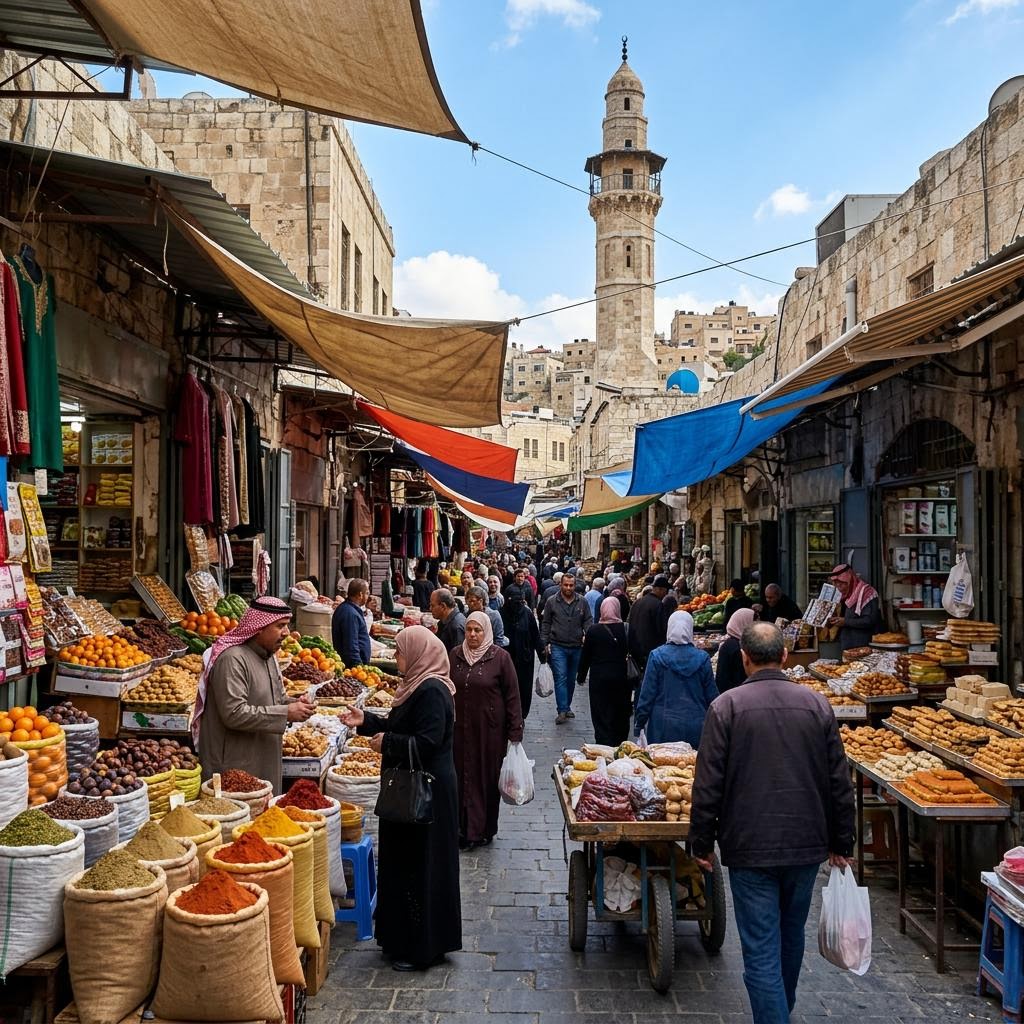
The Roman Theater is the natural next stop. Built into the opposite hillside in the 2nd century AD, it sits in the heart of Al Balad and is visible from the Citadel. Downtown’s produce, spice and clothing markets extend around it, alongside traditional falafel, hummus and knafeh shops.
The Jordan Museum presents major national finds in a larger, modern setting and complements the smaller hilltop museum. Rainbow Street on Jabal Amman offers cafés and evening atmosphere, while Jabal Al-Weibdeh is known for galleries, independent shops and quieter streets.
For an efficient half day, visit the Citadel early, descend to the Roman Theater, walk through the souks and finish with lunch downtown. Read our guides to things to do in Amman and the capital’s location for more planning context, or use the related Amman city tour link below.
Frequently Asked Questions
How much does it cost to enter the Amman Citadel?
The Amman Citadel costs 3 JOD to enter, including access to the Jordan Archaeological Museum on the hill. It is also included in the Jordan Pass. Optional licensed guiding is a separate service unless a booked tour explicitly includes it.
What are the Amman Citadel opening hours?
The Citadel is generally open daily from around 8am to 5pm, but schedules can vary by season, Ramadan, public holidays or operational changes. Confirm the current official time before visiting and arrive well before final admission.
What is the giant marble hand at the Citadel?
The giant fingers and elbow are fragments generally identified as part of a colossal Roman statue of Hercules near the temple. Estimates vary, but the complete figure may have stood more than 10 m high.
How long do you need at the Amman Citadel?
Allow 1–1.5 hours for the Temple of Hercules, Byzantine Church, Umayyad complex, museum and viewpoints. History enthusiasts and photographers may prefer two hours. The exposed, uneven hilltop rewards an unhurried pace.
Can you see the Roman Theater from the Citadel?
Yes. The eastern viewpoints look across and down to the 2nd-century Roman Theater carved into the opposite hillside. It is one of the clearest landmarks in the classic Citadel panorama and an easy next stop downtown.
Plan this trip with us
Ready to experience Jordan with a local guide?
We plan and run private tours across all of Jordan — one message and your trip is in local hands.
Chat on WhatsApp