Gerasa Jordan — the ancient city now known as Jerash — surprises almost everyone. People expect a few broken columns and instead find an entire Roman city: paved streets you can still walk, an oval forum, temples, theatres and fountains, remarkably intact after nearly two thousand years.
It sits about 50 km north of Amman, a 45–60 minute drive, which makes it the easiest big day trip from the capital. Give it a proper half day and you will understand why we rate it among the best-preserved Roman sites anywhere outside Italy. Here is how to spend your time inside the ruins.
What are the main things to see in Jerash?
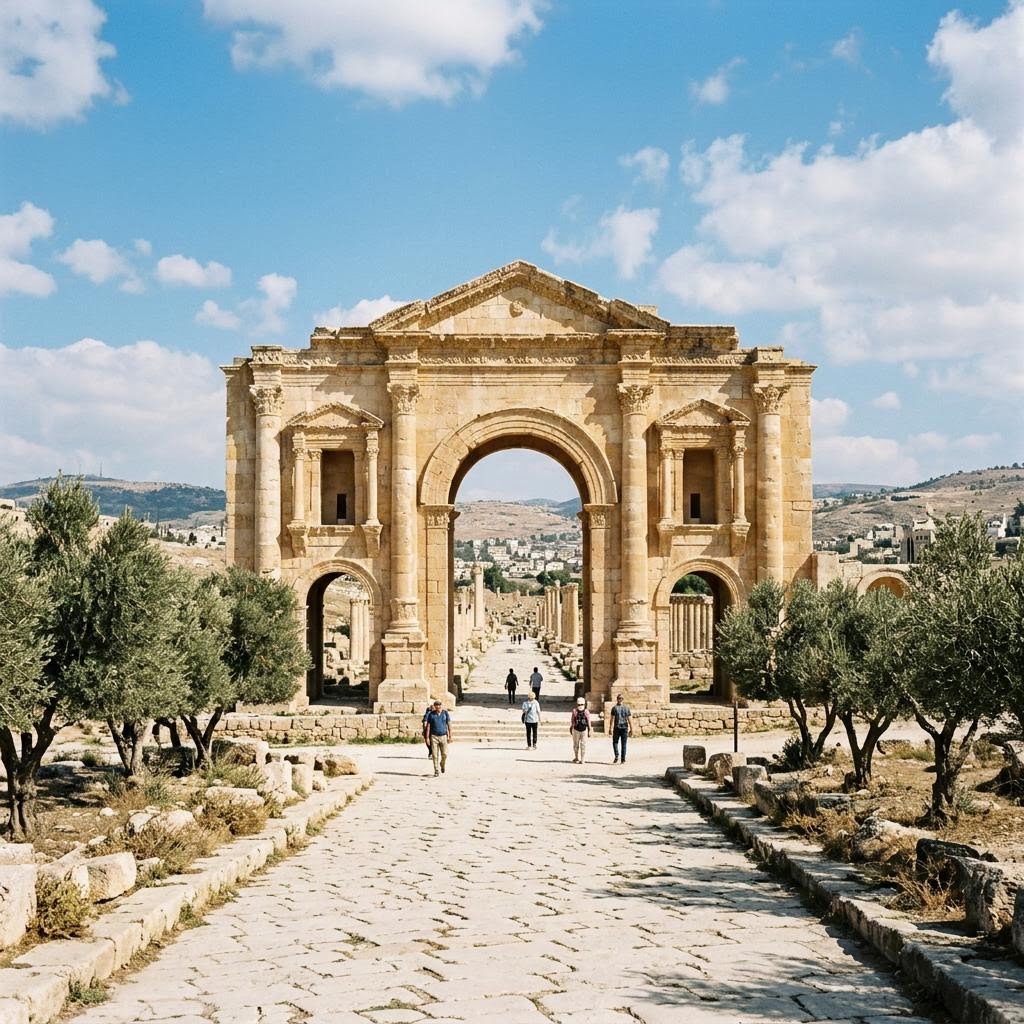
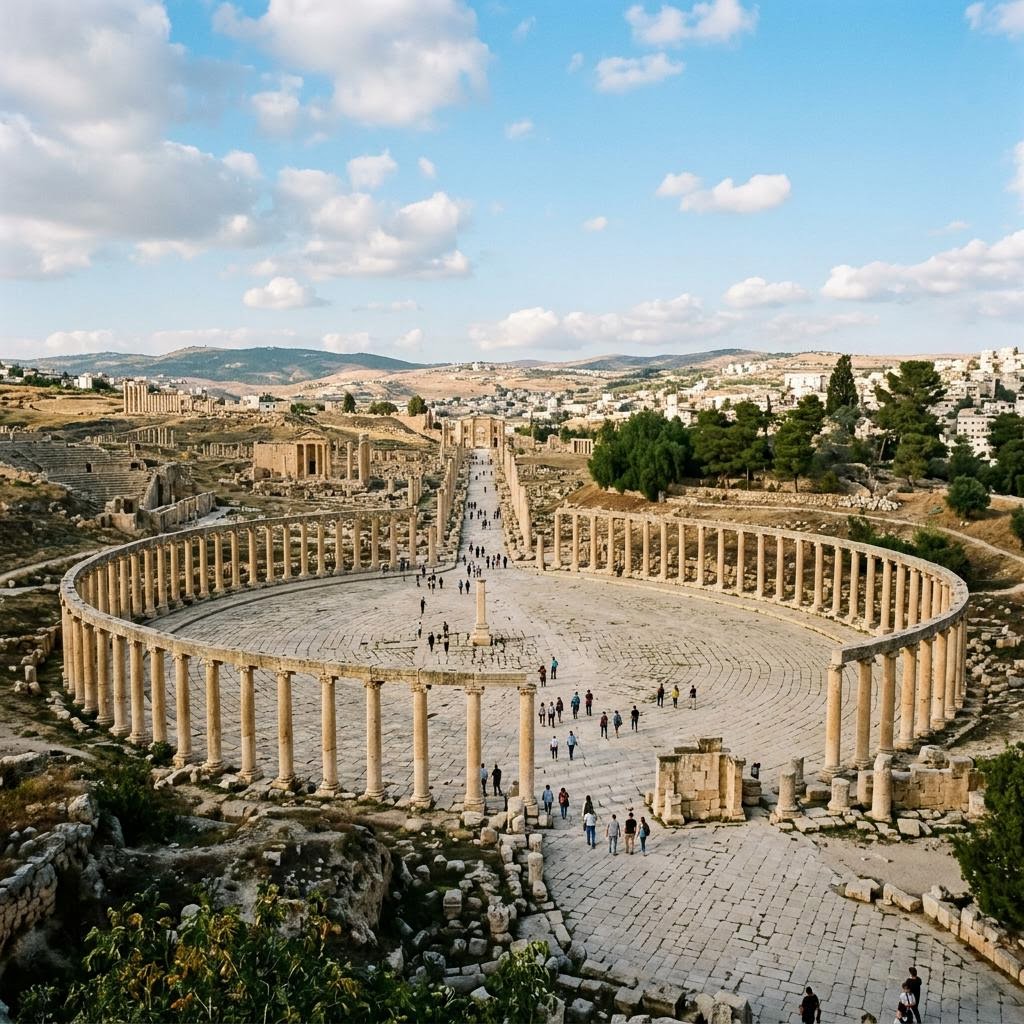
The unmissable four are Hadrian's Arch, the Oval Plaza, the Cardo Maximus and the Temple of Artemis. You enter through the great triple Hadrian's Arch, built to honour the emperor's visit in 129–130 AD, then reach the Oval Plaza — a stunning, unusually shaped forum ringed by 56 Ionic columns.
From there the Cardo Maximus, the main colonnaded street, runs about 800 metres north, its stones still grooved by ancient chariot wheels. Climb to the Temple of Artemis, whose towering Corinthian columns are engineered to sway gently in the wind — guides famously slide a spoon or key into a joint to show the movement. Add the North Theatre, the nymphaeum fountain and the Cathedral, and you have the core of the city.
What makes Jerash special is how complete it feels. Rather than a single ruin, you walk through a whole urban plan — gates, plazas, temples, baths, markets and drainage — laid out much as a visitor would have found it in the 2nd century AD. The city was part of the Decapolis, a league of ten Greco-Roman cities, and grew rich on trade before earthquakes and shifting routes slowly emptied it, preserving it under the soil for centuries.
What is the South Theatre in Jerash?
The South Theatre is Jerash's largest and best-preserved theatre, built in the 1st century AD to seat around 3,000 spectators. Its acoustics are so good that a voice from the marked spot at the centre of the stage carries clearly to the top rows without any amplification — try it.
On most days you will find Jordanian musicians in Roman-style dress playing bagpipes and drums here, a tradition that traces back to the country's links with the British-era Arab Legion. Climb to the upper tiers for a sweeping view back over the Oval Plaza and the columns of the Cardo. It is one of the most photogenic spots in the whole site.
When is the Jerash Festival?
The Jerash Festival of Culture and Arts is held every summer, usually across two to three weeks in July and August. It fills the ancient theatres and plazas with concerts, folklore troupes, poetry and craft markets, using the Roman monuments as a spectacular backdrop.
If your trip falls in late July or August, it is worth checking the current year's programme, as evening performances inside the South Theatre are unforgettable. Do note that the festival brings bigger crowds and some areas may have staging set up, so early-morning visits are best if you want the classic empty-ruins photos.
One more thing worth timing around: the Roman Army and Chariot Experience (RACE) is a re-enactment that has run at the restored hippodrome on some schedules, with legionaries in formation, gladiator bouts and a chariot race. It is not always operating, so check ahead, but when it runs it is a memorable add-on for families and history lovers alike.
How long do you need at Jerash, and what does it cost?
Plan on 2 to 4 hours at Jerash. Two hours is enough for a brisk highlights walk; three to four lets you take the far end of the Cardo, the North Theatre and the museum at a relaxed pace. Entry is 10 JOD, and Jerash is also included in the Jordan Pass (from 70 JOD), so most visitors pay nothing extra at the gate.
There is little shade among the ruins, so bring water, a hat and sunscreen — summer middays are hot, while spring and autumn (20–28°C) are ideal. Wear proper shoes, as the ancient paving is uneven. A licensed guide turns the stones into a living city, and our private Jerash tours include the drive from Amman with your own professional driver — entry (10 JD, or Jordan Pass) and an optional licensed site guide (30 JD) are paid on-site, so the day runs seamlessly.
On timing, arriving right at opening or in the last couple of hours before closing gives you softer light and thinner crowds, both better for photos and for feeling the scale of the place. Tour buses tend to cluster around late morning. Because Jerash is only 45–60 minutes from Amman, an early start is easy — you can be walking the empty Cardo before the day-trip coaches arrive and back in the city for a late lunch.
Should you combine Jerash with Ajloun Castle?
Yes — Jerash and Ajloun Castle make a natural pair and a perfect full day from Amman. Ajloun is only about 30 minutes further into the green northern hills, so combining them adds little driving.
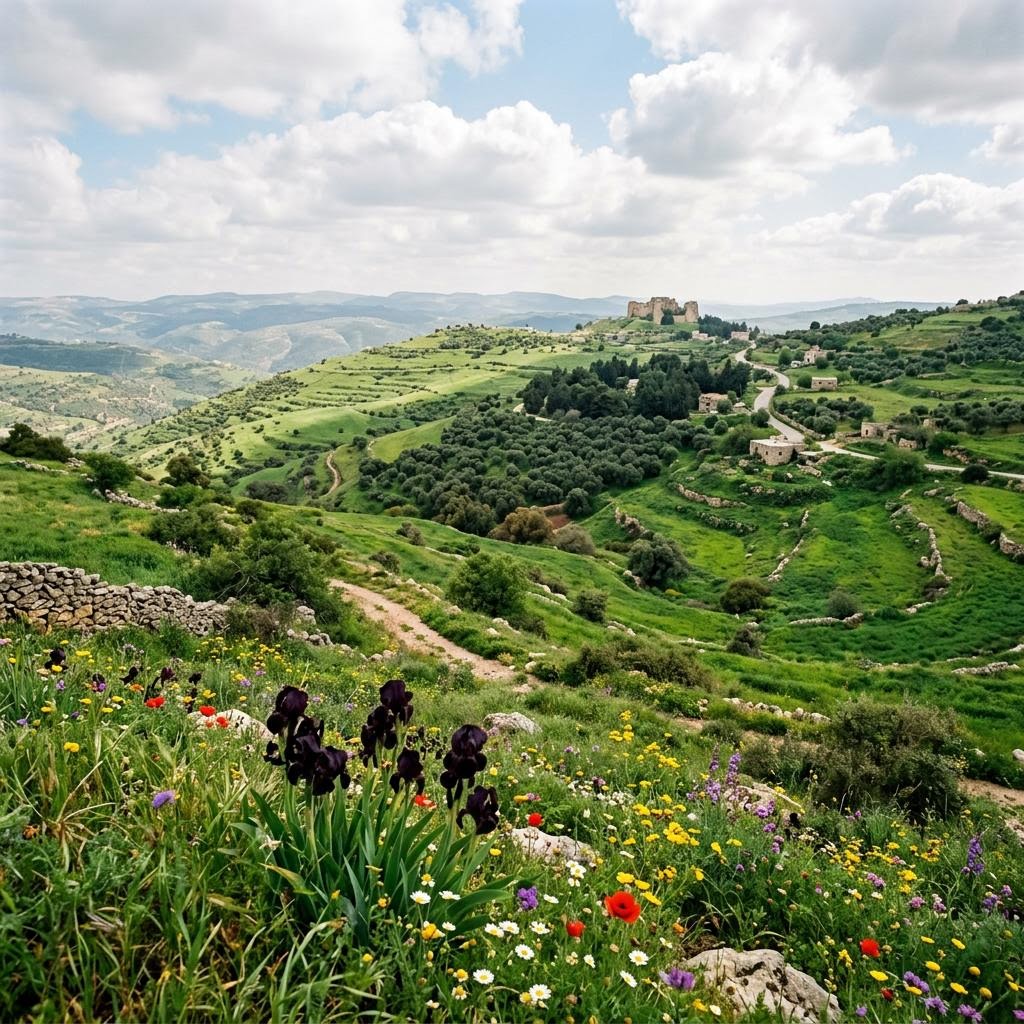
Ajloun Castle (Qal'at ar-Rabad, entry 3 JOD) is a 12th-century Islamic fortress built under Saladin's commander Izz al-Din Usama to guard the region against the Crusaders. Its hilltop position gives long views over the Jordan Valley, and it is a complete change of era and mood after the Roman ruins. Doing Jerash in the morning and Ajloun after lunch is one of our most popular northern day trips.
The northern hills around Ajloun are the greenest part of Jordan, with pine and oak forests and, in spring, wildflowers across the slopes — a surprise for anyone who pictures Jordan as all desert. If you have the time and interest, the nearby Ajloun Forest Reserve offers gentle walking trails. It rounds out a day that moves from Roman city to medieval castle to woodland, all within an easy drive of Amman.
Frequently Asked Questions
What are the must-see sights in Jerash?
The must-see sights in Jerash are Hadrian's Arch, the oval-shaped forum ringed by 56 columns, the 800-metre colonnaded Cardo Maximus, and the Temple of Artemis. Add the South Theatre, famous for its acoustics and resident bagpipers in Roman dress, for the essential highlights of the ancient city.
How long do you need to visit Jerash?
Plan on 2 to 4 hours at Jerash. Two hours covers a brisk highlights walk of the Oval Plaza, Cardo and main temples, while three to four hours lets you explore the far end of the site, the North Theatre and the museum at a relaxed pace.
How much is the entry fee for Jerash?
Entry to Jerash costs 10 JOD. Jerash is also included in the Jordan Pass, which starts at 70 JOD and bundles Petra, Wadi Rum and more than 30 other sites, so most visitors on the pass pay nothing extra at the Jerash gate.
When is the Jerash Festival held?
The Jerash Festival of Culture and Arts is usually held over two to three weeks in July and August each summer. It brings concerts, folklore performances and craft markets to the ancient theatres and plazas, using the Roman monuments as a dramatic backdrop.
Can you combine Jerash with Ajloun Castle?
Yes, Jerash and Ajloun Castle combine well into one full day from Amman. Ajloun, a 12th-century Islamic fortress with entry of 3 JOD, is only about 30 minutes beyond Jerash in the northern hills, so pairing them adds very little extra driving.
Plan this trip with us
Ready to experience Jordan with a local guide?
We plan and run private tours across all of Jordan — one message and your trip is in local hands.
Chat on WhatsApp