Umm Qais Jordan (Ancient Gadara) — Roman Ruins & Sea of Galilee Views
Ancient Gadara Ruins — Roman Theatre & Sea of Galilee Views
Umm Qais Jordan: ancient Gadara in the north
Umm Qais is one of the most rewarding places to visit in northern Jordan. Known in antiquity as Gadara, this hilltop archaeological site was a major Greek-Roman city of the Decapolis. Its dark volcanic basalt buildings, colonnaded streets, theatres and hillside views give it a character that feels completely different from the sandstone of Petra or the limestone columns of Jerash. For travelers searching for an off-the-beaten-path Jordan attraction, Umm Qais offers history, scenery and a quieter visitor experience in one stop.
The site sits on a ridge in Jordan's northwest, close to the Yarmouk Valley and the borders of the Sea of Galilee region. From the viewpoints around the ruins, clear weather can reveal the Sea of Galilee, the Golan Heights and the surrounding valleys. The landscape helps explain why Gadara became an important city: it commanded a dramatic position between inland Jordan and the wider Levant.
What to see at the Umm Qais archaeological site
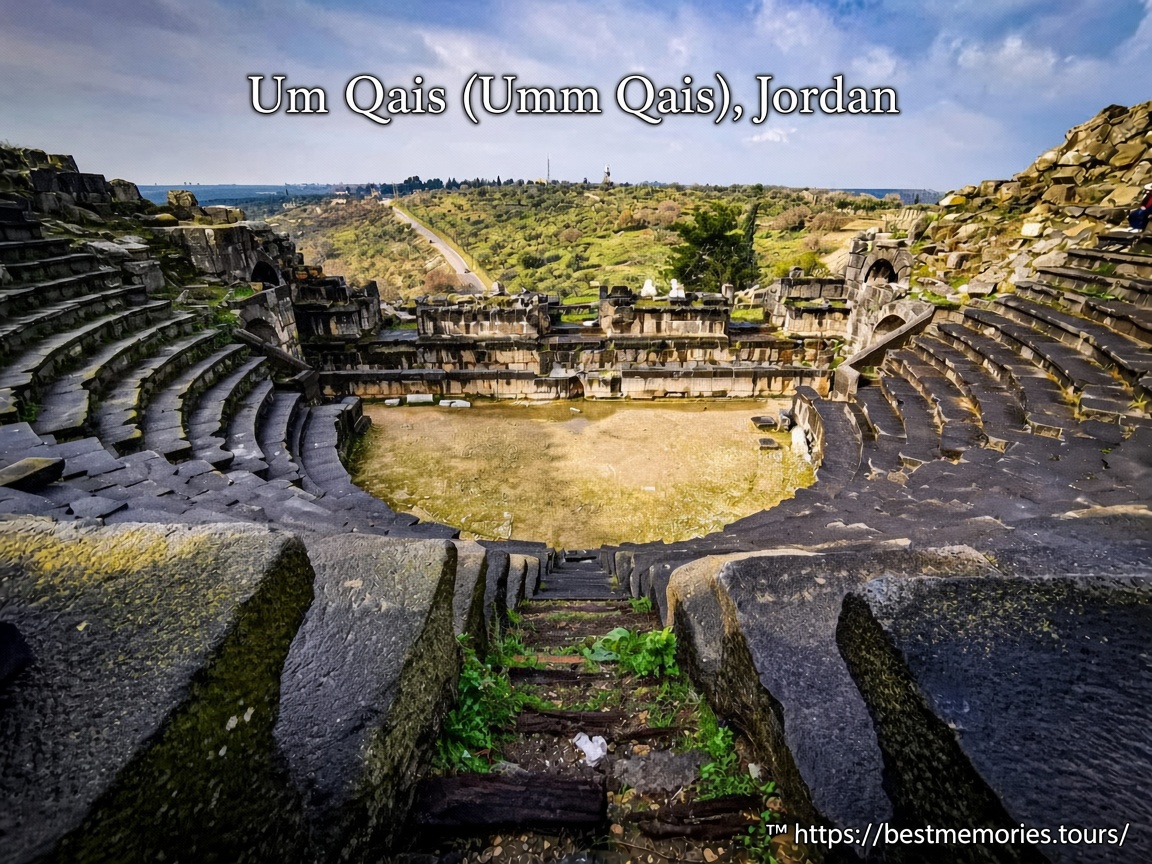
The West Theatre is the most recognizable monument at Umm Qais. Built from black basalt, its semicircular rows of seats face the stage and create one of the most memorable Roman theatre settings in Jordan. Walk through the seating and imagine performances taking place above the valley, then look closely at the stonework, entrances and surviving architectural details.
Beyond the theatre, the ancient Gadara ruins include a basalt-paved colonnaded street, the remains of a basilica and terrace, an Ottoman village, vaulted spaces, historic tombs and scattered columns. The mixture of Greek, Roman, Byzantine and Ottoman layers makes the site especially valuable for visitors who want more than one period of Jordanian history in a single walk. A local guide can connect the ruins to the people, trade routes and religious communities that shaped the city.
Gadara, the Decapolis and the black basalt architecture
Gadara was one of the Decapolis, a network of influential Greek-Roman cities in the region. Ancient writers associated the city with philosophers and poets, while the New Testament refers to the country of the Gadarenes. Its cultural importance was matched by its setting and materials: local black basalt gives the theatres, walls and columns a dramatic texture and makes Umm Qais instantly recognizable in photographs.
The later Ottoman village beside the archaeological area adds another layer to the visit. Traditional basalt houses have been adapted for heritage interpretation, and the site restaurant is known for its open views across the northern Jordan landscape. Umm Qais is not only a ruin to photograph; it is a place where ancient urban history, local stone architecture and living Jordanian hospitality meet.
Umm Qais views: Sea of Galilee, Golan Heights and Yarmouk Valley
One of the main reasons travelers add Umm Qais to a Jordan itinerary is the panorama. The ridge looks toward the Sea of Galilee and the Golan Heights, while the Yarmouk Valley drops away below. Visibility changes with season and weather, so the clearest views are never guaranteed, but even hazy conditions reveal why this was such a strategically important location.
Bring time for the viewpoints rather than rushing through the theatre. Early morning and late afternoon often produce softer light on the basalt ruins, while the open horizon can be especially atmospheric at sunset. Because this is a border-region landscape, always follow current local guidance and remain within the official visitor areas.
How to visit Umm Qais from Amman, Jerash or Ajloun
Umm Qais is approximately two hours north of Amman by car, depending on traffic and the route. It combines naturally with Jerash and Ajloun for a full northern Jordan day, although the distances and time at each archaeological site mean an early start is worthwhile. Travelers staying in Irbid can also visit Umm Qais as a half-day cultural excursion.
A private driver and licensed guide make the northern Jordan route easier because the site is distant from the country's main southbound tourist circuit. A guide can plan a realistic order for Jerash, Ajloun and Umm Qais, explain the Roman theatre and basalt architecture, and leave time for the viewpoints and the Ottoman village. Ask for current opening details and border-area travel guidance before setting out.
Best time to visit Umm Qais and what to bring
Spring is especially attractive around Umm Qais because the northern hills can be green and wildflowers may appear around the ruins. Autumn is also comfortable for walking. Summer afternoons are hot and exposed, while winter can bring wind, rain and cooler conditions on the ridge. Check the forecast and allow flexibility for visibility.
Wear comfortable walking shoes with good grip because the archaeological paths include uneven stone, steps and sloping ground. Bring water, sun protection, a light layer and a camera with a wide lens for the theatre and valley views. Modest clothing is respectful at cultural sites, and sturdy footwear is more useful than formal travel clothes.
Why include Umm Qais in a Jordan tour?
Umm Qais is ideal for travelers who want Roman ruins in Jordan without the busiest crowds, dramatic landscapes beyond Petra and a deeper understanding of the north. It works well in a northern Jordan itinerary with Jerash and Ajloun, or as part of a longer route that adds Amman, Madaba, the Dead Sea, Petra and Wadi Rum. The combination of ancient Gadara, black basalt ruins and Sea of Galilee viewpoints makes it one of Jordan’s most distinctive tourist attractions.
Photo Gallery
How to Visit
Umm Qais is about two hours north of Amman and is best visited with a private driver and licensed guide as part of a northern Jordan day trip with Jerash and Ajloun. Our guide can coordinate the archaeological site, West Theatre, Ottoman village, viewpoints and lunch stop while keeping the route comfortable and realistic.